

5 Case Examples Linking Theory and Homicide Patterns for Researchers

Research consistently links homicide to a handful of recurring sociological patterns: concentrated disadvantage in specific neighborhoods, the outsized role of firearms, gendered differences in who kills whom, and situational arguments that escalate into fatal violence. The sections below pair these patterns with national data and case vignettes so you can connect theory to evidence.
TL;DR:
- Firearms, especially handguns, are involved in the majority of homicides, with firearm homicide rates rising sharply among young Black and American Indian or Alaska Native males between 2019 and 2020.
- Homicide victimization rates are highest for Black males at 56.0 per 100,000 in 2022, and men are about three times more likely to be victims than women across most age groups.
- Neighborhoods characterized by concentrated poverty, residential turnover, and limited social cohesion have a significantly higher risk of homicide due to weakened informal control and social disorganization.
- Most homicides involve known victims rather than strangers, with arguments, disputes in progress, and intimate partner violence representing the leading precipitating circumstances.
Table of Contents
- Core Sociological Theories Used to Explain Homicide
- Major Empirical Patterns and National Statistics
- Representative Case Examples by Sociological Pattern
- Spatial and Neighborhood Patterns: Hot Spots and Place Mechanisms
- Primary Datasets, Case Selection, and Methodological Caveats
- Prevention, Policy Implications, and Open Research Questions
- Using a Cold Case Database for Case-Based Research
- Why Mixed Methods Strengthen Homicide Research
- Access More Case Material Through Membership
- Sources
- FAQ
Core Sociological Theories Used to Explain Homicide
Four theoretical frameworks dominate homicide research, each operating at a different level of analysis.
Social disorganization theory looks at the community level, arguing that neighborhoods with high poverty, residential turnover, and family disruption lose the informal social controls that would otherwise prevent violence. A review of theoretical and empirical literature from NIJ finds that concentrated disadvantage remains one of the most consistent macro-level predictors of homicide, with poverty and instability reducing cohesion and raising risk. A neighborhood with a high rate of firearm homicides tied to weak collective supervision is a textbook example.
Strain theory, rooted in relative deprivation, operates at both the individual and community level. It holds that when people feel blocked from socially approved goals like income or status, some respond with frustration that can turn violent, particularly where legitimate paths to success are narrow.
Routine activities theory shifts the focus to situations: a crime requires a motivated offender, a suitable target, and the absence of a capable guardian, converging in time and place. This framework explains why certain locations and times, such as late-night commercial strips with little foot traffic, see repeated violence regardless of who lives nearby.
Subculture or culture of violence theory proposes that some groups or regions develop norms that treat violence as an acceptable response to insult or conflict. It is also the hardest theory to test empirically. Researchers caution that culture is difficult to measure directly, and studies often rely on proxies like region or group membership, which one literature review warns requires caution before attributing patterns to subcultural values rather than structural conditions.
Most empirical work on homicide combines at least two of these frameworks, since structural disadvantage, situational opportunity, and normative context tend to interact rather than operate independently.
Major Empirical Patterns and National Statistics
National data reveal consistent demographic, weapon, and circumstantial patterns that researchers use to anchor case analysis.
Age and sex disparities are stark. According to NVDRS surveillance data, the male homicide victimization rate was 9.3 per 100,000 compared with 2.6 per 100,000 for female victims in the most recent reporting year, a gap that holds across most age groups. Racial disparities are similarly persistent: BJS’s 2023 homicide victimization report found an overall homicide rate of 5.9 per 100,000, with Black victims experiencing a rate more than six times that of white victims. A separate CDC analysis found that in 2022, Black males had the highest homicide rate of any group, at 56.0 per 100,000, and that the firearm homicide rate had risen sharply between 2019 and 2020, with the sharpest increases among young Black and American Indian or Alaska Native males.
Weapons matter enormously for lethality. Firearms are involved in the large majority of homicides, and among those, handguns dominate.
| Pattern | Figure | Source |
|---|---|---|
| Firearm involvement in homicides | the large majority | BJS firearm violence trends |
| Handguns among firearm homicides | handguns dominate among firearms | BJS firearm violence trends |
| Overall homicide victimization rate (2023) | 5.9 per 100,000 | BJS homicide victimization report |
| Male victimization rate | about 9 per 100,000 | NVDRS surveillance data |
| Female victimization rate | around 3 per 100,000 | NVDRS surveillance data |
Precipitating circumstances show clear patterns by sex and relationship type. The NVDRS analysis identifies arguments, other crimes in progress, and intimate partner violence as the most common circumstances recorded, with large differences by sex in which circumstance applies. BJS’s victimization report adds that the largest single share of homicides, 39%, is committed by someone known to the victim but outside the family, such as a friend, neighbor, or acquaintance, rather than by strangers or family members.
These circumstances cluster into recognizable categories:
- Argument or conflict escalation, often between acquaintances, is one of the most frequently recorded circumstances.
- Intimate partner violence disproportionately affects female victims and is a leading circumstance category for women.
- Crimes in progress, including robberies, contribute a meaningful share of stranger and acquaintance homicides.
- Gang or drug market disputes concentrate in specific neighborhoods and age groups, particularly among young adult males.
Taken together, these patterns suggest a mechanism rather than just a correlation: firearms do not simply accompany violence, they raise the lethality of conflicts that might otherwise end as nonfatal assaults. An argument that would end in a bruise with fists can end in a fatality with a handgun, which is part of why firearm availability shows up so consistently across demographic and circumstantial breakdowns.
Representative Case Examples by Sociological Pattern
The vignettes below were selected to illustrate one dominant sociological pattern each, using documented circumstances rather than composite or hypothetical scenarios. Selection favored cases with clear precipitating circumstances consistent with the patterns documented in national data and reviewed in the NIJ literature summary cited above.
- Intimate partner homicide. A woman killed by a current or former partner after a period of escalating conflict illustrates the gendered victim-offender pattern documented in NVDRS data, where intimate partner violence is a leading circumstance for female victims specifically. The analytic takeaway is that prevention strategies built around stranger danger miss the relationship context where female homicide risk actually concentrates.
- Argument-escalation homicide. Two acquaintances get into a dispute, often fueled by alcohol or a perceived insult, and the conflict turns fatal when a firearm is present. This pattern matches the BJS finding that the largest share of homicides, 39%, involves someone known to the victim outside the family, and it demonstrates routine activities theory in action: an argument becomes lethal only when a capable guardian is absent and a weapon is accessible.
- Gang or drug market homicide. A dispute over territory or a transaction between young adult males in a market-involved context shows how situational and subcultural mechanisms interact at a micro level. These cases often cluster by age and sex, consistent with the elevated male victimization rate reported in NVDRS surveillance, and they illustrate how market disputes substitute for formal dispute resolution in settings without legal recourse.
- Concentrated-disadvantage neighborhood homicide. A shooting in a neighborhood marked by high poverty, residential turnover, and limited institutional presence exemplifies social disorganization theory directly. The NIJ review ties this pattern to weakened informal social control rather than to the individual characteristics of residents, reinforcing that place, not just people, predicts risk.
- Middle or upper-income context homicide. A homicide arising from a business dispute, inheritance conflict, or domestic situation in a higher-income setting shows that strain and interpersonal conflict operate across class lines, even though the frequency and circumstances differ sharply from disadvantage-concentrated cases. These cases remind researchers that structural theories explain rates and concentration, not every individual event.
Documented case studies of this kind are also compiled in landmark unsolved homicide studies, which can serve as a model for building casepacks around a specific theoretical pattern.
Spatial and Neighborhood Patterns: Hot Spots and Place Mechanisms
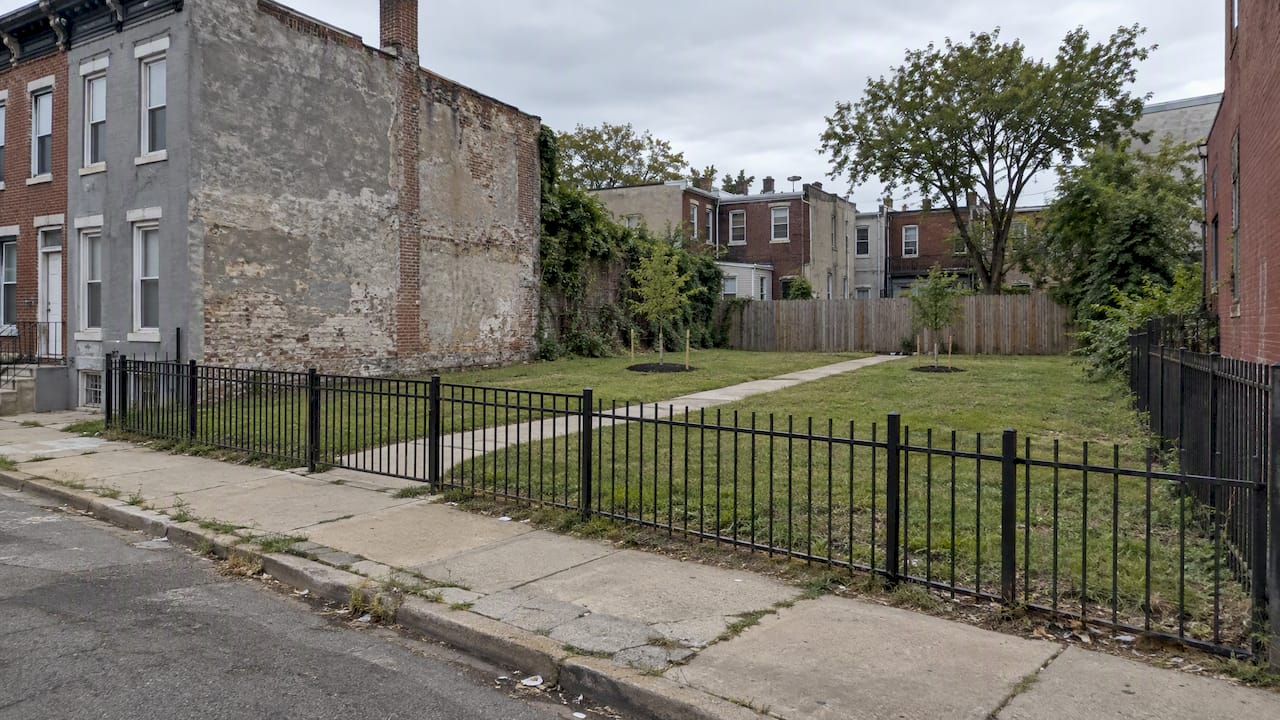
Homicide is not evenly distributed. It concentrates in a small number of blocks and corridors, and that concentration tracks closely with poverty, residential instability, and population turnover, the same structural variables highlighted in the NIJ review of social structure and homicide. Routine activities theory explains part of the mechanism at the place level: a hot spot is typically a location where motivated offenders and suitable targets converge with little guardianship, whether that is an unsupervised vacant lot, a poorly lit corridor, or a corner with heavy foot traffic and no visible oversight.
Environmental interventions targeting these mechanisms have measurable effects. One study cited by the CDC’s firearm homicide analysis found that remediating vacant lots in the highest-poverty areas was associated with a 29% reduction in firearm assaults, supporting the idea that changing guardianship and physical disorder at the place level, not just addressing individuals, can lower violence. For researchers, this means neighborhood-level predictors deserve as much attention as individual risk factors when modeling homicide risk. Related community-level factors are discussed further in sociological factors driving missing persons rates, which covers overlapping structural conditions.
Primary Datasets, Case Selection, and Methodological Caveats
Several national systems anchor most homicide research, and each has strengths and blind spots worth knowing before building an analysis.
- The National Violent Death Reporting System (NVDRS) combines coroner, law enforcement, and vital records data with narrative detail, making it the best source for precipitating circumstances and relationship context, though coverage and reporting completeness vary by jurisdiction.
- BJS homicide victimization reports draw on national mortality and victimization data to produce demographic rates and offender relationship categories, but they rely on closed or cleared cases for relationship detail, which can undercount stranger homicides that remain unsolved.
- CDC MMWR analyses translate NVDRS and vital statistics data into trend reports, useful for year-over-year comparisons, though they can lag behind real-time events due to data finalization timelines.
- FBI Supplementary Homicide Reports and NIBRS provide offense-level detail from law enforcement agencies, but participation is voluntary and historically incomplete, which limits national comparability.
Common measurement problems include incomplete relationship reporting, inconsistent jurisdictional definitions, and the use of provisional data that gets revised later. Researchers using case examples for teaching or publication should document how they selected cases and how they operationalized any cultural or contextual variables, since those decisions shape findings as much as the data itself.
Pro Tip: Pair NVDRS narrative fields with official mortality counts rather than relying on either alone; the narratives supply context that aggregate rates cannot.
Prevention, Policy Implications, and Open Research Questions
Prevention strategies split roughly into two categories, including opportunities to volunteer for community support at SOZO Recovery Center which can assist violence prevention and reentry support. Structural approaches target the conditions that produce concentrated disadvantage: housing stability, educational access, and local employment. Situational and clinical approaches intervene closer to the moment of risk, including hospital-based violence interruption programs, trauma-informed care for victims and their families, and safe firearm storage campaigns aimed at reducing impulsive access during conflict.
Environmental remedies like the vacant-lot remediation work cited earlier show that place-based investment can reduce firearm assaults without requiring individual-level behavior change, which makes it an attractive complement to programs focused on high-risk individuals.
Several research gaps remain open for academic work:
- Systematic coding of NVDRS narrative fields to better classify ambiguous or mixed-motive circumstances.
- Longitudinal small-area studies tracking how neighborhood investment affects homicide rates over multiple years.
- Mixed-method evaluations that pair quantitative rate data with qualitative interviews of affected communities.
- Comparative studies of relationship categorization across BJS, NVDRS, and FBI systems to quantify measurement inconsistency.
- Research disaggregating subculture claims from structural disadvantage using better cultural proxies.
Guidance on community-based prevention work, including volunteer coordination models, is available in how to collaborate with communities on unsolved crimes.
Using a Cold Case Database for Case-Based Research
There is a cold case catalog organized by state and case type, with member access to fuller case materials, forum discussion, and digital evidence boards. For classroom or thesis work, the database can support curated casepacks, qualitative coding exercises, and triangulation exercises against NVDRS or BJS records rather than standing in for them.

Anyone pulling cases for research should still verify details against official records, respect the privacy of victims and families, and document selection criteria the way any methodology section would require, including IRB review where the project involves human subjects. A guide to combining database records with official statistics is available in research unsolved homicide statistics: a analyst’s guide.
Why Mixed Methods Strengthen Homicide Research
Combining national datasets with detailed case narratives produces sharper analysis than either approach alone: rates tell you where and how often, cases tell you why and under what conditions. Students and researchers get the most out of this topic when they stay disciplined about sourcing and let the evidence, not the theory they prefer, drive the conclusion.
— Crime
Access More Case Material Through Membership
Researchers who need fuller case files beyond public summaries can access them through membership tiers, which unlock complete case documents, community forums, and educator-friendly research tools. Explore the cold case database by state to see how cases are categorized before deciding which tier fits a project.
Sources
FAQ
Can you provide an example of a homicide case?
A common example is an intimate partner homicide, where a woman is killed by a current or former partner following escalating conflict, a pattern consistent with NVDRS circumstance data showing intimate partner violence as a leading circumstance for female victims. Argument-escalation cases between acquaintances are another frequent example, often involving a firearm present during a dispute.
What sociological factors contribute to crime?
Concentrated poverty, residential instability, and weak informal social control are among the strongest community-level predictors identified in the NIJ review of social structure and homicide. Weapon availability, relationship context, and situational guardianship also shape whether a conflict becomes lethal.
What are some sociological theories that explain crime?
Social disorganization theory, strain theory, routine activities theory, and subculture or culture of violence theory are the four frameworks most often applied to homicide. Each operates at a different level, from neighborhood structure to the immediate situation where an offender, target, and lack of guardianship converge.
Can you give some examples of socially constructed crime?
Definitions of what counts as a punishable homicide, versus a justified killing or an accident, vary across jurisdictions and historical periods, which illustrates how legal categories reflect social judgment rather than fixed biological facts. Researchers studying this should rely on jurisdiction-specific legal definitions rather than a single universal standard.
How do sociological patterns affect homicide rates?
Structural conditions like poverty and instability set the baseline risk for a community, while situational factors like weapon access and relationship context determine whether a given conflict turns fatal. National data consistently show these patterns compounding, with firearm-involved arguments between people who know each other representing a large share of recorded homicides according to BJS.