

Famous Cold Cases: Top Investigations That Shaped Justice

A cold case is defined as a criminal investigation with no actionable leads and no current suspect, most often a homicide, because murder carries no statute of limitations in any U.S. state. Famous cold cases sit at the intersection of public obsession and investigative persistence, drawing true crime researchers back to files that span decades. Cases like the Zodiac Killer, JonBenét Ramsey, and the Black Dahlia have never left the public consciousness. New forensic tools, especially Investigative Genetic Genealogy (IGG), are now reopening investigations that once seemed permanently sealed.
What are the most famous cold cases in history?
The most notorious cold cases share a common thread: strong public interest, limited physical evidence, and investigative dead ends that stretched years into decades. Each case below represents a distinct failure point in criminal investigation, whether from technology gaps, jurisdictional confusion, or simply the passage of time erasing witnesses and evidence.
These landmark cold cases reshaped how law enforcement approaches unsolved criminal cases:
- The Zodiac Killer (1968–1969, California): Killed at least five confirmed victims in Northern California. Sent coded ciphers to newspapers. One cipher went unsolved for 51 years. No arrest has ever been made.
- JonBenét Ramsey (1996, Colorado): Six-year-old beauty queen found murdered in her family’s home on December 26. DNA evidence collected but no charges filed. The case remains one of the most scrutinized unsolved criminal cases in American history.
- The Black Dahlia (1947, Los Angeles): Elizabeth Short’s murder shocked postwar America. Her body was found severed and posed in a vacant lot. Hundreds of suspects were investigated. No one was ever charged.
- D.B. Cooper (1971, Pacific Northwest): The only unsolved air piracy case in U.S. aviation history. Cooper hijacked a Northwest Orient flight, extorted $200,000, and parachuted into the Pacific Northwest wilderness. He was never identified.
- Tupac Shakur (1996, Las Vegas): Shot in a drive-by on September 7 and died six days later. Despite multiple witnesses and ongoing investigations, no one has been convicted.
- Chandra Levy (2001, Washington, D.C.): Federal intern who disappeared in may 2001. Her remains were found a year later in Rock Creek Park. A conviction was later overturned, leaving the case effectively unsolved.
- The Zodiac’s Lake Berryessa Attack (1969): A separate attack from the confirmed killings, this assault left one survivor who provided a physical description. The sketch never led to a confirmed arrest.
Pro Tip: When researching infamous murder cases, cross-reference FBI Uniform Crime Reports with local case files. Discrepancies in reported victim counts often reveal overlooked evidence.
The chance of solving a homicide drops sharply if investigators miss the initial lead within 48 hours. That statistic explains why so many of these cases went cold so fast. A missed witness, a delayed autopsy, or a lost evidence chain in the first two days can seal a case’s fate for generations.
How has forensic DNA and genetic genealogy transformed cold case investigations?
Investigative Genetic Genealogy (IGG) is the practice of building family trees from crime scene DNA to identify suspects through distant relatives. It is the single most significant advance in cold case investigations in the past 30 years. The technique works by uploading crime scene DNA to genealogy databases, then using traditional detective work to narrow the family tree to a likely suspect before confirming with a direct DNA sample.
The Golden State Killer case is the defining example. Joseph James DeAngelo evaded capture for nearly four decades despite being one of the most hunted criminals in California history. A small team solved the case in 63 days using low-cost DNA kits, compared to the decades and thousands of agents deployed through traditional methods. Former Sacramento DA Anne Marie Schubert called forensic DNA the “greatest tool ever delivered” to law enforcement.
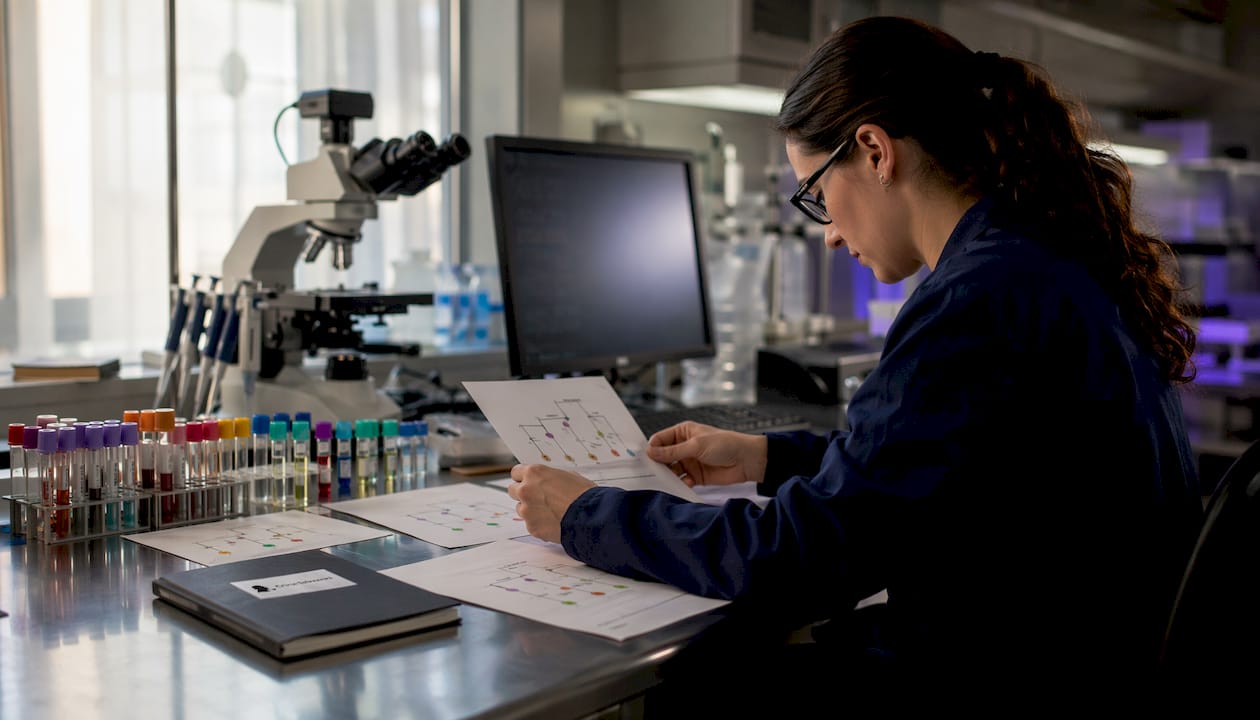
Since that 2018 arrest, IGG has helped solve over 1,600 cold cases across the United States, including cases dating back to 1974 and 1982 that were cracked within months in early 2026. That number represents families who finally received answers after decades of silence.
| Method | Timeframe | Cost | Key Limitation |
|---|---|---|---|
| Traditional investigation | Years to decades | High (personnel, resources) | Relies on witnesses and physical evidence |
| CODIS database matching | Weeks to months | Moderate | Requires prior offender DNA in system |
| Investigative Genetic Genealogy | Days to months | Lower per case | Requires genealogy database access and detective follow-up |
| Behavioral profiling | Ongoing | Low | Generates leads, not direct identifications |
One critical point: a DNA match alone rarely convicts. The Barbara Waldman murder, solved after more than 50 years, required a totality of evidence including DNA, interviews, and photo analysis. IGG narrows the suspect pool. Traditional detective work closes the case.
Pro Tip: Privacy and civil rights considerations around consumer DNA databases are actively debated. Researchers interested in the legal dimensions should review civil rights perspectives on how DNA data usage intersects with personal privacy protections.
What unresolved cold cases continue to challenge investigators today?
Several high-profile cases remain open despite renewed investigative attention, modern forensic tools, and sustained public interest. Each illustrates a different reason why cold case investigations stall even when resources are available.
- The Zodiac Killer: Investigators have submitted DNA evidence for IGG analysis, but the Zodiac’s DNA profile has not yet produced a confirmed familial match in public databases.
- JonBenét Ramsey: Boulder Police Department has conducted multiple rounds of DNA testing. Touch DNA evidence exists but has not conclusively identified a suspect. The case file remains active.
- Tupac Shakur: Las Vegas Metropolitan Police Department reopened the investigation in 2023. A suspect was identified and arrested, but charges were later complicated by evidentiary issues. The case is still pending resolution.
- The Delphi Murders (2017, Indiana): Abby Williams and Libby German were murdered on a hiking trail in february 2017. A suspect, Richard Allen, was arrested in 2022, but the case has faced legal challenges that have drawn national attention.
- The Long Island Serial Killer: Eleven victims were found on Gilgo Beach between 2010 and 2011. Rex Heuermann was arrested in 2023 and charged with multiple murders. Additional victims remain unidentified, and the full scope of the case is still unresolved.
Community tips remain one of the most reliable ways to reactivate stalled cases. Witnesses who were previously reluctant, or simply unaware of their information’s value, often come forward years later. Anonymous tip hotlines and advocacy groups have directly contributed to case reactivations across the country.
Cold cases are not permanently unsolvable. They are waiting for an opportunity: a new lead, a new technology, or a witness who finally decides to speak.
How community involvement and nonprofit efforts impact cold case investigations
Public participation is not a supplement to cold case investigations. For many cases, it is the primary engine. Law enforcement agencies frequently lack the budget to conduct advanced forensic testing, and community-driven funding fills that gap directly.
Crowdfunding has become a critical mechanism for financing costly genetic genealogy testing. Approximately 120 of the 1,600 IGG-solved cases involved crowdfunding to cover testing costs. That number reflects a structural funding problem: agencies want to use IGG but cannot always afford it without outside support. Federal legislation like the Carla Walker Act has been introduced to address forensic genealogy funding gaps at the agency level, but community action remains faster and more flexible.
Nonprofit organizations dedicated to cold cases perform three functions that law enforcement cannot always replicate: sustained public pressure, victim advocacy, and direct fundraising for testing. They also serve as connectors between families and investigators, ensuring cases do not disappear from active attention. Platforms like Crimesolverscentral, which catalogs over 264,913 cases organized by state and situation, give researchers and advocates a structured way to engage with overlooked victims and direct attention where it is most needed.
The national database model also helps by making case information accessible to the public, journalists, and researchers who might surface new leads that investigators missed. Accessibility is not a minor feature. It is a force multiplier for justice.
Key Takeaways
Famous cold cases remain unsolved primarily because of missed early leads, limited forensic technology at the time of the crime, and inadequate funding for modern testing methods.
| Point | Details |
|---|---|
| Cold case definition | A homicide with no actionable leads qualifies as a cold case; murder has no statute of limitations in any U.S. state. |
| IGG breakthrough | Investigative Genetic Genealogy has helped solve over 1,600 U.S. cold cases since the 2018 Golden State Killer arrest. |
| DNA is not enough alone | Successful resolutions require DNA combined with interviews, photo analysis, and corroborative evidence. |
| Community funding matters | Crowdfunding has financed IGG testing in approximately 120 solved cold cases where agency budgets fell short. |
| Public access drives leads | Databases like Crimesolverscentral’s 264,913-case catalog give advocates and researchers the access needed to surface new information. |
What decades of cold case work actually teaches you
Cold case work is not glamorous. The files are thick, the leads are cold, and the families have been waiting longer than most investigators have been on the job. What strikes me most, after years of following these investigations closely, is how rarely the breakthrough comes from a single dramatic discovery. It comes from accumulation.
The Golden State Killer case is the clearest proof. Decades of traditional investigation produced nothing. A small team with a DNA kit and a genealogy database cracked it in 63 days. That is not a story about technology replacing detective work. It is a story about the right tool meeting the right moment. The detective work still had to follow.
The ethical questions around IGG and consumer DNA databases are real and deserve serious attention. Using a relative’s recreational ancestry profile to build a criminal case raises civil rights questions that courts and legislatures are still working through. Enthusiasm for solving cases should not outrun the legal frameworks designed to protect everyone.
The cases that stay with me are not the famous ones. They are the ones in the database that nobody talks about. Every unsolved case represents a family still waiting. That is why platforms like Crimesolverscentral matter. The famous cases get the documentaries. The others need the database.
— Crime
Crimesolverscentral and the cold cases that still need answers
Crimesolverscentral maintains a state-by-state cold case database covering over 264,913 missing persons and unsolved homicide cases. Researchers can search by state and case type, making it one of the most accessible public resources for cold case investigation in the country. Families can submit tips, advocates can identify underfunded cases, and researchers can find the case files that rarely make national headlines. The platform also connects users with DNA’s role in cold cases through detailed guides on forensic genealogy and investigative methods. If you follow cold cases, this is where the work actually happens.
FAQ
What qualifies a case as a cold case?
A cold case is a criminal investigation with no actionable leads and no identified suspect. Homicides are the most common cold cases because murder carries no statute of limitations in any U.S. state.
How many cold cases has genetic genealogy solved?
Investigative Genetic Genealogy has helped solve over 1,600 cold cases in the United States since the Golden State Killer’s arrest in 2018, including cases dating back to the 1970s.
Can community tips actually reopen famous unsolved mysteries?
Yes. Anonymous tips through hotlines and advocacy organizations have directly contributed to cold case reactivations. Witnesses who were previously reluctant or unaware of their information’s value often come forward years after the original crime.
Why do cold cases go unsolved for decades?
The chance of solving a homicide drops sharply if investigators miss the initial lead within 48 hours. After that window closes, deteriorating evidence, fading witness memories, and limited forensic technology at the time of the crime combine to stall investigations indefinitely.
Where can researchers access cold case files by state?
Crimesolverscentral maintains a publicly accessible database of over 264,913 cold cases organized by U.S. state, covering both missing persons and unsolved homicides, with options for tip submission and community advocacy.