

The Role of Archivists in Cold Case Work
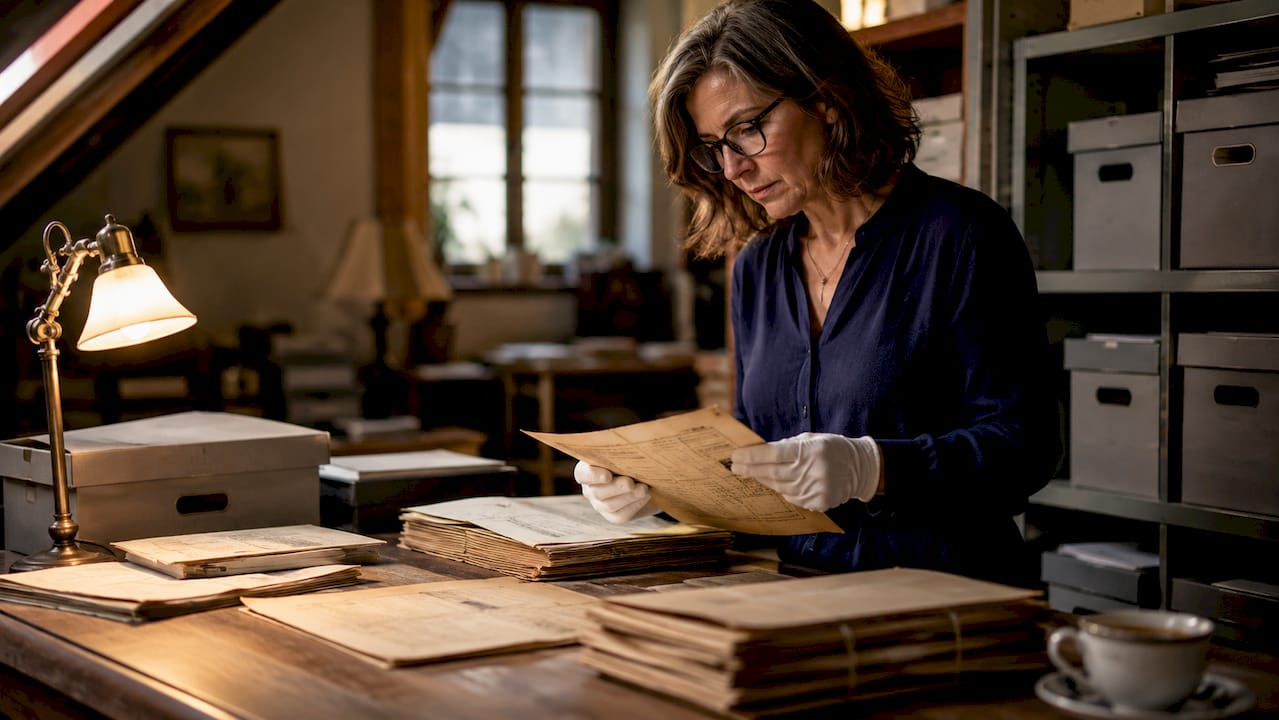
Archivists are defined as trained professionals who preserve, organize, and provide access to historical records. The role of archivists in cold case work is to serve as the institutional memory of an investigation, recovering and interpreting documents that primary witnesses can no longer provide. The DOJ’s Office of Special Investigations relied on professional archivists rather than law enforcement personnel for historical cases precisely because archival documentation outlasts human memory. Platforms like Crimesolverscentral, which catalog over 264,913 cases, depend on the same principle: preserved records are the foundation of any serious reinvestigation.
How do archivists assist in cold cases through preservation and access?
Archivists make decades-old evidence usable by applying three core disciplines: preservation, organization, and access control. Without these, physical records deteriorate and digital files become unsearchable. The importance of archives in cold cases becomes clear when investigators return to a file after 30 years and find it intact, indexed, and legally admissible.
Preservation techniques protect fragile materials from further decay. Archivists use acid-free storage, climate-controlled environments, and photographic duplication to stabilize deteriorating paper records, photographs, and audio tapes. A cold case file from the 1970s may include reel-to-reel recordings or carbon-copy reports that require specialized handling before any investigator can review them.
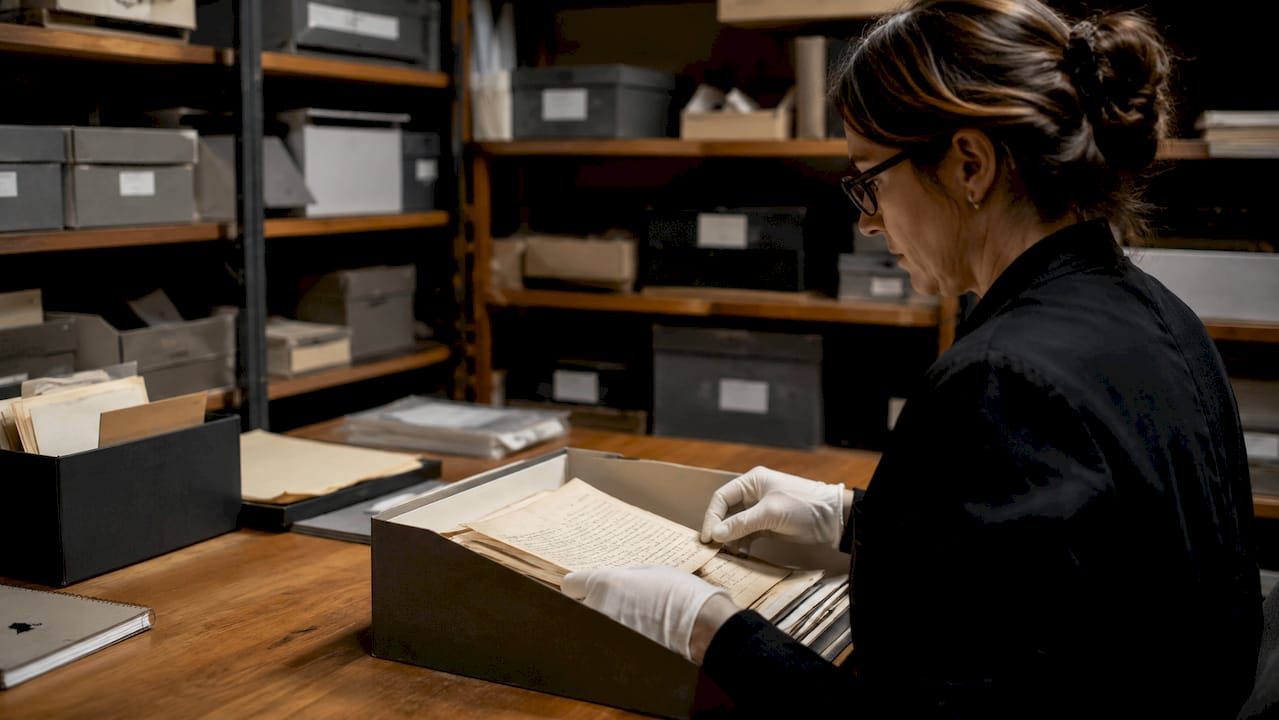
Organization is equally critical. Archivists apply cataloging standards that assign metadata to each document, making retrieval systematic rather than accidental. Systematic inventory and chain of custody maintenance by archivists ensure completeness and admissibility of evidence in cold case reviews. That admissibility standard matters enormously. Evidence that cannot prove an unbroken chain of custody is often excluded from court proceedings entirely.
Digitization extends access beyond a single physical location. Scanned records with embedded metadata allow investigators in different jurisdictions to search the same archive simultaneously. This is particularly valuable for cases involving multiple agencies or suspects who crossed state lines.
- Acid-free and climate-controlled storage for paper, film, and audio media
- Metadata tagging that enables keyword search across thousands of documents
- Digital imaging that creates backup copies without damaging originals
- Chain of custody logs that document every person who accessed a record
- Integration with law enforcement evidence management systems
Pro Tip: When requesting archival records for a cold case review, ask the archivist for the finding aid first. A finding aid is a structured index of the collection that saves hours of manual searching.
How does AI technology amplify archivists’ capacity in investigations?
AI-assisted archival review in 2026 enables investigators to process decades of manual records and make diverse archives searchable at scale. That shift changes the economics of cold case work. Tasks that once required weeks of manual review now take hours.
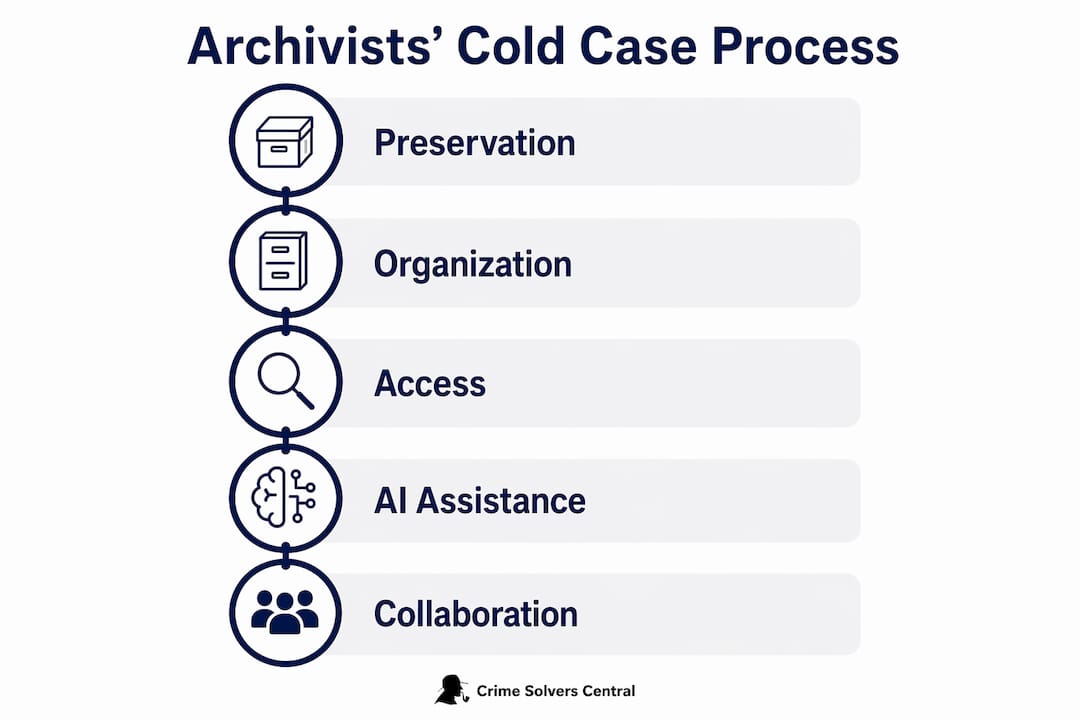
The specific capabilities matter here. AI tools perform speech separation in audio transcriptions, frame-by-frame indexing of surveillance footage, and multi-format entity extraction across PDFs, scanned images, and handwritten documents. An archivist working alone might spend three months reviewing uncatalogued videotapes. AI can index the same footage in days, flagging timestamps where names, locations, or faces appear.
The result is a single searchable corpus built from heterogeneous file types. An investigator can run a plain-language query across police reports, witness statements, newspaper clippings, and court transcripts simultaneously. That kind of cross-document search was impossible before digital archiving and AI indexing combined.
Human oversight remains non-negotiable. AI is a lead-generation tool and must not be treated as a verdict-generator in cold case investigations. Treating AI output as final evidence risks compromising investigation integrity. Archivists and investigators must verify every AI-generated lead against primary source documents before acting on it.
- AI transcribes audio and video records, including degraded or low-quality recordings
- Optical character recognition converts handwritten documents into searchable text
- Entity extraction identifies names, dates, and locations across thousands of files
- Cross-document indexing links related records that were never physically filed together
- Human archivists verify AI outputs and flag errors before leads reach investigators
The importance of human oversight in verifying AI-generated leads cannot be overstated. AI surfaces patterns. Archivists and investigators determine whether those patterns constitute evidence.
How do archivists collaborate with forensic experts to solve cold cases?
Modern cold case breakthroughs are driven by multidisciplinary teams combining archivists, forensic experts, and genetic genealogy specialists to re-evaluate degraded evidence. That collaborative model moves investigations from reactive to proactive. Archivists do not just store records. They actively contribute context that forensic scientists and investigators cannot generate on their own.
Forensic pathologists, for example, may re-examine physical evidence using updated DNA techniques. But they need the original case file to understand how that evidence was collected, stored, and handled. An archivist who has maintained the chain of custody documentation provides the legal and historical framework that makes new forensic findings admissible.
Genealogical archives represent one of the most powerful intersections of archival science and forensic investigation. Archivists contribute to forensic investigative genetic genealogy by building family trees from public ancestry records, aiding rapid resolution of cold cases. Expert-led genealogical research resolved cases in as little as 63 days. The Golden State Killer case demonstrated this at scale, with public genealogical databases providing the connective tissue between a DNA profile and a named suspect.
“Archivists are unsung heroes whose detailed archival work often makes the difference between cold cases staying unsolved or being reopened successfully. Their persistence beyond what digital tools can yet automate is what drives breakthroughs.”
The role of librarians in cold case research overlaps here. Reference librarians at public and university libraries often maintain newspaper archives, city directories, and local history collections that complement official case files. A librarian who locates a 1962 city directory can confirm a suspect’s address at the time of a crime, corroborating or contradicting witness statements in the official record.
Best practices in this collaborative model include:
- Establishing a shared evidence log accessible to archivists, forensic teams, and investigators
- Assigning a lead archivist to each cold case review to maintain continuity
- Documenting every new finding with its archival source before sharing it with the broader team
- Scheduling regular cross-disciplinary review meetings to align archival and forensic timelines
What challenges do archivists face in cold case work?
Archival research for unsolved crimes runs into predictable obstacles. Incomplete records, deteriorated physical evidence, and institutional resistance are the three most common barriers. Each requires a specific response rather than a general workaround.
Fragmented archives are the norm, not the exception, in cold cases. Files get separated across agencies, transferred without documentation, or partially destroyed. The DBS Standard methodology addresses this directly. It involves building narratives below the official file, prioritizing public records such as deeds, probate filings, and tax records over official investigative documents to identify gaps and potential corruption. This property-first lens detects institutional failures that the official file may conceal or omit.
Deteriorated evidence presents a physical challenge. Paper records from the 1950s through 1970s often used acidic paper that becomes brittle over decades. Magnetic tape recordings lose signal strength. Photographs fade or stick together. Archivists address these issues through professional conservation treatments before any digitization attempt.
| Challenge | Archival strategy |
|---|---|
| Fragmented or missing files | Build from public records using the DBS Standard approach |
| Deteriorated paper records | Apply conservation treatment before digitization |
| Compromised chain of custody | Reconstruct access logs from institutional records |
| Institutional resistance | Request records through formal FOIA or state equivalents |
| Premature conclusions from incomplete data | Document all gaps explicitly in the finding aid |
Transparency about record limitations is a professional obligation. An archivist who presents an incomplete file as comprehensive misleads the entire investigation. Every finding aid for a cold case archive should explicitly note what is missing, why it is missing, and what alternative sources were consulted.
Pro Tip: When a cold case file appears incomplete, cross-reference it against court dockets, coroner records, and local newspaper archives from the same period. These sources are often held separately and can fill critical gaps.
The role of digital archives in investigations grows more significant as agencies digitize legacy records. Digital archives reduce the risk of physical loss but introduce new challenges around file format obsolescence and access permissions that archivists must manage proactively.
Key Takeaways
Archivists are the operational backbone of cold case reinvestigation, providing the preserved records, organized evidence, and verified documentation that make new forensic findings legally and investigatively meaningful.
| Point | Details |
|---|---|
| Preservation is foundational | Archivists use acid-free storage and digitization to keep decades-old evidence usable and admissible. |
| AI expands capacity, not authority | AI indexes and transcribes records at scale, but archivists must verify every lead before investigators act on it. |
| Multidisciplinary teams solve cases | Archivists working alongside forensic experts and genealogists resolve cases that single-discipline teams cannot. |
| DBS Standard fills gaps | Building from public records below the official file exposes institutional failures in compromised cold case archives. |
| Transparency prevents errors | Archivists must document every missing record explicitly to prevent investigators from drawing conclusions from incomplete data. |
Archivists deserve a seat at the investigative table
I have spent years tracking how cold cases get reopened, and the pattern is consistent. The breakthrough rarely comes from a single forensic test. It comes from someone who spent weeks in a records room, cross-referencing a 1974 property deed against a witness statement that never made it into the official file.
Archivists in criminal investigations are treated as support staff in most agencies. That framing is wrong. An archivist who applies the DBS Standard to a compromised case file is doing investigative work. An archivist who builds a genealogical family tree from public ancestry records is generating leads that DNA alone cannot produce. The archival research for unsolved crimes that happens quietly in county courthouses and university libraries is what makes the forensic science meaningful when it finally arrives.
The integration of AI changes the scale but not the principle. AI can index 10,000 documents overnight. It cannot tell you which document matters or why a gap in the record is suspicious. That judgment belongs to a trained archivist who understands institutional behavior, records management history, and the specific context of the case. Agencies that treat AI as a replacement for archival expertise will generate more leads than they can verify and fewer convictions than they expect.
The most effective cold case units I have observed treat their archivist as a co-investigator from day one. That is the standard every unit should reach.
— Crime
Crimesolverscentral and archival cold case research
Crimesolverscentral maintains a national cold case database covering over 264,913 missing persons and unsolved homicide cases, organized by state and situation. For researchers, advocates, and investigators applying archival methods to unsolved crimes, this database provides a structured starting point that mirrors the cataloging principles archivists use in professional practice. Each case entry supports the kind of systematic cross-referencing that archival research for unsolved crimes demands. Community members can contribute through membership and fundraising, extending the reach of cold case investigations beyond what any single agency or archive can accomplish alone.
FAQ
What is the role of archivists in cold case work?
Archivists preserve, organize, and provide access to historical records that investigators use to reopen unsolved cases. Their work includes maintaining chain of custody documentation, digitizing fragile evidence, and cross-referencing public records to fill gaps in official files.
How do archivists assist in cold cases when witnesses are unavailable?
Archivists rely on documentary evidence rather than testimony, making their contribution more valuable as witnesses age or become unavailable. The DOJ’s Office of Special Investigations used archival documentation as the primary evidence base for historical cases precisely for this reason.
What is the DBS Standard in archival cold case research?
The DBS Standard is an investigative methodology that builds case narratives from public records such as deeds and probate filings rather than official investigative documents. It helps archivists identify gaps and potential corruption in compromised cold case files.
How does AI support archivists in criminal investigations?
AI transcribes audio and video, converts handwritten documents to searchable text, and indexes heterogeneous file types into a single searchable corpus. Human archivists must verify all AI-generated leads before investigators act on them to protect investigation integrity.
What role do genealogical archives play in cold case resolution?
Genealogical archives allow archivists to build family trees from public ancestry records, connecting DNA profiles to named suspects. Expert-led genealogical research has resolved cold cases in as little as 63 days, as demonstrated by high-profile investigations including the Golden State Killer case.