
Jan 27, 2026
Jan 27, 2026
Charles
White Whittlesey
141
37
Unknown inches
White
Male
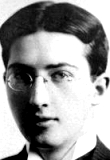
Charles White Whittlesey was a man defined by a reluctant heroism that ultimately cast a long shadow over his life. A lawyer by profession, with degrees from Williams College and Harvard Law School, he left his practice to serve in World War I, a decision that would forever alter his destiny. As a Major in the United States Army, he commanded a battalion of over 550 men in the Meuse-Argonne Offensive in October 1918. Following orders to advance, his unit and others pushed forward into the dense Argonne Forest, but the units on their flanks were held back, leaving Whittlesey's men surrounded by German forces. For five harrowing days, they were cut off from their supply lines, enduring constant enemy fire with no food and little water. Despite the desperate situation and a German request to surrender, Whittlesey refused, holding his position until relief finally arrived. For his extraordinary leadership during this ordeal, which became famously known as the saga of the "Lost Battalion," he was promoted to Lieutenant Colonel and awarded the prestigious Medal of Honor, returning to the United States as one of the great heroes of the war. The post-war years proved to be a different kind of battle for Whittlesey. Though he attempted to resume his quiet life as a lawyer in New York, the fame that followed him was relentless. He was in constant demand for parades, speeches, and ceremonies, celebrated for the very events he found too traumatic to discuss. Friends and family noted that he became moody and depressed, haunted by his wartime experiences. The weight of his heroism and the memories of the immense suffering and loss of life he had witnessed seemed to be a heavy burden. In November 1921, in a moment heavy with symbolism, he served as a pallbearer at the burial of the Unknown Soldier in Arlington National Cemetery, an event that deeply affected him. Just days later, he quietly settled his personal affairs, writing a will that left everything to his mother and arranging his finances. He then booked passage on the SS Toloa, a ship bound from New York to Havana, Cuba. On the evening of November 26, 1921, the first night of the voyage, the 37-year-old male was last seen. He dined with the ship's captain, where he was described as being in good spirits, even speaking about the war, something he usually avoided. At approximately 11:15 p.m., he excused himself from the smoking room, stating he was retiring for the evening. Charles White Whittlesey was never seen again. The next morning, he was reported missing. A search of his cabin revealed he had left behind several letters addressed to friends and family, along with a note for the captain providing instructions for the disposal of his luggage. Although no one witnessed him go overboard and his body was never recovered from the Atlantic Ocean, the evidence overwhelmingly pointed to a deliberate act. The case of Charles White Whittlesey is not viewed as one of foul play, but as the tragic final chapter for a man who survived the battlefield but could not escape the war that waged within his own mind, a casualty of the invisible wounds of conflict.
Nov 26, 1921
New York
New York
New York
None
08/29/2026
Unlock the full case narrative for Charles White Whittlesey, all available source links, additional videos, and member discussions.
Unlock Full Case Access — $3.97/monthView the complete collection of available reporting and reference links for this case.
View All Case Sources — $3.97/monthRead full forum posts and contribute to this case discussion.
Unlock forum access — $3.97/month