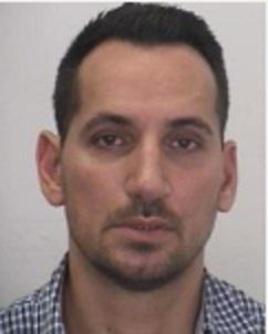
Summary based on the NamUs case record (can2014004557) and
1 other sourceOscar T. Casaseca was a 38-year-old man living in Toronto, Ontario, when he disappeared on January 23, 1992. The last known person to see him was his wife, who saw Oscar at approximately 8:30 that morning. At that point, nothing in the publicly available account indicates that an emergency was underway or that Oscar was about to vanish. His wife left for work, and when she later returned home, Oscar was no longer there.
He did not subsequently return, and the available missing-person records do not describe another confirmed sighting after that morning. What began as an apparently ordinary day therefore became the dividing point between Oscar's known life with his family and a disappearance that would remain unresolved for decades.
Investigators and missing-person organizations have preserved a physical description that could help distinguish Oscar from others. He was described as a white male with a medium build and fair complexion, standing approximately 5 feet 8 inches tall and weighing about 150 pounds. He had brown hair and brown eyes. The publicly accessible case material located for Oscar's disappearance is unusually limited beyond those identifying characteristics and the circumstances surrounding the morning he vanished. It does not provide a description of what he was wearing, identify a vehicle connected with his disappearance, name a destination he intended to visit, or describe any confirmed communication from him after he left the home. Likewise, the available account does not establish whether he departed voluntarily, intended to be away temporarily, or encountered some unexpected circumstance after his wife last saw him. Because those details have not been made public in the sources available online, there is no responsible basis for assigning a motive or theory to his disappearance.
Oscar's disappearance ultimately became part of several Canadian missing-person records. He has been listed in connection with the Royal Canadian Mounted Police under case number 2014004557 and with Ontario's Missing Adults under case number ON-MM-1992-01-02060. The Toronto Police Service Missing Persons Unit is identified as the investigating agency, with the case referenced as 1992-2206063.D32. His continued appearance in missing-person records many years after he vanished demonstrates how little publicly documented information has emerged to explain what happened after he disappeared from his Toronto home. There is no publicly reported confirmed destination, later contact, or verified sequence of movements that carries his story beyond that final morning with his wife.
The passage of time has made Oscar Casaseca's case especially difficult and poignant. His disappearance did not begin with a publicly documented dramatic incident, witnessed confrontation, or known journey into danger; instead, the available record describes a man who was present at home in the morning and simply was not there when his wife returned. For his family, that absence would have brought an uncertainty far different from having a clear explanation for what occurred. For investigators, the case is equally challenging because the publicly known timeline is exceptionally narrow: Oscar was seen by his wife in Toronto at approximately 8:30 a.m., she went to work, and by the time she came home he had disappeared. More than three decades later, the essential mystery remains unchanged. Oscar was 38 when he vanished, his last confirmed sighting occurred at his Toronto home on January 23, 1992, and the available records provide no confirmed account of where he went afterward. In overview, the case of Oscar T. Casaseca is a long-standing Toronto missing-person investigation centered on an ordinary morning, a brief gap in time, and a disappearance for which publicly available information still offers no definitive explanation.Last Seen: Jan 23, 1992