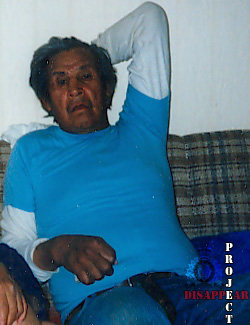
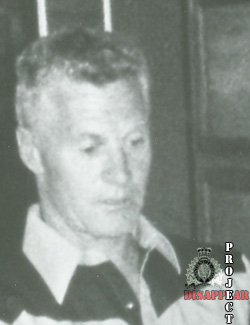
Roderick Carson Cook was a 26-year-old man who was last seen in The Pas, Manitoba, on December 7, 1986. The circumstances surrounding his disappearance quickly became tied to a disturbing incident along the river in the community. On that day, a man whose appearance was later believed to match Roderick’s was seen floating in the water. Witnesses saw the man go beneath the surface, but he was not seen coming back up.
At the time the incident occurred, authorities did not know who the man in the river was, and there was no immediate identification connecting him to a known missing person. The circumstances led to the belief that the unidentified man had likely drowned, but without the recovery of a body, there was no way to establish his identity with certainty. Roderick was known to have been in the vicinity of the river around the same period, a fact that would become increasingly important as his family began searching for answers about why he had seemingly vanished.
The connection between Roderick and the river incident emerged after his parents contacted authorities because they had not heard from or seen their son for some time. Once police learned that Roderick was missing, investigators compared what was known about him with the description of the unidentified man who had been observed in the river. The similarities were considered significant, particularly because Roderick was reportedly known to have been near the river around the time the incident occurred. These circumstances caused authorities to believe that the man seen in the water may have been Roderick. Even so, the theory could not be conclusively proven. The person seen in the river disappeared beneath the water before a positive identification could be made, and no body believed to be Roderick’s was recovered. What began as an unidentified possible drowning therefore became intertwined with a family’s realization that their 26-year-old son was also missing, leaving investigators with a compelling explanation but without the physical evidence that could definitively establish what happened.
At the time he disappeared, Roderick was described as approximately 5 feet 6 inches tall and weighing about 161 pounds, with a medium build and a dark complexion. He had brown eyes and long, black, curly hair. One particularly distinctive identifying characteristic was that his two upper front teeth were false, a detail that could have been important had remains ever been recovered for comparison. He was reported to have been wearing clothing appropriate for the cold Manitoba season: brown leather gloves, a brown leather jacket, brown boots, and blue denim pants. Those details became especially important because investigators had no recovered body, identification, or other conclusive physical evidence linking Roderick to the man seen in the river. Instead, the identification theory rested largely on the description of the man who had been observed, Roderick’s known appearance and clothing, his presence near the river, and the fact that he could no longer be located afterward.
Publicly available information about the investigation is limited, and there are few details concerning the extent of searches of the river or surrounding area after the incident. Available accounts indicate that authorities did not suspect foul play and instead considered drowning the likely explanation for what had been witnessed. However, the absence of recovered remains created an enduring uncertainty. No one was able to positively identify the man in the river as Roderick before he disappeared beneath the surface, and the presumed victim was never recovered afterward. That distinction is important: the circumstances strongly suggested a possible explanation for Roderick’s disappearance, but they did not provide definitive confirmation of his fate. The case therefore became one in which investigators had a probable sequence of events but lacked the final piece of evidence that could conclusively connect those events to Roderick. Public missing-person accounts have continued to preserve his name, description, and circumstances in the hope that additional information might someday clarify exactly what happened.
For Roderick’s family, the case carried a particularly painful kind of uncertainty. Their concern that they had not heard from him was what helped authorities make the possible connection between their missing son and the unidentified man seen in the river. Yet the connection never produced the certainty that recovering and identifying him could have provided. Decades later, the central facts remain stark: Roderick Carson Cook was 26 years old when he disappeared from The Pas on December 7, 1986; a man matching his description was seen in the river that day and disappeared beneath the water; Roderick had reportedly been near the river around that time; and his parents’ later report that he was missing led authorities to believe the two events were connected. No foul play has been publicly suspected, but the man seen in the river was never recovered and therefore could never be positively identified as Roderick. In overview, Roderick’s case is a long-standing disappearance in which the available evidence points toward a possible accidental drowning, while the absence of recovered remains has prevented the final confirmation that could fully explain what happened to him and provide unquestioned answers to those who have continued to remember him.Last Seen: Dec 7, 1986