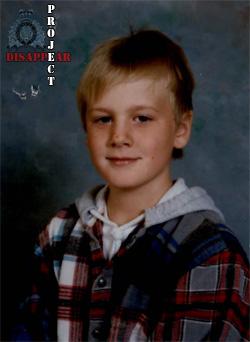
Summary based on the NamUs case record (can2014002147) and
1 other sourceBrian Dean Esmoil was a 23-year-old man from Iowa who was last known to be in the Hudson Bay region near Churchill, Manitoba, on September 12, 1981, during an ambitious wilderness canoe expedition with three companions. Esmoil was traveling with his younger brother, 20-year-old Bradley Walter Esmoil, 24-year-old Joseph Edmond Mason, and 20-year-old John Daniels, all from Independence, Iowa.
The four men were described in contemporary reporting as experienced outdoorsmen who had carefully planned a lengthy journey through the remote Canadian wilderness. Their adventure had been inspired in part by Sigurd F. Olson's book The Lonely Land, an account of a wilderness canoe journey through northern Canada. Brian and his companions set out from Leaf Rapids, Manitoba, on August 17, traveling through an isolated region hundreds of kilometers from Winnipeg and Churchill. Their planned expedition placed them far from populated communities, where changing weather, cold water, rough currents, and long distances between settlements could quickly transform an adventurous journey into an emergency.
For several weeks the four men continued their journey northward toward Churchill. Much of what investigators later understood about their final movements came from a logbook recovered from their canoe. According to the Royal Canadian Mounted Police, the entries indicated that the group most likely spent the night of September 12 in a trapper's cabin on the shore of Button Bay, near Churchill. There were no diary or logbook entries describing what happened afterward. Police believed the men left the Button Bay area and attempted to cross the water toward Churchill. Although the lights of Churchill could reportedly be seen from their location, an RCMP officer who had been to the area explained that the apparent closeness was deceptive. What could appear to be only a mile or two across the water was actually approximately 15 to 20 miles. The conditions were also far more dangerous than they might have appeared from shore. Investigators reported that the water was extremely rough, with swells reaching approximately five feet, while Hudson Bay's strong tides and rapidly changing conditions made the crossing especially hazardous. Those circumstances led police to believe the canoeists encountered serious trouble after leaving the relative shelter of Button Bay.
Concern grew when the men failed to arrive as expected. Brian and Bradley's mother, Darlene Esmoil, eventually contacted the RCMP in Churchill because her sons were overdue and were supposed to return for school. A search was launched across the enormous and difficult Hudson Bay environment. During the search, authorities recovered the bodies of three members of the group: Joseph Mason, Bradley Esmoil, and John Daniels. Brian, however, was not recovered. Contemporary reports described him as missing and said authorities presumed that he, like his companions, had drowned. Search operations were complicated by the same severe weather that investigators believed had contributed to the disaster, and by September 28 bad conditions forced authorities to temporarily suspend the effort to find Brian. His disappearance was particularly heartbreaking because his family knew how seriously the young men had taken the expedition. Darlene explained that the four had planned the trip carefully and regarded it as an adventure they felt compelled to undertake, rather than an impulsive outing by inexperienced travelers.
The physical evidence left behind provided investigators with a probable sequence of events but could not answer every question surrounding Brian's disappearance. The group's recovered canoe and logbook showed that the men had successfully traveled through the Canadian wilderness for weeks before reaching the Button Bay area. The absence of later entries suggested that whatever happened occurred after their stay at the trapper's cabin. Investigators believed the four canoeists attempted the long crossing toward Churchill under extremely poor conditions and were overwhelmed by the waters of Hudson Bay. The recovery of Brian's three companions supported that theory, yet the failure to recover Brian meant that his individual fate could not be established through the discovery of his remains. Decades later, he continued to be documented as a missing person from Manitoba; the Doe Network added Brian Dean Esmoil to its Manitoba missing-person records in 2024.
Brian Dean Esmoil's case is ultimately the story of a carefully planned wilderness expedition that ended in tragedy within sight of its destination. Four young outdoorsmen had traveled for weeks from Leaf Rapids toward Churchill, inspired by an enduring fascination with Canada's remote waterways and the adventures of earlier canoe travelers. Their last documented stop was a trapper's cabin along Button Bay, after which authorities believed they attempted a deceptively long and dangerous Hudson Bay crossing amid powerful tides and large swells. Three of the men were eventually recovered, while Brian remained missing and was presumed drowned. The logbook, canoe, weather conditions, and recovery of his companions allowed investigators to reconstruct what probably occurred, but they could never provide Brian's family with the same physical confirmation received by the other families. His disappearance therefore remains a poignant reminder of how quickly conditions on Hudson Bay can become unforgiving and of a 23-year-old adventurer whose final journey ended only a short distance from Churchill after weeks of determined travel through Canada's northern wilderness.Last Seen: Sep 12, 1981