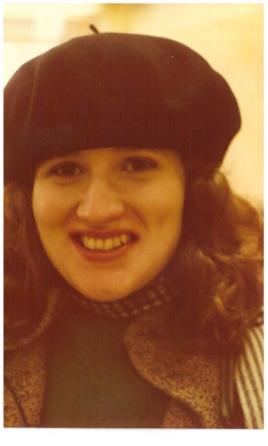
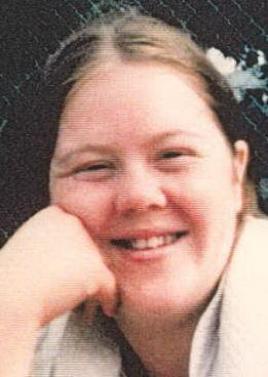
On the evening of December 8, 1973, 17-year-old Carmen Louise Robinson finished her shift as a dishwasher at the Ingraham Hotel in Victoria, British Columbia, and boarded a bus for home. A hardworking teenager looking forward to two days off, she was last seen at approximately 10 p.m. exiting the bus at the corner of West Burnside Road and Holland Avenue in View Royal. The stop was only two blocks from the house she shared with her mother and younger sister, a short walk she would tragically never complete. Carmen Robinson, a young woman described by those who knew her as happy and healthy with few enemies, vanished into the rainy night without a trace. Her disappearance, completely out of character for the responsible teen, sparked an investigation that has spanned decades.
The investigation into Carmen's disappearance was met with immediate and enduring challenges, primarily a stark lack of physical evidence and witnesses.
Investigators from the Royal Canadian Mounted Police (RCMP) explored every avenue, interviewing her family, friends, and acquaintances, all of whom painted a picture of a "pretty good girl" not involved in any risky behavior. Police scoured the rural area near the bus stop, searched for known sex offenders, and even conducted undercover surveillance, but no substantial leads emerged. Over the years, a few potential clues surfaced, only to lead to dead ends. One such instance involved a hypnotized witness who recalled seeing Carmen arguing with a man in a distinct burnt-orange car two days before she went missing; this lead, however, never panned out.
Decades have passed, yet the case of Carmen Robinson remains an open and baffling mystery for law enforcement and her community. In 1982, notorious serial killer Clifford Olson claimed to know the location of her remains, leading police on a fruitless search at Fort Rodd Hill. Authorities ultimately concluded that Olson, who was incarcerated at the time, was likely using the case for his own purposes and was not involved. Investigators also considered a possible connection to American serial killer Ted Bundy, but no evidence ever placed him in Canada around the time of Carmen's disappearance. The prevailing theory among investigators is that Carmen was the victim of a random, sexually motivated attack and was likely murdered on the night she vanished. Her case remains an active investigation, a haunting reminder of a young life cut short and a family left without answers.Last Seen: Dec 8, 1973