Crime Solvers Central
302 Cases Solved. Advancing justice for missing persons, unsolved homicides, unidentified and unclaimed remains.

Case Description

Any updates on this case? Let us know!
Summary based on 4 sources
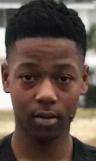
Zackary Aiken was remembered by those who knew him as a funny, loving, and talented young man. Friends recalled a caring person who had grown up in the Charleston, South Carolina, area, attending local schools like Ladson Elementary and Stall High School. His life, rooted in the neighborhoods and communities of the Lowcountry, came to a tragic end when he was just 22 years old on a winter night in 2016.

In the early morning hours of Thursday, February 4, 2016, Charleston Police Department officers were called to an apartment complex in the 1900 block of Hazelwood Drive in the West Ashley area. The call, which came in around 12:45 a.m., reported a shooting. When police arrived, they found Zackary, a young Black man, lying on the ground behind one of the apartment buildings with a gunshot wound. Paramedics rushed him to the Medical University of South Carolina for emergency treatment, but his injury was too severe, and he was pronounced dead at the hospital.

Detectives at the scene began to piece together the moments that led to the fatal shot. A police spokesman, Charles Francis, soon told reporters that the shooting was not a random act of violence but appeared to be a domestic-related incident. The initial investigation revealed that Zackary knew the people inside one of the apartments and, for reasons that were not made public, had been trying to get into their home through a bedroom window. It was during this attempt that one of the occupants inside the apartment fired a gun. The bullet struck Zackary, causing him to fall to the ground outside.

The investigation continued as Zackary’s family and friends mourned their loss. On online memorial pages, loved ones shared memories of a young man whose life was just beginning. They spoke of his humor and his caring nature, painting a picture of a person deeply missed, not just a name in a news report. The case was noted in national databases that track gun violence, another life lost in a year that would prove to be one of the deadliest in memory for the Charleston area.

Several days after the shooting, on February 8, 2016, Charleston police announced they were looking for a “person of interest” they believed had been present during the incident. They identified him as 23-year-old Joshua Grampus and released his description, asking for the public’s help in locating him for questioning. Officials were careful to state that Grampus did not have any active warrants related to the case, but they wanted to speak with him as part of their ongoing investigation.

For months, there were no public updates on the case, and no arrests were announced. The narrative seemed to have stalled, leaving an unresolved question hanging over the night’s events. However, by the end of the year, the outcome of the investigation became clear. In a December 2016 report summarizing the 77 homicides that had occurred in the tri-county area, law enforcement officials provided a final determination in Zackary Aiken’s death.

The investigation concluded that the shooting was a case of justifiable homicide. Police determined that the shooter, Joshua Grampus, had fired his weapon in self-defense while Zackary was attempting to break into the apartment. Based on this finding, prosecutors filed no criminal charges against Grampus. Of the dozens of homicides that year, Zackary's death was one of seven that were officially ruled justifiable by authorities. The case was closed, leaving his loved ones with the memory of a life that ended in a tragic confrontation.