Crime Solvers Central
302 Cases Solved. Advancing justice for missing persons, unsolved homicides, unidentified and unclaimed remains.

Case Description

Any updates on this case? Let us know!
Summary based on 3 sources
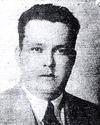
In the violent, freewheeling era of Prohibition, Federal Agent Irving B. Washburn was a man sworn to uphold a deeply divisive law. Born in Ossining, New York, the 34-year-old agent was a dedicated officer who had joined the Prohibition Unit on July 31, 1926. After a period of service in Buffalo, he transferred to Albany, where he was known for his steadfast commitment to his work. This dangerous duty in a city rife with bootlegging had already brought threats against his life. He was a married man, survived by his wife, Mary. His promising career and life would be tragically cut short in a sudden, brutal confrontation on a dark city street.

The early morning hours of Friday, July 13, 1928, found Agent Washburn, a White/Caucasian male, and his partner, Agent Wilfred Grissom, on patrol in Albany's South End. The neighborhood was a known hub for the illicit liquor trade, and the agents were on alert. Around 2:30 a.m., their suspicion was drawn to a Packard touring car parked on Madison Avenue. As they approached to investigate, a group of men stormed out of a nearby building at 73 Madison Avenue, the location of an unlicensed soft-drink parlor. The encounter exploded into violence. Agent Grissom was struck over the head with a revolver, and in the ensuing chaos, a gunfight broke out.

When Albany police officers, alerted by the sound of gunfire, arrived at the chaotic scene, they discovered Agent Washburn had been critically wounded. He was rushed to a local hospital, but his injuries were too severe. In the final hours of his life, with the Assistant District Attorney present at his bedside, a dying Irving Washburn made a last official act. He identified his killer, whispering the name "Bob Zullo." This dying declaration immediately focused the investigation on one man: Barbero "Bob" Zullo, the 45-year-old proprietor of the establishment at 73 Madison Avenue, which authorities believed was a front for illegal liquor sales.

In the immediate aftermath, Zullo was arrested and brought before Washburn in the hospital shortly before the agent passed away. Following Washburn's death, federal arrest warrants were issued for Barbero Zullo and three other men: Joseph Schepist, Angelo "Charlie" Gutta, and Barbero's own brother, Joseph Zullo. Though Washburn had identified Barbero, investigators soon developed the theory that it was actually Joseph Zullo who had fired the fatal shot from a .45 caliber handgun. Despite this, the case proceeded to trial against the man named by the dying agent.

The legal proceedings brought a stunning outcome. In April 1929, after a jury deliberated, Barbero Zullo and another man, Vincent Bonaventura, were acquitted of the murder charge. They ultimately served only a short time in jail for lesser alcohol-related violations. The man authorities came to believe was the true killer, however, was never brought to justice for the murder of Agent Washburn.

In the wake of the shooting, Joseph Zullo had vanished. While his brother Barbero faced the courts, Joseph became a fugitive from the law, widely believed to have fled to Canada. His status as a wanted man was confirmed in a June 1933 FBI law enforcement bulletin, which listed him as being sought by the Albany Police Department for murder. The bulletin provided his physical description, noting a distinctive amputated first joint on his left index finger.

The murder of a federal agent prompted a fierce response. Colleagues of Washburn launched a massive crackdown on the illicit liquor trade in Albany's South End, conducting numerous raids in an effort to dismantle the criminal networks that festered there. But despite these efforts and the initial arrests, the man suspected of firing the shot that killed Irving Washburn was never captured or tried for the crime. Joseph Zullo was never heard from again, and his ultimate fate remains unknown. As of the latest available information, the murder of Federal Agent Irving B. Washburn remains an unsolved case, a cold echo from the lawless days of Prohibition.