Crime Solvers Central
302 Cases Solved. Advancing justice for missing persons, unsolved homicides, unidentified and unclaimed remains.

Case Description

Any updates on this case? Let us know!
Summary based on 11 sources
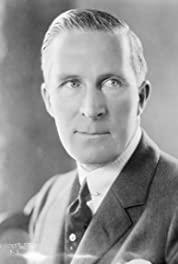
William Cunningham Deane-Tanner, known to the world of silent film as William Desmond Taylor, was a successful and charismatic Anglo-Irish-American director and actor. Born in County Carlow, Ireland, the 49-year-old White man had built a prominent career in Hollywood, directing dozens of films for major studios like Paramount Pictures and serving as the president of the Motion Picture Directors' Association. His work included adaptations of classics like "Tom Sawyer" and "Anne of Green Gables." But his polished life in California concealed a secret past; in 1908, he had abruptly vanished from New York, leaving behind a wife, Ethel May, and a young daughter, Ethel Daisy. He reinvented himself on the West Coast, his past unknown to most until his life came to a shocking and violent end, creating one of Hollywood's most enduring and scandalous mysteries.

On the morning of February 2, 1922, Taylor was found dead by his valet, Henry Peavey, inside his bungalow at the Alvarado Court Apartments in the affluent Westlake neighborhood of Los Angeles. He was lying on his living room floor. At first, a man at the scene who claimed to be a doctor pronounced that Taylor had died of a stomach hemorrhage. It was only when the body was moved that the truth was revealed: he had been shot once in the back with a .38 caliber pistol. The crime scene suggested the motive was not robbery; Taylor’s wallet, containing cash, and a diamond ring on his finger were untouched. Before police could properly secure the area, a crowd of studio executives and actors swarmed the bungalow, rummaging through Taylor's belongings and potentially destroying crucial evidence in their search for anything that might embarrass the studio or its stars.

The Los Angeles Police Department investigation was immediately caught in a media firestorm, fueled by the sensationalism surrounding early Hollywood scandals. The last person known to have seen Taylor alive was the famous comedic actress Mabel Normand, a close friend who had visited him on the evening of February 1. She left his home around 7:45 p.m., cheerful and carrying a book he had given her. After a grueling interrogation by police, she was cleared of any involvement, but the intense public scrutiny and suspicion severely damaged her career.

The list of potential suspects grew quickly and became a cast of characters from a Hollywood drama. Intense focus fell on Mary Miles Minter, a 19-year-old actress who was deeply infatuated with the much older director. Love letters from Minter discovered in the bungalow became fodder for sensational newspaper articles, though Taylor was believed not to have returned her affections. This led investigators to Minter's fiercely protective mother, Charlotte Shelby, who vehemently disapproved of her daughter's obsession with Taylor. Shelby owned a rare .38 caliber pistol, and there were reports she later threw a gun into a Louisiana bayou. Despite strong suspicion, and even a later public accusation from her other daughter that she was the killer, two separate district attorneys publicly declined to prosecute Shelby, concluding the evidence was insufficient for an indictment.

Other persons of interest included men from Taylor's own household and his hidden past. His former valet and cook, Edward Sands, had a criminal history and had been fired months earlier for stealing from Taylor and forging his checks. While Taylor was away on a trip, Sands had ransacked the bungalow, stealing clothes, jewelry, and his car. He then taunted Taylor by sending him pawn tickets for the stolen items under Taylor's birth name, William Deane-Tanner, a name few in Hollywood knew. Sands, whose real name was Edward Snyder, disappeared on the day of the murder and was never seen again, despite a large reward offered by Paramount. Even Taylor's long-lost brother, Denis Deane-Tanner, who had also abandoned his family years earlier, was briefly theorized to be connected to the crime, with some speculating he was, in fact, Edward Sands.

Over the decades, the case has remained officially unsolved, though theories and confessions have continued to emerge. In 1964, a former actress named Margaret Gibson, who had worked with Taylor, reportedly confessed to the murder on her deathbed. However, this claim has never been officially substantiated. Director King Vidor, who spent years privately investigating the case for a film project, concluded that Charlotte Shelby was the most likely culprit. The investigation was further hampered by the mysterious disappearance of the original police files and evidence from the district attorney's office years ago.

The murder of William Desmond Taylor sent shockwaves through Hollywood, contributing to a public outcry over industry morals and the implementation of "morality clauses" in studio contracts. His death remains a dark and fascinating chapter in film history, a symbol of the scandals that lurked beneath the glittering surface of the silent era. More than a century later, the case is still officially an open cold case with the Los Angeles Police Department, a classic whodunit with a cast of real-life characters whose secrets likely went with them to the grave. Taylor is interred in the Cathedral Mausoleum at Hollywood Forever Cemetery.