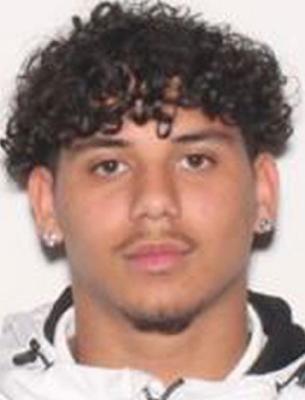
Ahmad Alonzo Davis, a 19-year-old from Apopka, Florida, was tragically found shot to death on December 30, 2019. His body was discovered along the West Orange Trail near Old Apopka Road. The Orange County Sheriff's Office responded to reports of a man down and found Davis suffering from a gunshot wound. He was pronounced dead at the scene. The initial investigation revealed that Davis' death was not a random act of violence but rather a targeted crime.
Authorities sought the public's help in gathering information about the case, offering a reward for any leads.
The investigation into Davis' death led to the arrest of three individuals. Tyquarius Smith, 19, was charged with first-degree murder in connection with the shooting. Smith was identified as the primary suspect, and his arrest was followed by the apprehension of two other individuals, KeyShawn Epps, 19, and Markese Mosely-McNeil, 21. Epps and Mosely-McNeil were charged with accessory after the fact of first-degree murder. The arrests were part of a broader effort by law enforcement to address a series of homicides in South Apopka, which included two other fatal shootings occurring shortly after Davis' death.
The legal proceedings against Tyquarius Smith culminated in a trial where he was found guilty of first-degree murder and aggravated battery with a firearm. The prosecution presented evidence, including surveillance footage and witness testimonies, to support their case. One of the key witnesses, who was also shot during the incident, testified against Smith. Despite the defense's attempts to discredit the witness's reliability, the jury found Smith guilty. He was sentenced to life in prison with a minimum of 25 years mandatory for the murder, along with an additional 15 years for the aggravated battery charge, to be served consecutively.
The case of Ahmad Alonzo Davis highlights the challenges faced by law enforcement in addressing targeted violence and the importance of community cooperation in solving such crimes. The efforts of the Orange County Sheriff's Office, including increased patrols and community engagement, were crucial in bringing the perpetrators to justice and providing some measure of closure to Davis' family and friends.