Crime Solvers Central
302 Cases Solved. Advancing justice for missing persons, unsolved homicides, unidentified and unclaimed remains.

Case Description

Any updates on this case? Let us know!
Summary based on 1 source
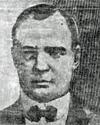
Matthew E. McGrath was a man who had dedicated his life to the Illinois Central Railroad, having worked for the company for fifteen years, since he was just a boy. By the age of 28, the White / Caucasian man had risen to the position of Special Detective, a role that placed him on the front lines of protecting the railroad’s property and passengers. He was married and the father of a son and a daughter, building a life beyond the railyards he patrolled. His work was dangerous, a reality underscored by the persistent thefts of brass and other valuable fixtures from the interiors of Pullman cars, which had become a significant problem in the Chicago yards during the summer of 1903.

In response to these ongoing thefts, the Illinois Central Railroad Police detailed an extra force to patrol the yards. On the night of Saturday, August 8, 1903, McGrath and his partner were assigned to this high-stakes duty. Their plan was to conduct a surveillance operation inside a train of empty Pullman cars being moved to the 'Y' at 72nd Street. Just before midnight, in the sprawling Illinois Central Yard near East 27th Street, the two detectives concealed themselves inside one of the cars. McGrath hid in a clothes closet while his partner slipped under a seat, both waiting in the darkness for the thieves to appear.

They did not have to wait long. A few minutes after they were in position, a door was forced open and three men climbed into the car. McGrath immediately emerged from the closet to confront them. As he stepped forward, one of the men raised a revolver and fired a single shot. The bullet struck McGrath just above the heart, and he was killed instantly. As McGrath fell, his partner came out from under the seat to help, but one of the intruders struck him on the head with a revolver. Despite his injury, the second detective fought fiercely with his attacker, struggling in the aisle near where his partner lay. Another thief then shot the wounded detective, the bullet hitting him over the heart.

Two other detectives in a nearby car heard the gunshots and rushed toward the sound. They hesitated to fire at first, unable to clearly see who was who in the dimly lit, struggling group. After the second detective was shot and fell, the backup officers charged into the car. Surprised by the new assault, the three thieves abandoned their fight and leaped through the car’s windows, shattering the glass as they fled down the yards toward Fourteenth Street. One of the detectives fired several shots after them as the entire railroad police force was alerted and converged on the scene. One of the fleeing men was wounded by the gunfire.

The investigation quickly led police to a suspect, a 19-year-old parolee from the Pontiac Reformatory named Joseph Koestner. When officers entered his home, he tried to escape, but the bullet wound in his leg prevented him from getting away. In custody, Koestner confessed to being part of the group that shot and killed Special Detective McGrath and wounded his partner. He also implicated two accomplices. However, the path to justice was not straightforward. After initially naming one of his fellow thieves, Koestner later retracted the statement when confronted with the individual at the police station, a move authorities believed was driven by fear of retaliation. Meanwhile, McGrath's wounded partner was taken to St. Luke's Hospital, where he eventually recovered from his serious injuries.

Matthew McGrath was remembered as a well-known and respected officer. His death was reported in newspapers beyond Chicago, with one Iowa paper noting he had made a number of friends during his visits to Waterloo, where he had been present for a visit from President Theodore Roosevelt. He was survived by his wife, Annie, his young son, and his daughter. His funeral was held on Tuesday, August 11, 1903, at St. Anne's Church, followed by a procession to Mount Olivet Cemetery where he was laid to rest.

The ultimate legal outcome for Joseph Koestner and the other two men responsible for the murder of Matthew McGrath is not detailed in available records. The case, which began with a violent confrontation in a dark Pullman car, faded from public view, leaving the final chapter of the pursuit of justice unwritten. As of today, the full resolution of the case remains unclear, a somber note in the history of the Illinois Central Railroad and the city of Chicago.

Links to Additional Sources (1)

See any mistakes? Let us know!