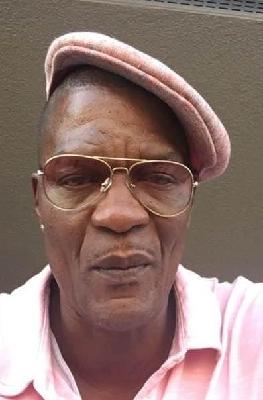
The life of Ali Mohamed Omar, a 25-year-old Black man, came to a violent and unresolved end in Minneapolis, Minnesota, on Tuesday, August 30, 2011. More than a decade later, his death remains a cold case, a painful entry in the city's register of unsolved homicides. For his family and community, the years have passed without answers, without justice, and without the closure that a resolution might bring. The public record contains no details about who Ali was—his work, his family, his passions—leaving only the stark facts of his identity and the enduring mystery of his death.
The circumstances of Ali's killing have never been shared publicly. The specific location, the time of day, and the method by which his life was taken are details known only to the investigators and to the person or people who committed the crime. The case was handled by the Minneapolis Police Department's homicide unit, which would have launched an immediate and intensive investigation. Detectives typically begin by securing the crime scene, searching for physical evidence like DNA or shell casings, and canvassing the area for anyone who might have seen or heard something that could lead to a suspect.
However, the path to solving a homicide is often fraught with challenges. In many urban environments, a "no-snitching" culture, born from fear of retaliation or a deep-seated mistrust of law enforcement, can create an impenetrable wall of silence. Without eyewitnesses willing to testify or surveillance footage capturing a clear image of a suspect, even the most dedicated investigators can find themselves with no viable leads to pursue. When the trail of evidence grows cold, a case is designated as unsolved, though it is never truly closed.
Ali's murder occurred during a difficult period of violence in Minneapolis. An analysis of crime data by MPR News the following year revealed the scope of the city's struggle with unsolved killings. Between 2007 and 2011, the Minneapolis Police Department investigated 179 homicide cases. Of those, about 65 percent were "closed," meaning a suspect was arrested and charged. This left 63 cases from that five-year span unsolved, representing dozens of families, like Ali's, left in a state of perpetual uncertainty. The data also highlighted a stark racial disparity: of those 63 unsolved homicides, 48 of the victims were African-American.
For the loved ones of a homicide victim, the silence that follows an unsolved case is a unique and agonizing form of grief. The initial shock and sorrow are compounded by the endless loop of unanswered questions: Who did this? Why? Will they ever be caught? Anniversaries pass, seasons change, but the absence of justice remains a constant, open wound. The hope for a breakthrough often rests on the slim chance that someone's conscience will compel them to come forward, or that advancements in forensic technology might one day reveal a new clue from old evidence.
The detectives in the Minneapolis Police Department's cold case unit periodically review unsolved files like Ali's. They re-examine evidence, look for new connections, and hope for the one tip that could change everything. It is a slow and painstaking process, but one that holds the potential to finally deliver answers to families who have waited for years, or even decades. These investigators understand that behind every case file is a human story cut short and a family still waiting for the phone to ring.
As of November 2026, the murder of Ali Mohamed Omar remains an open and unsolved investigation. No suspects have ever been publicly identified, no persons of interest have been named, and no arrests have been made. The person or people responsible for his death have evaded accountability for more than fifteen years. Ali is remembered by those who loved him, his life frozen in time at the age of 25, while the search for truth and justice continues.