Crime Solvers Central
302 Cases Solved. Advancing justice for missing persons, unsolved homicides, unidentified and unclaimed remains.

Case Description

Any updates on this case? Let us know!
Summary based on 8 sources
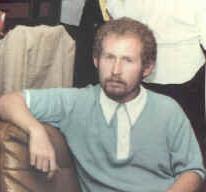
Brian Clendennen was a 21-year-old man with a talent for art and a commitment to his church, where he would sometimes preach. One of his oil paintings hangs in the Everman City Hall in Texas, a lasting testament to a life of promise. His family remembered him as an artist and writer who was just beginning to fulfill his dreams when his life was cut short.

In the late hours of February 3, 1985, Brian was working at a Circle K convenience store in Fort Worth, Texas. A former employee of the store, James Allridge III, arrived after the store had closed. Brian recognized Allridge and unlocked the door for him after Allridge asked for change to use a payphone. Allridge pretended to make a call, left, and then returned moments later. His older brother, Ronald Allridge, who had dropped him off and was waiting nearby, had accused him of getting "cold feet." When Brian unlocked the door for him a second time, James produced a .25-caliber pistol and forced his way inside. He took Brian into a storeroom, tied his hands behind his back with an electrical cord, and began emptying the cash register and safe. Hearing a noise from the back room, James returned to the storeroom, forced Brian to his knees, and shot him twice in the back of the head.

James and Ronald Allridge were in the midst of a violent crime spree across the Fort Worth area, often accompanied by two other brothers, Clarence and Milton Jarmon. After shooting Brian, James started to go back to ensure he was dead but saw a car in the parking lot and fled. The car belonged to Brian’s mother, Doris Clendennen, who had arrived to pick him up from work. She entered the unlocked store, saw loose change scattered on the floor, and immediately drove to a nearby restaurant to call the police. Officers found Brian in the storeroom, still alive but gravely wounded. He was rushed to a hospital, where he died from his injuries the next day, February 4, 1985.

The investigation into Brian’s murder and the string of other violent robberies led police to the Allridge brothers. James Allridge III was arrested and charged with capital murder. At his 1987 trial, prosecutors presented evidence of his participation in seven armed robberies and argued that he had killed Brian, whom he knew from a training program, to eliminate a witness. James, who had no prior criminal record, was found guilty. The jury answered "yes" to two questions: whether the crime was deliberate and whether he posed a future danger to society. Based on these answers, he was sentenced to death. After the verdict, James turned to Brian's family and apologized. In 1993, he also pleaded guilty to four counts of aggravated robbery, receiving a life sentence for those crimes.

His brother, Ronald Allridge, was convicted and sentenced to death for the murder of 19-year-old Carla McMillen Otto during the robbery of a Whataburger restaurant on March 25, 1985, about a month after Brian's murder. Ronald had a prior conviction for killing a classmate when he was 15. He was executed by lethal injection on June 8, 1995.

Over the 17 years he spent on death row, James Allridge became an accomplished artist, selling his paintings online and gaining international attention. His case drew support from a wide range of people, including four of the original jurors from his trial, former prison guards, and death penalty opponents like Sister Helen Prejean and actress Susan Sarandon. They argued that he had been rehabilitated and was no longer a threat, petitioning the Texas Board of Pardons and Paroles and Governor Rick Perry for clemency. His supporters contended that jurors had not been allowed to fully consider mitigating factors, such as the negative influence of his older brother.

The attention given to James's art and his campaign for clemency was deeply painful for Brian Clendennen's family. They felt it overshadowed the loss of their son, who was also a talented artist. "Any person in his right mind should be ashamed of himself for standing up for a murderer," Brian’s brother, Shane, said. "It’s appalling. It makes me sick." His sister, Donna Ryals, reflecting on the execution, said, "He died with his hands tied behind him back in a stockroom of a convenience store... I wouldn’t forgive him for nothing. He got what he deserved."

Despite the appeals, clemency was denied. On August 26, 2004, James Allridge III was executed by lethal injection. In his final statement, he addressed Brian's family. "Shane, I hope you find peace," he said. "I’m sorry I destroyed y’all’s life. I really am." Brian's mother, Doris, who witnessed the execution, wanted to ask him if he was "truly born again" but was not permitted to speak. The case is considered closed.