Crime Solvers Central
302 Cases Solved. Advancing justice for missing persons, unsolved homicides, unidentified and unclaimed remains.

Case Description

Any updates on this case? Let us know!
Summary based on 6 sources
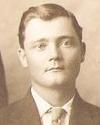
Quirl Bailey Carnes was a 26-year-old Texas Ranger whose life was cut short in the line of duty on July 31, 1910. A member of a law enforcement family—his brother, Herff, was also a Ranger who later became a U.S. Customs Inspector—Quirl had served with the Rangers for just over a year and a half. He was known for his dedication and courage in a volatile era of Texas history, a time when tensions often flared along the U.S.-Mexico border.

The tragic end to Carnes's service began with a manhunt for Jacinto Trevino, a man wanted for murder in Cameron County. Authorities received a tip from Trevino's own cousin, Pablo Trevino, who claimed that Jacinto was prepared to surrender. Pablo promised to lead a posse of lawmen to a discreet location near San Benito, close to the Rio Grande, where the fugitive would give himself up. Trusting the information, a posse was formed, consisting of Ranger Carnes, Cameron County Special Deputy Henry B. Lawrence, and Constable Earl West.

Just after midnight, the lawmen positioned themselves at the designated spot, a deserted area thick with brush. Soon, they heard the approach of several men. When one of the officers ordered the group to halt, their call was answered not with surrender, but with a sudden and brutal fusillade of gunfire. It was an ambush. As they rose from their crouched positions, both Carnes and Deputy Lawrence were struck. Lawrence was killed instantly, hit in the head by seven buckshots.

Ranger Carnes was grievously wounded, suffering multiple rifle wounds, including a fatal shot that entered the back of his head and exited through his right eye. Despite the severity of his injuries, he clung to life for several hours. He was transported for medical care but succumbed to his wounds at 9:00 a.m. that morning. Constable West was also wounded in the exchange but survived. The man who had led them into the trap, Pablo Trevino, was found dead at the scene the next day, killed in the crossfire.

The target of the manhunt, Jacinto Trevino, vanished into the night. He successfully escaped across the border into Mexico, launching one of the region's most notable fugitive cases. The Texas Rangers and other law enforcement agencies pursued him for years, but he was never captured or brought to trial for the murders of Ranger Carnes and Deputy Lawrence. The ambush was seen as a profound betrayal, and the failure to apprehend Trevino was a source of deep frustration for authorities.

In the years that followed, the story of Jacinto Trevino grew into a local legend, immortalized in a well-known border "corrido," or ballad, that painted him as a folk hero who had outsmarted the "rinches," a colloquial term for the Texas Rangers. While he remained a wanted man in the eyes of the law, historical accounts and the narrative of his legend suggest that after several years as a fugitive in Mexico, Trevino eventually returned to Texas. According to these accounts, he evaded justice for the rest of his days and ultimately died of old age. The case remains officially unsolved, as Trevino was never held accountable in a court of law. Quirl Bailey Carnes was buried in Floresville, in Wilson County, and his name is honored on the Texas Peace Officer's Memorial in Austin, a lasting tribute to his ultimate sacrifice.