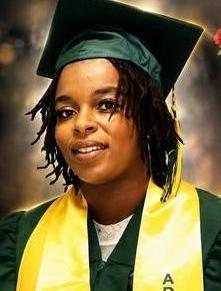
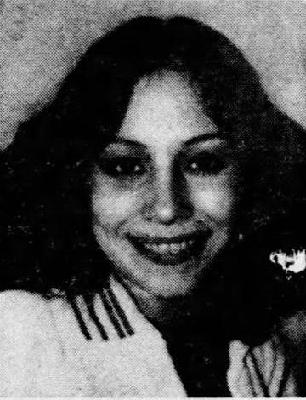
On a summer day in Brooklyn, New York, the life of Gloria Green was cut short. The 39-year-old Black woman died on June 29, 1999, but the specific circumstances of her death have left a faint trail in the public record. In a city of millions, her story has become one of the many that risk being lost to time, a name and a date in a file, leaving behind unanswered questions and a family’s unresolved grief. Without an obituary or public remembrances, details about Gloria’s life—her work, her family, her passions—are not widely known, leaving a silhouette of a person where a vibrant portrait should be.
What is known is that her death was a homicide, an act of violence that placed her among the city's statistics for that year. The investigation into her killing was handled by the New York City Police Department, but public information about the case is scarce. There were no prominent news reports detailing the crime scene, no descriptions of potential suspects, and no public appeals for information that have been preserved in accessible archives. Her case faded from public view, becoming a cold case filed away as the city moved on to the next day’s headlines.
Just weeks after Gloria’s death, a shadow fell over the nearby Brooklyn neighborhoods of Williamsburg and Bedford-Stuyvesant. A series of brutal murders began, creating fear in the community and launching a massive investigation by the Brooklyn North Homicide Task Force. The victims were women, often living on the margins, who were found strangled. The killer was dubbed the "Brooklyn Strangler," and for nearly a year, he eluded capture.
In August 2000, police finally made an arrest. Vincent Johnson, a homeless man and crack addict, was taken into custody after a detective cleverly collected his DNA from saliva he spat on the street. The DNA was a match to evidence found on four of the victims. Johnson ultimately confessed to killing five women between August 1999 and June 2000: Vivian Caraballo, Joanne Feliciano, Rhonda Tucker, Laura Nusser, and Patricia Sullivan. He pleaded guilty to avoid the death penalty and was sentenced to life in prison without the possibility of parole.
While the timeline and location might suggest a connection, Gloria Green has never been officially named as one of Vincent Johnson’s victims. Her death in late June 1999 occurred two months before the first murder in Johnson's confessed spree. The public narrative of the Brooklyn Strangler case, constructed from police statements and court records, begins with the murder of Vivian Caraballo on August 26, 1999. Gloria’s case remains separate, an unsolved homicide that occurred just before a serial killer began his reign of terror in the same borough.
For those left to mourn Gloria Green, the resolution of the Brooklyn Strangler case brought no closure. Her killer has never been identified, and her story was not part of the narrative that captured the city’s attention. The investigation into her death remains open, one of thousands of cold cases in the NYPD’s files. More than two decades have passed, and the trail has grown cold, but the hope for justice, however distant, remains. Her case is a stark reminder that behind every statistic is a human life, and for every solved case that brings a measure of peace, there are others that leave only a painful, lingering silence. As of today, the homicide of Gloria Green remains unsolved.