Crime Solvers Central
302 Cases Solved. Advancing justice for missing persons, unsolved homicides, unidentified and unclaimed remains.

Case Description

Any updates on this case? Let us know!
Summary based on 3 sources
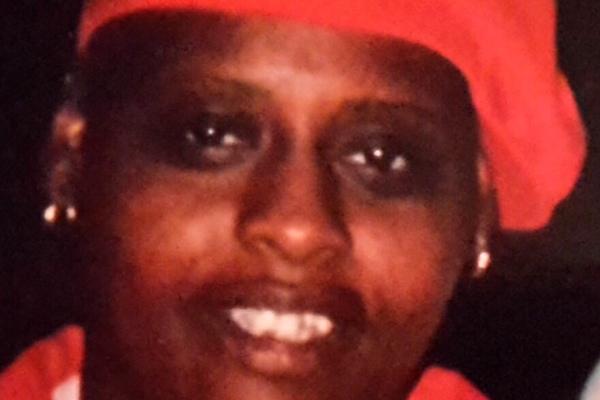
Cheryl Lee Ray, a 37-year-old Black woman remembered for her gentle nature, lived a life marked by early hardship but also by kindness. Born in Queens, New York, to a mother who was only 12 at the time, Cheryl was raised on welfare and her mother’s salary as a cook. Her mother, Almelissia Nash, recalled that despite their poverty, Cheryl was a pampered child who "had everything a poor black child could want." She struggled academically, reading and writing poorly, and dropped out of school in the 10th grade. By 17, she left home for good, eventually making her way to Miami. There, her life took a difficult turn as she battled an addiction to crack cocaine and accumulated a record of 39 arrests, mostly for begging. Despite her struggles, those who knew her saw a different side. A motel owner, Stuart Marmor, where she lived for a time, remembered her warmly as a "people-pleaser" who would share her last cigarette or her only meal.

On the morning of January 25, 1996, Cheryl’s life was brutally ended. Her body was discovered at sunrise inside Miami’s oldest cemetery, a historic site off Biscayne Gardens. The scene was horrific: she had been severely beaten on her head and face, was found naked from the waist down, and the upper part of her body had been set on fire. A witness later told police they had seen Cheryl sitting with a man on a bus-stop bench outside the cemetery between 1 and 2 a.m. that morning. Her death was the third in a series of terrifyingly similar killings that had been plaguing Miami’s inner-city neighborhoods, targeting vulnerable women.

The discovery of Cheryl’s body confirmed investigators' fears that a serial killer was at work, prompting the Miami police to form a dedicated task force of 24 officers, joined by profilers from the FBI and the Florida Department of Law Enforcement. The investigation was intensive, with detectives working around the clock. Initially, their focus was on a homeless man with dreadlocks known on the street as "Dread," based on the witness sighting near the cemetery. Police released a composite sketch and distributed fliers in homeless encampments, hoping to find the man they believed was either a suspect or a key witness. The killer, dubbed the "pyro killer" by some, had struck twice before Cheryl's murder and would kill once more, leaving a trail of fear.

The break in the case came nearly five months later, in early June 1996. A homeless woman approached the task force after recognizing a man who had assaulted her nine months prior. She had escaped him then and, upon seeing him again, immediately alerted authorities. Her description led investigators to Francisco del Junco, a 38-year-old dishwasher at a sports bar in Coconut Grove. Detectives brought him in for questioning on a Friday but released him pending crime lab results. Those tests came back with a match: the sole pattern of del Junco's combat boots was identical to prints found at one of the crime scenes.

On the following Monday, police arrested Francisco del Junco. During interrogation, he confessed to killing four women between August 1995 and March 1996. The victims were identified as Vida Hicks, 43; Diane Helms, 44; Janice Cox, 37; and Cheryl Lee Ray. Del Junco, a Cuban immigrant who arrived during the 1980 Mariel boatlift, told police that "voices told him to do it." He was not the man known as "Dread," and police noted he bore no resemblance to the initial sketch. Investigators said he was methodical and cunning, and that on the night he was finally caught, he was carrying gasoline and matches, seemingly on his way to find another victim.

Francisco del Junco was charged with four counts of murder. His confession brought an end to a 10-month reign of terror that had gripped Miami's most vulnerable communities. The case against him was built on his detailed confession, the crucial boot-print evidence, and the testimony of the brave woman who had escaped him and led police to his door. Though little information is publicly available about the specific legal proceedings that followed his 1996 arrest and confession, the case is considered closed through litigation. The series of brutal slayings he committed left multiple families, including Cheryl Lee Ray's, to grapple with the senseless loss of a loved one who, despite her struggles, was remembered for her gentle heart.