Crime Solvers Central
302 Cases Solved. Advancing justice for missing persons, unsolved homicides, unidentified and unclaimed remains.

Case Description

Any updates on this case? Let us know!
Summary based on 1 source
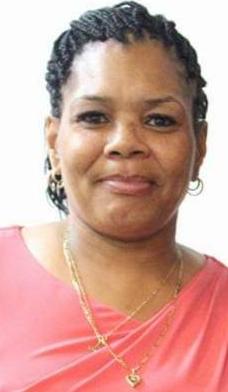
Jeanette Woods was a 24-year-old Black woman living in Detroit, Michigan, during a time of fear in the spring of 1980 as a series of brutal killings unfolded across the city. Jeanette had a history that included convictions for prostitution and had been hospitalized for injuries from beatings twice in the year before her death. Her life was tragically cut short in a crime that remains a complex and officially unsolved case, tangled in the confessions of two different men.

On the evening of Friday, April 18, 1980, around 9 p.m., Jeanette left her mother’s house on Hill Street. She told her mother she was going to meet her boyfriend. She was never seen alive by her family again. The following morning, a passerby made a grim discovery on a sidewalk on Melrose Street, near the I-375 freeway. It was the body of Jeanette Woods. The violence inflicted upon her was extreme; she had been sexually assaulted, severely beaten, strangled, and her throat had been slashed.

The investigation into Jeanette’s murder soon became part of a larger inquiry into the deaths of at least 18 young women, many of them prostitutes, in Detroit between January and December of that year. Police theorized that at least two serial killers were operating in the area. The case took a significant turn in November 1980 with the arrest of David J. Payton, a 23-year-old girls' basketball coach from Highland Park. After a marathon interrogation lasting 56 hours, during which he was allegedly denied access to his lawyer, Payton confessed to the murders of Jeanette Woods and three other women. His family and friends were adamant that police had the wrong man.

The situation grew more convoluted when another man, Donald Murphy, a 36-year-old ex-convict and unemployed construction worker, was arrested on December 13, 1980, after violently attacking and sexually assaulting a 24-year-old woman who survived and identified him. In custody, Murphy, who had a record of sex offenses and bank robbery, began to talk. He confessed to killing at least ten prostitutes in the city, including Jeanette Woods. He provided details about the crimes, claiming he was often heavily intoxicated and would only realize what he had done after seeing reports in the news.

With two men confessing to the same murder, authorities were faced with a dilemma. Investigators found physical evidence that linked Murphy to some of the crime scenes. Hair samples found on a pickaxe handle in his car matched another victim, Betty Jean Rembert, to whose murder both men had also confessed. David Payton later recanted his confession, stating it had been coerced by investigators under intense pressure. In March 1981, prosecutors dismissed all murder charges against Payton. He would later file a $15 million lawsuit against the police departments and the prosecutor's office for slander.

Despite Donald Murphy's detailed confession to killing Jeanette Woods and several other women, the evidence was considered insufficient to bring charges in most of the cases. He ultimately entered a plea bargain, formally confessing to the murders of two other women, 23-year-old Cynthia Angela Warren and 23-year-old Cecilia Marie Knott. He was convicted for those two killings and sentenced to two concurrent prison terms of 15 to 30 years.

Donald Murphy was never charged with the murder of Jeanette Woods. Due to the lack of a conviction, her case, along with those of several other women Murphy and Payton had confessed to killing, remains officially unsolved. The tangled investigation, with its coerced and conflicting confessions, left a legacy of uncertainty and denied justice for Jeanette and her family, her death remaining one of the many unsolved homicides from that violent year in Detroit's history.

Links to Additional Sources (1)

See any mistakes? Let us know!