Crime Solvers Central
302 Cases Solved. Advancing justice for missing persons, unsolved homicides, unidentified and unclaimed remains.

Case Description

Any updates on this case? Let us know!
Summary based on 1 source
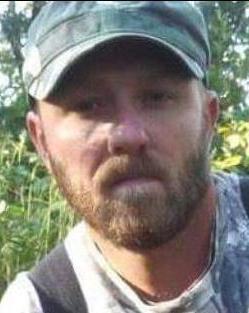
Charles Leroy Enders, a 43-year-old resident of Baxter Springs, Kansas, was born in Cardin, Oklahoma, on May 31, 1934. His life was tragically cut short in a case that has remained a mystery for decades, leaving a quiet but persistent question mark in the history of Cherokee County. While official records note his date of death as April 20, 1978, the full and grim reality of his fate would not come to light for more than a year, revealing a homicide that remains unsolved. The specific details of his life in the small Kansas town, his work, and his family ties are not widely known, but his violent death left an indelible mark on the community.

The circumstances surrounding the end of Charles's life began as a disappearance. What happened on that spring day in 1978 is unclear, as is when exactly his loved ones or authorities realized he was missing. The silence surrounding his absence was shattered in May of 1979 when his body was discovered. The location of the discovery spoke to the unique and sometimes hazardous landscape of the region: Charles’s remains were found inside an abandoned mine shaft near Baxter Springs. This area of southeast Kansas, part of the historic Tri-State Mining District, is riddled with the remnants of a once-booming lead and zinc industry, its landscape dotted with thousands of old mines, open shafts, and tailings piles, a legacy that in this case became the setting for a dark secret.

The discovery of a body in the mine shaft immediately launched a homicide investigation, handled by the Cherokee County Sheriff's Office. The condition of the remains and the location pointed unequivocally to foul play. For investigators, the challenge was immense, piecing together a timeline that had grown cold for over a year and seeking evidence in a case where the initial crime scene was unknown. The investigation was an arduous process of trying to reconstruct Charles's final days and identify anyone who might have wished him harm.

Over time, the investigation did produce a person of interest. According to a 1996 report in The Oklahoman, which quoted Cherokee County Sheriff's Sergeant Chuck Sharp, a man named Myers was considered a suspect in the death of Charles Enders. Myers was also a suspect in the deaths of two women whose remains were found in a nearby mining area in April 1978 and was later implicated in other violent crimes in Oklahoma. Despite the official suspicion, however, Myers was never formally charged in connection with the death of Charles Enders. The reasons for this have never been publicly detailed, leaving the question of his potential involvement unanswered and the case without a definitive resolution.

Decades have passed since Charles Enders was laid to rest, but his case has not been forgotten. It remains one of the lingering unsolved homicides in Cherokee County, a testament to the pain and uncertainty that families and communities endure when justice is not served. The passage of time has obscured many details, and the primary suspect identified by law enforcement is no longer a path to resolution. The case stands as it has for over forty years, a chilling story of a man who disappeared, only to be found more than a year later in the dark depths of a mine shaft.

As of the latest available information, the homicide of Charles Leroy Enders remains officially unsolved. There have been no arrests and no convictions in his death. The investigation is considered a cold case, waiting for a new lead, a new witness, or a new piece of evidence to emerge from the past. The questions of who was responsible for his death and why he was left in such a desolate, hidden place persist, echoing from the abandoned mines that characterize the landscape of southeast Kansas.

Links to Additional Sources (1)

See any mistakes? Let us know!