Crime Solvers Central
307 Cases Solved. Advancing justice for missing persons, unsolved homicides, unidentified and unclaimed remains.

Case Description

Any updates on this case? Let us know!
Summary based on 11 sources
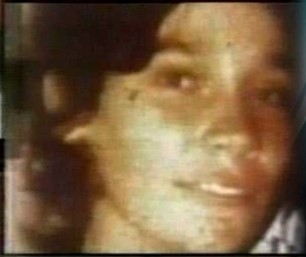
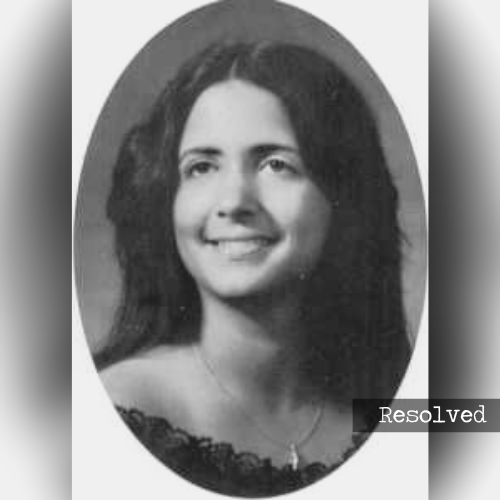
In the spring of 1986, Louise Medeiros, a 25-year-old woman of Pacific Islander descent, was looking forward to a new chapter in her life. Three months pregnant, she had recently reconnected with her family on Kauai after years of living a sometimes troubled and transient life on Oahu. Her family recalled that during her visit, for a reading of her late mother's will, Louise seemed centered, motivated, and happy. Her eldest sister, Brenda Durant, remembered their last visit, saying, "She was finally happy. She had found peace within herself. We were lying in my bedroom. She'd laugh and laugh." This sense of newfound peace made her subsequent fate all the more tragic.

On the evening of March 26, 1986, Louise boarded a late-night flight from Kauai back to Oahu. After landing at Honolulu International Airport, she told her family she would take a bus to her boyfriend's home in Waipahu. She was last seen leaving the airplane, but she never arrived at her destination. For a week, her whereabouts were a mystery, until April 2, when road workers made a grim discovery. Under a freeway overpass near Waikele Stream, they found her decomposing body. She had been sexually assaulted and strangled, with her hands bound behind her back. Her blouse was still on, but she was unclothed from the waist down.

Louise’s murder was the fourth in a series of terrifyingly similar killings that gripped Honolulu between 1985 and 1986. The unknown perpetrator, dubbed the "Honolulu Strangler," was believed to be responsible for the deaths of five women. The victims were often last seen at bus stops or traveling alone, and their bodies were discovered in remote locations, bound, sexually assaulted, and strangled. The pattern of violence plunged the normally peaceful island into a state of fear and prompted the Honolulu Police Department (HPD) to form a 27-person task force, with assistance from the FBI, to hunt Hawaii's first known serial killer.

The investigation was complex. In the mid-1980s, Oahu was a bustling hub for tourists, migrant workers, and a large military population, creating a vast pool of potential suspects. Police set up sting operations with undercover female officers at the airport and Keehi Lagoon, where other victims' bodies had been found, but the killer remained elusive. The terror continued until the fifth and final victim, Linda Pesce, was found in early May 1986.

A primary suspect, Howard Gay, an air cargo worker, emerged after he approached police with a bizarre story. He claimed a psychic had told him the location of Pesce's body and led them to Sand Island. While his initial tip was inaccurate, police eventually found Pesce's remains nearby. Gay was arrested on May 9, 1986. The circumstantial evidence against him was compelling: he had access to the type of materials used to bind the victims, his ex-wife and girlfriend described his interest in bondage, and his girlfriend noted that he would often leave their home after arguments on the same nights the murders occurred. A witness also picked Gay out of a photo lineup as the man seen with Pesce on the night she disappeared.

Despite the strong suspicions, a failed polygraph test, and the mountain of circumstantial links, prosecutors lacked the direct evidence needed to file charges. Gay was released after extensive questioning. The witness who identified him was afraid to testify, believing he had seen her as well. With no new leads, the case went cold, leaving a permanent scar on the community and forever changing public safety perceptions and measures, including the installation of two-way radios on city buses.

The Honolulu Strangler was never officially caught, and no one was ever convicted for the murders of Louise Medeiros and the four other women. Howard Gay, the man police firmly believed was the killer, moved to California and died in 2003 at the age of 60, taking any secrets he may have had to his grave. As of his death, the murder of Louise Medeiros, a young woman on the verge of a new beginning, is considered closed, with the primary suspect identified but deceased. The case remains one of Hawaii’s most haunting and unresolved serial murder investigations.