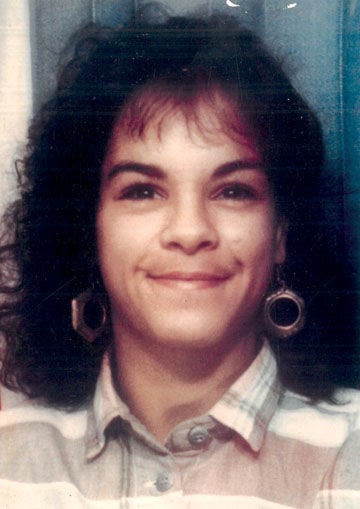
On the night of July 7, 1978, a 21-year-old woman named Ruth Ann Jany was abducted from a First National Bank automated teller machine in downtown Belleville, Illinois. At approximately 11:30 p.m., in a moment of vulnerability, her life took a tragic turn. Following her disappearance, a series of both successful and unsuccessful attempts were made to withdraw money from her checking account using her ATM card.
A total of $330 was successfully withdrawn, indicating a motive beyond the abduction itself. The search for Ruth Ann ended in a rural area south of Belleville, where her body was discovered. She was found fully dressed, not buried, about 20 feet from a farmer's road, with a halter top knotted around her neck.
The investigation into the young woman's death led authorities to a man named Gregory Bowman. Evidence connected Bowman to the crime, including the fact that he also had an account and an ATM card with the First National Bank of Belleville. It was also reported that around the time of Ruth Ann's disappearance, Bowman was observed spending an uncharacteristically large amount of cash. His admissions regarding the murder and the location of her body, made before she was found, were corroborated by the evidence. Subsequently, on September 7, 1979, a grand jury indicted Bowman for the murders of both Ruth Ann Jany and another young woman, Elizabeth West.
In a move to avoid a potential death sentence, Gregory Bowman waived his right to a jury trial. On October 24, 1979, he entered an Alford plea, a legal maneuver in which a defendant does not admit guilt but acknowledges that the prosecution has enough evidence to likely obtain a conviction. The court found that a factual basis existed for his plea and that he was entering it voluntarily. On November 30, 1979, Bowman was sentenced to two concurrent terms of natural-life imprisonment for the murders. A subsequent motion to withdraw his guilty plea was denied in January 1980, and an appeal of his sentence was also unsuccessful. The case of Ruth Ann Jany's murder concluded not with a dramatic courtroom confession, but with a calculated legal plea that ensured the perpetrator would spend the rest of his life behind bars, bringing a form of closure to a tragic and violent crime.