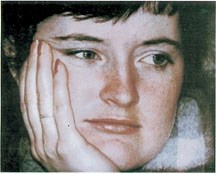
Cathryn Johnson, an eight-year-old girl, was killed alongside her mother, Jane Johnson, in their home in Turner Valley, Alberta, on September 3, 1996. That evening, firefighters were called to the residence after a fire was discovered burning inside. Once the blaze was extinguished, Cathryn and Jane were found dead in the house. What initially appeared to be a fatal residential fire quickly became a homicide investigation when authorities determined that both victims had died before the fire
was deliberately set. Investigators concluded that the blaze was intended to destroy evidence and conceal the killings.
Jane and Cathryn did not regularly spend every night at the Turner Valley house because they often stayed with Jane's partner. They were reportedly at their own residence that night because Cathryn was preparing to begin Grade 3 at Turner Valley School the following day. That circumstance became important to investigators because RCMP believed the murders were not the result of a random burglary or chance encounter. Police believed the person or people responsible knew Jane and Cathryn and were familiar enough with their routines to know when they would be at the house.
The investigation established that Jane, who was pregnant at the time, had been stabbed to death. Authorities have never publicly disclosed Cathryn's specific cause of death, but investigators determined that she too had been murdered before the fire was started. Police have also withheld some details about the crime scene, including information that could be known only by the killer, as they continued trying to preserve the integrity of the investigation.
The people closest to Jane were examined as investigators tried to reconstruct what happened. Her former husband, Sam Johnson, Cathryn's father, publicly said that he volunteered to take a polygraph examination soon after the murders because he wanted investigators to be able to eliminate him and concentrate on other leads. Jane's partner, Henry Reichert, also came under investigative scrutiny and repeatedly denied any involvement. Reichert said he was at his own home when the murders occurred. Contemporary reporting stated that he declined a polygraph on the advice of his lawyer but provided DNA samples to investigators. Despite the attention surrounding him, authorities did not obtain sufficient evidence to charge him with the killings.
Investigators pursued numerous other possibilities as well. Over the years, RCMP officers conducted repeated interviews and re-interviews, collected and examined physical evidence, distributed information-wanted material and followed hundreds of tips. Police said several potential suspects had been identified, but the available evidence was insufficient to conclusively connect them to the murders.
A significant development was announced in 2011, when RCMP revealed that investigators had a person of interest who was believed to be living in the Parksville area of Vancouver Island, British Columbia. Police did not publicly identify that person. The announcement came approximately 15 years after the killings and reflected investigators' continuing belief that someone with knowledge of Jane and Cathryn's lives was responsible. The lead did not result in a publicly announced arrest or criminal charge.
The case has remained unresolved despite decades of investigation. No one has been arrested, tried or convicted for the murders of Cathryn and Jane Johnson. Later reporting continued to describe the deaths as an open cold case, with investigators maintaining that the fire was intentionally set after the murders and that the killer or killers were likely people familiar with the victims' daily lives.