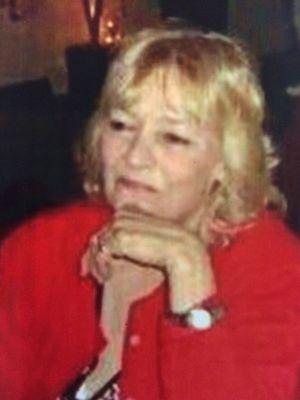
Darlene Noble, 51, a mother of five, was shot and killed on Lee Avenue in the O'Fallon neighborhood of north St. Louis on Tuesday, May 18, 2010. The St. Louis Metropolitan Police Department investigated her death.
The shooting happened in broad daylight. As the St. Louis Post-Dispatch put it two weeks later, "it was daylight, almost noon on a Tuesday, May 18," when she was shot dead. A neighbor, Brooksie Morris, 79, lived across the street from the spot where she was killed. The public accounts found for this case do not say how many shots were fired, whether she died at the scene or at a hospital, or what led up to the shooting.
No description of a suspect, a vehicle or a motive has been made public. Her killing became part of a larger story about the "don't tell" code on the streets of the neighborhood. The Post-Dispatch article, by reporter Denise Hollinshed, described how nobody in the O'Fallon neighborhood would talk after Alvin Dees Jr.
was shot in 2006, again after he was shot in 2008, and again after he was shot to death on April 17, 2010, a month before Noble was killed. No reward for information in her case was found.
Very little about Darlene Noble's own life has been published beyond her age and the fact that she was the mother of five children. No obituary or memorial page for her was found. Her children, and any grandchildren, would have been the people most directly affected by her death, and she was surely known to many neighbors on and around Lee Avenue.
The response on the block was immediate. On the evening after her death, Wednesday, May 19, a prayer vigil was held at the corner of Lee Avenue and Athlone Avenue, where several shootings had taken place. Alvin Dees Jr.'s parents, Yvette Peeples and Sam Jackson, were there. On Monday, May 24, St. Louis Alderman Antonio French walked Lee Avenue, past the spot where Noble was killed, trying to recruit neighbors for a block unit to fight crime.
O'Fallon is a residential neighborhood on the city's north side, named for O'Fallon Park, with blocks of older brick homes, churches and vacant lots. Because the shooting happened close to noon on a weekday, on a street where people sat on their porches, it is likely that someone saw or heard something.
St. Louis recorded 144 homicides in 2010 and 113 in 2011, and for years its per capita homicide rate was among the highest of any large city in the United States. Most of the killings took place in a handful of neighborhoods on the city's north and south sides, and many of them were never solved. A case with little public information, like this one, rarely stays in the news for long.
No arrest, criminal charge or court case connected to the death of Darlene Noble could be found in news archives or public records. More than 16 years later, there is no public sign that anyone has been held responsible. Anyone who was on or near Lee Avenue around midday on May 18, 2010, or who has heard talk in the neighborhood about who fired the shots, may be able to help. A neighbor who stayed quiet out of fear in 2010 may feel freer to speak today. Even a small detail, such as a name overheard, a car seen leaving the area or a conversation remembered, can help detectives move a case forward. Anyone with information can call the St. Louis Metropolitan Police Department Homicide Division at 314-444-5371, or leave an anonymous tip with CrimeStoppers at 866-371-TIPS (866-371-8477).