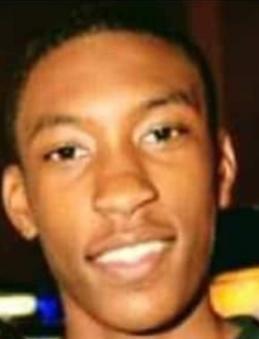
Catrell Churchman was 20 years old when he was killed in St. Louis on Thursday, July 12, 2012. The St. Louis Metropolitan Police Department investigated his death. The Washington Post's homicide database, which tracked killings in St. Louis through 2017, lists it as a homicide that remained open with no arrest.
Beyond his name, his age and the date of his death, almost nothing about his killing has been made public. No news story about it, obituary, memorial page or family fundraiser could be found for this account. He surely had family, friends and teachers who remember who he was, but very little of that has entered the public record.
Because so little has been released, even the basic circumstances remain unknown to the public. The record does not say how he was killed, whether he was attacked indoors or on the street, whether he knew the attacker, what time of day it happened, or whether he died at the scene or later at a hospital.
It does not say whether anyone else was hurt or whether investigators ever identified a suspect.
There may be one public trace of his life. In March 2011, about 16 months before his death, a student named Catrell Churchman spoke to a Missouri Senate committee in support of a bill that would help homeless students attend charter schools. He was a student at Shearwater High School, a St. Louis charter school for young people who had dropped out, and a former dropout himself. He told senators he had lived in four different homeless shelters that week but had not missed a day of school. "Shearwater gives me a second chance, I thought I had no hope," he said. A Senate journal from that session also records him being introduced in the chamber.
The name is unusual and the age fits, but nothing in the record confirms that the student and the young man killed in 2012 are the same person. If they are, his death cut short a young man who had fought hard to stay in school despite having no stable home.
The location recorded in the Post's database places his death in south St. Louis, a few miles southwest of downtown, an area of brick flats, homes and small businesses. He died on the same day that Antwone Chatman was shot in a vacant lot in north St. Louis; nothing in the record links the two deaths. People who lived in the area that summer may remember Catrell and the police activity that followed.
St. Louis has long had one of the highest homicide rates of any large American city. The city recorded more than 100 homicides in every year of the early 2010s, and the yearly totals later climbed to 188 in 2015 and 205 in 2017. In many of those years, fewer than half of the city's killings ended in an arrest. Cases with few public details, like his, often faded from view quickly.
No arrest, criminal charge or court case connected to the death of Catrell Churchman could be found in news archives or public records. More than 14 years later, there is no public sign that anyone has been held responsible. Anyone who knew Catrell Churchman, from school, from the shelters or from the neighborhood, who saw him in the days before July 12, 2012, or who heard talk afterward, may be able to help. Even a small detail, such as a name overheard, a car seen leaving the area or a conversation remembered, can help detectives move a case forward. Anyone with information can call the St. Louis Metropolitan Police Department Homicide Division at 314-444-5371, or call CrimeStoppers at 866-371-TIPS (866-371-8477), where tips can be anonymous.