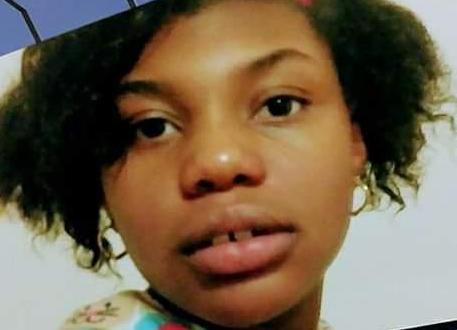
For nearly two decades, she was a ghost, a name waiting to be spoken. The woman known only as Jane Doe, found in an abandoned house on Detroit’s east side, was finally given her name back in 2022: Darylnn Washington. A 45-year-old Black female, Darylnn was the final known victim of a serial killer who terrorized the city’s vulnerable women for five years. Her story is one of a long, painful wait for answers and the ultimate triumph of science in restoring her identity.
On June 5, 2006, police were called to a vacant house on Harding Street, not far from where the man who killed her had been raised by his grandmother. Inside, they discovered the body of a woman. Investigators determined she was a Black female, approximately five feet tall, and had likely been deceased for only a few days. Her death was ruled a homicide. For years, these were the only facts known about her.
Her case was entered into the National Missing and Unidentified Persons System, and a forensic composite was created and released to the public, a silent plea for someone to recognize the face of the unknown woman. But no one came forward, and her case went cold.
All the while, Darylnn's family held onto a terrible suspicion. They believed their loved one had been murdered by a serial killer, but with her remains never located, they were left in a state of agonizing uncertainty. Their fears were tragically well-founded. The man responsible for Darylnn's death was Shelly Andre Brooks, a predator who targeted women in Detroit between 2001 and 2006. Brooks, who harbored a deep resentment toward women stemming from childhood abandonment, preyed on those living on the margins of society.
Brooks's method was brutal and consistent. He would lure women, often sex workers or those struggling with addiction, to desolate locations—abandoned buildings, vacant lots, and empty garages—with the promise of money for sex. Once they were isolated, he would attack, bludgeoning them with bricks, rocks, or other blunt objects before sexually assaulting them. He left a trail of at least seven murdered women: Sandra Davis, Pamela Greer, Marion Daniels, Rhonda Myles, Thelma Johnson, Melissa Toston, and, finally, Darylnn Washington.
The reign of terror ended just weeks after Darylnn’s death. On June 26, 2006, a woman survived a vicious attack by Brooks. She was able to provide police with a description and a street name, "E," which led them to arrest him. DNA evidence soon linked Brooks to the 2002 murder of Pamela Greer, and the cases began to connect. He eventually confessed to the slayings, even admitting to a murder police hadn't known about. He allegedly admitted to killing the unidentified woman on Harding Street—Darylnn—claiming it was a robbery gone wrong. In 2007, Brooks was convicted of first-degree premeditated murder, felony murder, assault, and criminal sexual conduct. He was sentenced to life in prison without the possibility of parole, ensuring he would never harm another person.
Because Brooks was already guaranteed to spend the rest of his life in prison, prosecutors did not pursue trials for all seven murders he was charged with, including the killing of the then-unidentified Darylnn. For her family, and for the investigators who never gave up, the case remained incomplete. She was still Jane Doe. That changed in 2022, when the Detroit Police Department partnered with Othram Inc., a Texas-based laboratory specializing in forensic genetic genealogy. Using advanced DNA testing on forensic evidence from the scene, scientists built a comprehensive DNA profile.
This profile allowed genealogists to trace the woman's family tree, generating new leads that pointed investigators toward potential relatives. Through this painstaking work, the Jane Doe from Harding Street was finally identified as Darylnn Washington, born on June 15, 1959. After 16 years of silence, her name was known. Detroit police notified her family, confirming their long-held belief and closing a painful chapter of not knowing. While little has been shared publicly about Darylnn's life, the identification brought a measure of closure, a final, somber answer to a question that had haunted a family for nearly two decades.