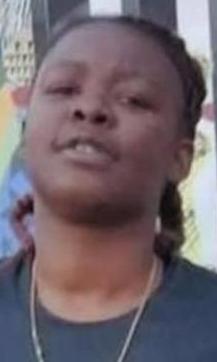
In the days leading up to Christmas of 2002, the city of Chicago was bustling with holiday preparations, but for one family, it would become a time of permanent loss. On Friday, December 20, 2002, the body of Celeste Jackson, a 37-year-old Black woman, was discovered abandoned in an alley. The cause of her death was determined to be strangulation, a violent end to a life about which few public details remain. Her case joined a growing and terrifying list of unsolved murders in the city, leaving her loved ones with unanswered questions and a grief that would span decades.
Celeste’s death was not an isolated incident. Investigators and researchers would later identify her as a potential victim of a serial killer, or killers, who haunted Chicago’s South and West Sides for nearly two decades. This series of slayings, attributed to a figure dubbed the "Chicago Strangler," began around 2001 and continued until at least 2018.
The pattern was chillingly consistent: the victims were predominantly African American women, and their deaths were almost always the result of strangulation or asphyxiation.
The Murder Accountability Project, a nonprofit organization that analyzes homicide data, identified a cluster of 51 unsolved strangulation cases in Chicago that shared these disturbing similarities. Celeste Jackson’s murder fit the grim profile. Like many of the other victims, her body was left in a desolate location, discarded in a way that suggested a profound lack of regard for human life. These women were often found in vacant lots, abandoned buildings, garbage cans, and alleys, their final moments spent in the hands of a predator who moved through the city’s most vulnerable communities like a ghost.
The investigation into these murders was hampered by the circumstances of the victims, many of whom lived on the margins of society. Their connection to one another was not one of friendship or family, but of shared geography, gender, race, and the brutal manner of their deaths. This made establishing a clear link between the cases difficult for law enforcement in the early years. For a long time, the deaths were treated as individual homicides, and the idea of a serial killer at work was not officially acknowledged by the Chicago Police Department, despite pressure from activists and community leaders.
Over the years, the number of potential victims connected to this pattern grew, with some estimates suggesting the total could be as high as 75 women. The killer’s methods were consistent, pointing to a single offender or a small group using the same signature. The victims were often left partially or fully unclothed, adding another layer of degradation to their final moments. The sheer number of unsolved cases created an atmosphere of fear and frustration, particularly in the communities where the women were taken from.
Despite the extensive work by organizations like the Murder Accountability Project to highlight the connections between these homicides, Celeste Jackson’s case, like dozens of others, remains cold. No suspect has ever been publicly named or charged in her murder. The lack of resolution means that the person responsible has, for over two decades, evaded justice. For the families of the victims, the passage of time does not heal the wound of not knowing who took their loved one or why.
Today, Celeste Jackson is remembered as one of the 51 women whose names are listed together in a somber roll call, a testament to a long and terrifying chapter in Chicago's history. Her life was cut short by a brutal act of violence that remains a stain on the city's conscience. The investigation into the Chicago Strangler cases is officially still open, a collection of cold case files waiting for the one tip or piece of evidence that could finally bring a killer to justice and provide a measure of peace to the families who have waited for so long.