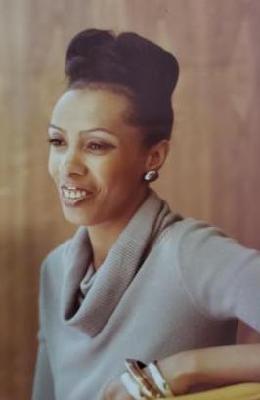
At just 18 years old, Makalavah Williams was on the cusp of adulthood when her life was stolen on November 20, 2004. A young Black woman in Chicago, her death is one of the most tragic and least detailed among a horrifying cluster of similar slayings that haunted the city for nearly two decades. While little is known about the specific dreams and aspirations Makalavah held, her story is inextricably linked to a pattern of violence that claimed the lives of more than 50 women, leaving a trail of unanswered questions and grieving families.
Makalavah is believed to be a victim of a possible serial killer, or killers, sometimes referred to as the "Chicago Strangler." Between 2001 and 2018, at least 51 women in Chicago were killed in a chillingly similar manner. The victims, predominantly Black and often from marginalized communities, were killed by strangulation or asphyxiation.
Their bodies were then left in desolate places: dumped in alleys, discarded in vacant lots and abandoned buildings, or hidden in garbage cans, primarily across the city's South and West Sides.
The specific details of Makalavah’s last day and how she was found have not been publicly reported, a painful silence that echoes the limited media attention given to many of the victims. A report by the Murder Accountability Project, an organization that analyzes unsolved homicides, notes only that she was found "outdoors." This stark, minimal detail paints a grim picture of a young life discarded with profound cruelty. Her case, like dozens of others, remains unsolved, a cold file among many that represent a deep and painful wound in the city's history.
The investigation into these murders has been fraught with frustration and controversy. For years, the Chicago Police Department did not officially link the 51 cases, treating them as individual homicides. However, activists and organizations like the Murder Accountability Project used algorithms to identify the alarming pattern, pointing to a potential serial killer. They highlighted the consistencies in victimology, cause of death, and the geographic clustering of the crimes. Despite this, DNA evidence, which was only recovered in a fraction of the cases, has not provided a definitive link between them, and no single suspect has been charged in the entire series of 51 killings.
The immense loss is perhaps best understood through the stories of other victims, whose families have spoken out. Gwendolyn Williams, 44, was killed two years before Makalavah. Her family remembers her as a protector, the oldest of six children, a fashion lover, and a fierce defender of animals. She was found raped and strangled behind a dollar store on June 12, 2002. Her sister described her as the best big sister anyone could ask for, someone who was always there when her family needed her. This portrait of a loved and valued human being underscores the reality that every one of the 51 women, including Makalavah, was more than a statistic.
Today, Makalavah Williams’ case remains open but inactive, one of many that have grown cold. The lack of resolution leaves her family, and the community, without justice or closure. Her name is preserved on lists and in the databases of those who refuse to let these women be forgotten. She was a young woman with a future that was violently erased, a victim of a crime spree that targeted the most vulnerable. Her unsolved murder is a haunting reminder of the many lives lost and the urgent need for answers that, for now, remain buried in the silence of Chicago's streets.