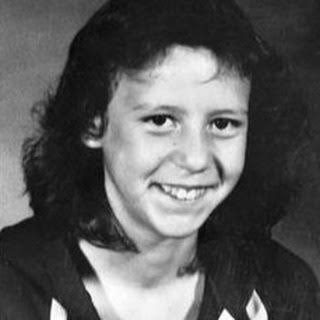
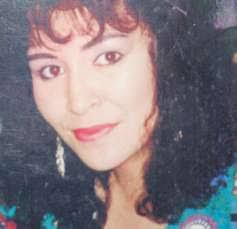
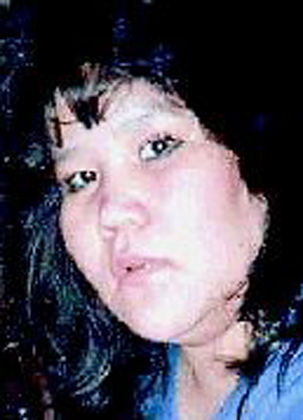
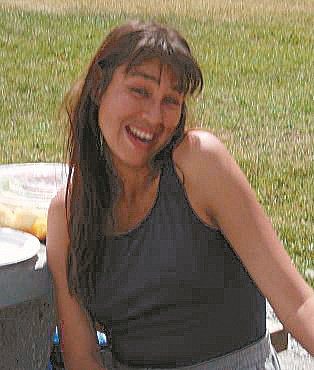
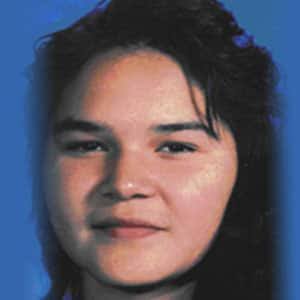
In the summer of 1981, a wave of fear gripped the Lower Mainland of British Columbia as children and teenagers vanished with terrifying frequency. The disappearances created a climate of anxiety that culminated in the tragic death of Louise Simonne Marie Evelyn Chartrand, a 17-year-old female who had moved west for a new start. Described as very tiny and young-looking for her age, Louise was the youngest of seven children. She had journeyed from her native Quebec with three of her sisters, settling in the Fraser Valley town of Maple Ridge, about 20 miles east of Vancouver, where she found work as a waitress.
On the evening of July 30, 1981, Louise was on her way to her night-shift job. Police believe she hitchhiked part of the way before being dropped off. She then walked toward a store in downtown Mission to buy cigarettes. It was during this short walk that she crossed paths with Clifford Robert Olson Jr., a man who would later be known as "The Beast of British Columbia."
Olson, already a seasoned criminal and the subject of police suspicion in the string of disappearances, lured Louise into his car. That same day, he had been meeting with police and his lawyer, yet it did not deter him from seeking another victim.
Olson drove Louise north towards the ski resort town of Whistler. In a chilling display of audacity, he even stopped at the Squamish RCMP detachment with Louise in his car, hoping to retrieve a confiscated gun, but was unsuccessful. Continuing his journey, he took her to a remote area where he killed her and buried her body in a shallow grave. Louise Chartrand was the eleventh and final confirmed victim in a murderous spree that had begun in November 1980. Olson's methods were brutal and varied, including strangulation, stabbing, and bludgeoning his victims with a hammer or rocks.
The massive police investigation into the disappearances had begun to focus on Olson, who had a long criminal record. He was placed under surveillance, but it was not constant. His reign of terror finally ended on August 12, 1981, when he was arrested for attempting to abduct two more young girls. Facing a weak case, investigators made a controversial and unprecedented deal with the killer. Olson agreed to confess and lead police to the bodies of his victims in exchange for $100,000, paid to his wife and son—$10,000 for each victim he helped locate.
Thanks to this grim bargain, Olson led authorities to the undiscovered bodies of his victims, including Louise. Her remains were found near the Whistler ski resort. The deal spared the families the agony of a prolonged trial and the uncertainty of not knowing their loved ones' fates, but it was widely condemned as "cash for bodies." On January 11, 1982, Olson's trial began and ended swiftly when he pleaded guilty to 11 counts of first-degree murder. He was sentenced to 11 concurrent life sentences, with no possibility of parole for 25 years.
Clifford Robert Olson Jr. died of cancer in a prison hospital on September 30, 2011, at the age of 71, having served nearly 30 years of his sentence. He remained a taunting, unrepentant figure throughout his imprisonment, writing to victims' families and applying for parole when eligible, causing them repeated pain. The murder of Louise Chartrand marked the end of a dark chapter in British Columbia's history, a nine-month period when a predator preyed on the young and vulnerable, leaving a trail of shattered families and a legacy of profound loss.