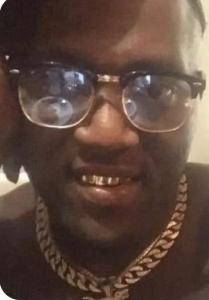
In the small city of Ashburn, Georgia, Robert Martin was a familiar, if sometimes misunderstood, figure. The 29-year-old Black man lived with his mother, Geraldine, and his disabled brother, Reginald, in a mobile home on the south side of town. He often expressed himself by dressing in women's clothing, and while many in the community were accepting, he was also subjected to taunts from local teens. His mother remembered him as her son, a person deserving of safety and life, whose fate would leave her with an anger and a headache that persisted every day.
The night of January 7, 2001, brought a brutal end to Robert’s life as he knew it. He was found severely beaten and left for dead in the yard of an abandoned school. When discovered, he was wearing a feminine wig and a dress. The attack was vicious; he had been struck in the back of the head with a blunt object, causing a catastrophic injury.
First responders rushed him to Phoebe Putney Memorial Hospital in nearby Albany, where he was admitted in critical condition. For three agonizing months, Robert lay in a coma, a tube in his throat helping him breathe. His mother was a constant presence at his bedside, sleeping in waiting rooms and holding onto the faint hope he might recover. She would call his name, and he would open his eyes, trying to see her, but he never regained consciousness. On April 3, 2001, Robert Martin succumbed to his injuries.
The Georgia Bureau of Investigation (GBI) took the lead on the homicide investigation. Tom Davis, the special agent in charge of the GBI's Perry office at the time, acknowledged the difficulty of the case. Investigators had little to go on, and weeks after the attack, no new leads had surfaced. The GBI offered a $1,000 reward for information that could lead to the arrest of Robert's attacker, but no one came forward to claim it. The agency stated it had no direct evidence to classify the murder as a hate crime, though the possibility was a significant part of the public conversation surrounding the case.
In the wake of the attack, advocacy groups voiced their concern that Robert was targeted because of his gender expression. The Georgia Equality Project, an Atlanta-based gay and lesbian advocacy group, sent a representative to Ashburn to support the Martin family. The organization also hired an attorney to serve as a liaison between the family and law enforcement, ensuring the possibility of a hate crime was thoroughly investigated. Harry Knox, the group's executive director, stated that they had reason to believe the authorities were taking that angle seriously.
Geraldine Martin was left to navigate a world of grief and unanswered questions. "I'm angry," she told a reporter while her son was still in the hospital. "I want to know who and why. [The attacker] must be an animal or something." Her life was put on hold, consumed by the daily visits to the critical care unit and the desperate need for justice.
Years have passed, but the case has grown cold. The investigation into who killed Robert Martin remains open but inactive, a painful unsolved chapter in the files of the GBI. As of March 2026, no arrests have ever been made, and no official motive has ever been confirmed. The reward for information is still technically available, but the trail has long since faded. For a family and a community, the brutal killing of Robert Martin remains a haunting mystery and a profound loss.