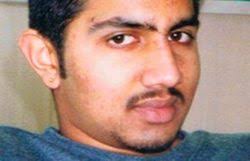
On January 15, 2001, the body of Krishan Sharma, a 24-year-old man from Vancouver, was discovered in a desolate area of Surrey, British Columbia. His remains were found in a pond or ditch near 112th Avenue and Bridge Road, in the shadow of the Pattullo Bridge, a major artery connecting Surrey and New Westminster. The discovery marked the beginning of a homicide investigation that would span decades and grow cold, leaving a family without answers and a community with lingering questions.
The scene that confronted investigators was grim. Krishan’s body showed signs of a brutal and calculated murder. He had been choked to death, stripped of his clothing, and his body was burned before being left in the water. From the outset, police believed the killing was not random. Sources indicated that Krishan was known to police and that his murder was likely an act of retaliation. It was reported that investigators believed he was responsible for a shooting that had occurred a short time before his death, which had left another man critically wounded.
The initial investigation was handled by the Surrey detachment of the Royal Canadian Mounted Police (RCMP). In the early 2000s, the Lower Mainland was grappling with a significant wave of gang-related violence, much of it centered within the Indo-Canadian community. Dozens of young men were killed in targeted, execution-style slayings tied to drug trafficking and turf wars. Krishan's death was viewed within this violent context, one of a series of brutal killings that often went unsolved due to a lack of cooperating witnesses. The area under the Pattullo Bridge, an industrial and somewhat isolated zone, had unfortunately been the scene of other violent crimes over the years, a place where evidence—and victims—could be discarded.
For years, Krishan’s case remained open but inactive, one of many cold cases in the files of the Surrey RCMP. The Unsolved Homicide Unit, which handled such files, was eventually folded in 2018, and its caseload was absorbed by the Investigative Services Unit. Despite the passage of time, the investigation never officially closed. No suspects were publicly named, and no arrests were ever made, leaving the specific details of Krishan’s final hours and the identities of his killers a mystery.
The lack of resolution has left a void for those who knew Krishan, their memories and grief unacknowledged in the public record. No vigils, memorials, or family statements have been reported in the media, and the personal story of the young man—his interests, his work, his family life, and the people who loved him—has been lost in the sparse, grim details of his death. The narrative has been defined by his alleged connection to criminal activity and the brutal manner in which he was killed.
As of October 2024, the investigation into Krishan Sharma’s murder has entered a new phase. His file is one of 56 unsolved homicide cold cases being officially transferred from the Surrey RCMP to the newly formed Surrey Police Service. This transition offers a fresh set of eyes on the evidence and the possibility that new investigative techniques, such as advances in DNA technology, could finally shed light on what happened more than two decades ago. The hope is that this new chapter may one day lead to the answers and accountability that have been missing for so long.