Crime Solvers Central
302 Cases Solved. Advancing justice for missing persons, unsolved homicides, unidentified and unclaimed remains.

Case Description

Any updates on this case? Let us know!
Summary based on 3 sources
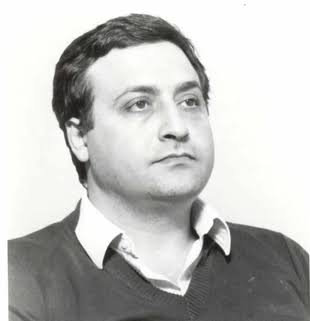
Enio Mora was a man known for a flamboyant personality and a life deeply enmeshed in the complex and dangerous world of organized crime. Born in Sora, Italy, in 1949, he moved to Canada in 1968 and quickly became a significant figure in the criminal underworld. To his family, he was a husband and a father to three sons, and his lawyers successfully argued against a deportation order by emphasizing that separating him from his family would be cruel. In his legitimate life, he sold insurance, worked as a building contractor, owned a drywalling firm, and operated a restaurant. In his other life, he was a mobster known as "Pegleg," a nickname acquired after a 1979 shotgun blast destroyed much of his lower left leg, forcing him to wear a prosthesis.

Mora's criminal career was extensive, involving illegal gambling, loansharking, money laundering, and home repair scams. He began his underworld ascent working for Toronto gangster Rocco Zito before aligning himself with Paul Volpe. After Volpe's murder in 1983, Mora joined the Papalia crime family, a powerful organization based in Hamilton, Ontario. Alongside Carmen Barillaro, Mora became a principal lieutenant for boss Johnny Papalia, overseeing the family's interests in the Toronto area. He was known for his brutal methods, reportedly dousing debtors with gasoline and threatening to set them on fire if they didn't pay. His activities led to convictions for conspiracy to sell heroin as well as weapons and drug charges.

The end for Enio Mora came on Wednesday, September 11, 1996. The 47-year-old male was shot four times in the head in a brutal, execution-style killing. His body was then placed in the trunk of his own Cadillac, which was abandoned on the quiet, rural Teston Road in Vaughan, Ontario, a growing suburban city just north of Toronto. The discovery of the high-level mobster's corpse sent a clear message through the underworld.

Investigators from what is now the York Regional Police quickly determined the murder itself had not happened on Teston Road. Forensic analysis traced the scene of the killing to a farm in Vaughan that Mora was known to visit frequently. A particularly disturbing detail noted by police was the state of Mora's body when it was found. His pants and underwear had been pulled down. Detectives familiar with the subculture of the Mafia interpreted this as a pointed message, suggesting the victim had committed a sexual transgression, such as having an affair with the wife of another mobster—an offense punishable by death within that code.

The investigation into Mora's murder was complex from the start. As one Toronto police detective, Ron Sandelli, noted at the time, "It sure wasn't a surprise. He had his hand into so many things." Mora had numerous enemies. He was a suspect in the 1980 murder of Anthony Carnevale, the man believed to have been responsible for the shotgun attack that cost Mora his leg. He was also one of the last people to see mob boss Paul Volpe alive before his 1983 murder, and police suspected Mora helped lure Volpe into an ambush.

In the year before his death, Mora had taken out a $7.2 million loan from Vito Rizzuto, the head of Montreal's powerful crime family. Mora reportedly passed most of this money to his bosses, Papalia and Barillaro, who were not interested in repaying the debt. This led to speculation that Rizzuto, angered by their defiance, decided to eliminate the Papalia family's leadership. This theory gained traction when both Papalia and Barillaro were murdered within a year of Mora's death. The murders of all three men effectively dismantled the Papalia family's command structure.

Decades have passed, but the murder of Enio Mora officially remains unsolved. The web of allegiances, betrayals, and rivalries that defined his life has made it difficult for investigators to definitively close the case. As of May 2022, his killing was noted by the Toronto Star as one of the region's lingering underworld mysteries. There have been no arrests, and the specific individuals who carried out the execution on that Vaughan farm in 1996 have never been brought to justice.