Crime Solvers Central
307 Cases Solved. Advancing justice for missing persons, unsolved homicides, unidentified and unclaimed remains.

Case Description

Any updates on this case? Let us know!
Summary based on 6 sources
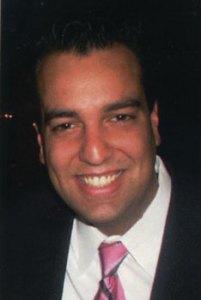
Cecil M. Lopes III was an 18-year-old freshman with a bright future. A business student at the University of Massachusetts Dartmouth, he was ambitious and smart, having spent the summer before college investing the money he earned into mutual funds. His family remembers him as a loved one whose loss created an open wound, a promising young man whose life was stolen. His father, Cecil "Bussey" Lopes Jr., and grandmother, Phyllis Lopes, became outspoken activists after his death, channeling their grief into a campaign against violence and for witness cooperation.

On Halloween night, October 31, 2004, Cecil had dinner at his grandmother's house on Ash Street in New Bedford, Massachusetts. Afterward, he walked to the United Front housing project to meet up with friends. At approximately 8:25 p.m., as he stood with a group on Chancery Street, a vehicle drove by and shots were fired. Witnesses who ran outside after hearing the gunfire found Cecil on the ground in a fetal position, bleeding from fatal gunshot wounds that included a strike to his head. His death marked the seventh and final homicide in New Bedford that year.

The New Bedford Police Department immediately launched an investigation, but progress was stalled by a pervasive climate of fear and witness intimidation in the neighborhood. Investigators struggled to find people willing to come forward with information. In the years following the murder, no arrests were made and no suspects were publicly named in Cecil’s killing. The code of silence was so strong that Cecil's grandmother and aunt, Deirdre Lopes, began selling "talk about it" T-shirts to counteract the "Stop Snitching" merchandise being sold locally.

The violence did not end with Cecil's death. On July 4, 2005, a 31-year-old man named Dana Haywood, who had turned his life around and started a youth basketball league, was shot and killed at Monte Park. During the trial of John C. Burgos for Haywood's murder, testimony revealed the shooting was a direct retaliation for Cecil's homicide. A key witness testified that the justification for the killing was "a holiday for a holiday." Burgos was recorded in his jail cell admitting that he and another gang member, William "Buddha" Payne, went to Monte Park intending to shoot the first person they saw from the area. While Burgos was convicted for the murder of Haywood, investigators do not believe Haywood's killers were involved in Cecil's death, leaving the original crime unsolved.

In the years since the murder, Cecil's family has worked tirelessly to keep his memory alive and push for justice. They started a scholarship fund at UMass Dartmouth and supported a program offering a $5,000 reward for information leading to a conviction in the city's unsolved homicides. His grandmother contacted the television show "America's Most Wanted" in the hope that national exposure would generate new leads. His family became advocates at the state level, speaking out in favor of witness protection legislation. The case was later highlighted by the Massachusetts State Police Unresolved Case Unit, which featured Cecil's story on a set of cold case playing cards distributed in correctional facilities.

As of early 2026, the murder of Cecil Lopes III remains unsolved. His family continues to hope that someone with information will finally come forward and provide the answers they have sought for over two decades. The Bristol County District Attorney's Office lists the case as an open and unsolved homicide. A reward may still be available for information that leads to a conviction. Anyone with information is urged to contact the Massachusetts State Police Unresolved Crimes Unit at 1-855-MA-SOLVE.