Crime Solvers Central
307 Cases Solved. Advancing justice for missing persons, unsolved homicides, unidentified and unclaimed remains.

Case Description

Any updates on this case? Let us know!
Summary based on 3 sources
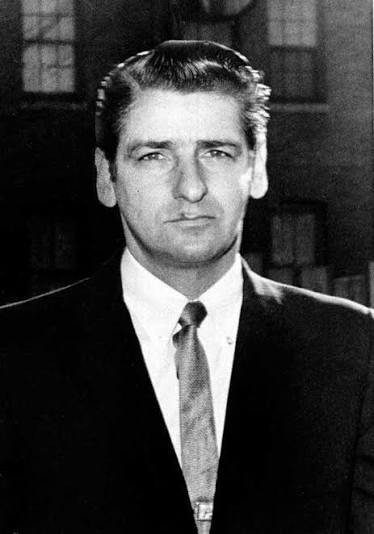
Albert DeSalvo was a man whose name was already synonymous with crime long before his own violent death. Known to the world for his detailed and sensational confession to the infamous Boston Strangler murders of the early 1960s, DeSalvo was a complex and notorious figure. Although he confessed to killing thirteen women, he was never prosecuted for those crimes. Instead, the 42-year-old male was serving a life sentence for a series of unrelated armed robberies and sexual assaults he committed as the so-called "Green Man." His life of crime, which began in his youth, had placed him behind the walls of what was then known as Walpole State Prison, a maximum-security facility in Massachusetts.

In the fall of 1973, DeSalvo was an inmate in the prison's infirmary. On the morning of November 25, 1973, a guard making rounds discovered his body. DeSalvo was lying in his bunk, dead from at least one stab wound to the heart. An investigation determined he had been stabbed multiple times. At the time of his death, he had reportedly been working with a psychiatrist and a writer on a book that he claimed would tell the true story of the Boston Strangler, retracting his earlier confession and alleging that he had been coached. He had apparently become fearful for his life, telling his family he believed he was in danger.

The investigation into DeSalvo's murder was conducted by the Massachusetts State Police. The prison environment presented immediate and significant challenges. Walpole was known for its violent atmosphere and a powerful inmate hierarchy that operated under a strict code of silence. Investigators interviewed numerous inmates but struggled to find cooperative witnesses. The crime scene within the infirmary offered few initial clues, and the murder weapon was not immediately recovered. The motive was widely speculated upon; theories ranged from a dispute over the prison drug trade to a silencing prompted by what he might reveal in his upcoming book.

Despite the intense scrutiny on the case, the investigation stalled. Suspicion eventually focused on a fellow inmate, but authorities were never able to gather enough evidence to secure an indictment. The lack of cooperation from potential witnesses inside the prison proved to be an insurmountable obstacle. No one was ever formally charged or brought to trial for stabbing Albert DeSalvo, and the case grew cold over the ensuing decades. His death added another layer of mystery to his already dark legacy, leaving questions about whether he was killed for reasons related to his life in prison or for what he knew about the Strangler murders.

Years later, DeSalvo's name would return to the headlines. In 2013, advances in DNA technology definitively linked him to the 1964 rape and murder of Mary Sullivan, the last victim attributed to the Boston Strangler. Investigators exhumed DeSalvo's remains to confirm the match, providing long-sought-after answers for the Sullivan family and cementing DeSalvo's role in at least one of the killings he had once confessed to. This scientific breakthrough, however, shed no new light on his own murder.

The homicide of Albert DeSalvo remains officially unsolved. While the man he was accused of being brought terror to a city, his own end came violently and without resolution at the hands of an unknown killer within the prison walls. As of 2019, his murder was still classified as an open, unsolved case. The full story of what happened in the Walpole prison infirmary on that November morning in 1973, and who was responsible, remains locked away in the past.