Crime Solvers Central
307 Cases Solved. Advancing justice for missing persons, unsolved homicides, unidentified and unclaimed remains.

Case Description

Any updates on this case? Let us know!
Summary based on 5 sources
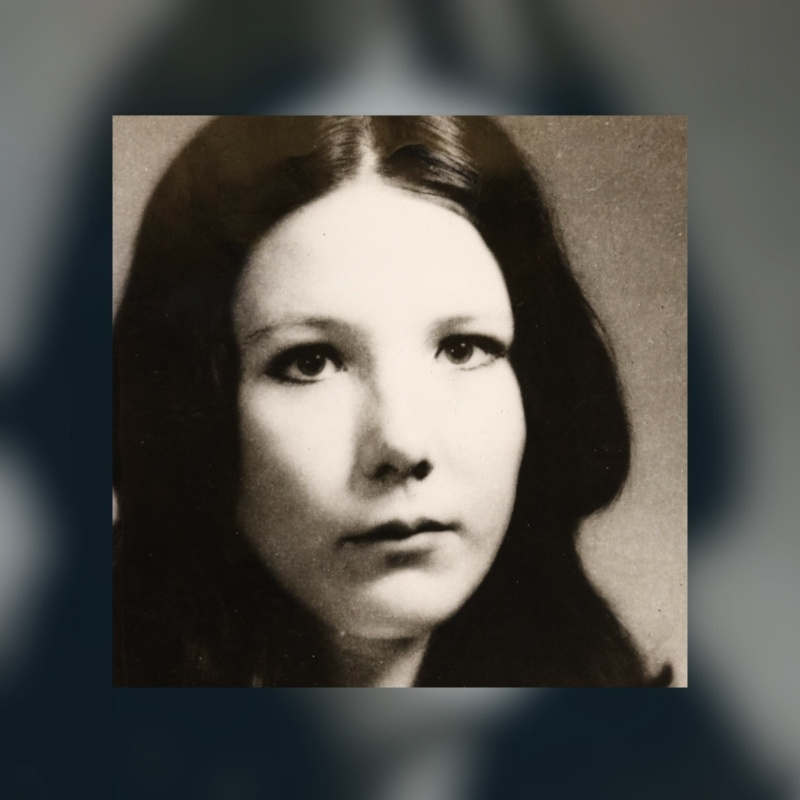
Mary Joe Frug was a brilliant and provocative feminist legal scholar whose life was violently cut short on a quiet street in Cambridge, Massachusetts. A 49-year-old wife, mother of two, and professor at the New England School of Law, she was a pioneering voice in legal postmodern feminist theory. Born Mary Joe Gaw in St. Joseph, Missouri, she dedicated her career to challenging how the law perceived and treated women. Before joining the faculty at New England Law in 1981, she earned degrees from Wellesley College, George Washington University, and New York University, and worked providing legal services to low-income clients. At the time of her death, she was a fellow at the Bunting Institute at Radcliffe College, continuing her influential research.

Her work was often characterized as radical, particularly her assertion that legal rules enabled the "terrorization, maternalization, and sexualization" of the female body. She was a founding member of the "Fem-Crits," a group of scholars who applied principles of Critical Legal Studies to feminism, arguing that the law was a tool in a male-dominated power structure. For those who knew her, she was a generous mentor and friend, an "intellectual and spiritual beacon for feminists in law." She was married to Gerald Frug, a professor at Harvard Law School, and they had two children, Stephen and Emily.

On the evening of April 4, 1991, Mary Joe left her Cambridge home for a walk to a nearby convenience store. At around 8:30 p.m., just 300 yards from her front door, she was attacked on Sparks Street, near the corner of Brewster Street. The assault was brutal; she was stabbed multiple times in the chest and upper thighs with what police believe was a military-style knife. A passing motorist saw her and ran into the nearby Armenian Holy Trinity Apostolic Church for help. Members of a choir practicing inside rushed out, and one, a Harvard professor who recognized her, ran to her home to get her husband and daughter. An ambulance arrived, but Mary Joe was pronounced dead at Mount Auburn Hospital.

The investigation, conducted by Cambridge and state police, was baffled from the start. Robbery was quickly ruled out as a motive, as her purse was found untouched at the scene. A witness reported seeing a white male in his late teens or early 20s, between 5'10" and 6'0" with brown hair and dark clothing, running from the area. Plaster casts of shoe prints were taken, but the murder weapon was never recovered. Investigators initially explored whether she was targeted for her controversial scholarship, a theory her colleagues found implausible. As one state police investigator noted, academics who disagree "write an article saying how stupid they are... I don’t go out and kill them." The trail soon went cold, with no suspects or clear motive.

A year after her death, the New England School of Law offered a $25,000 reward for information, but no significant leads emerged. The case was further complicated by a controversy at Harvard Law School in 1992. The Harvard Law Review published a draft of an unfinished article by Mary Joe, submitted by her husband. In response, the school's annual parody publication, the Harvard Law Revue, printed a piece that cruelly mocked her work and her death, causing widespread outrage.

Decades passed with no answers. The brutal slaying in an exclusive, tree-lined neighborhood stunned the academic world and the city of Cambridge. The lingering questions of whether the attack was random or targeted, a crime of opportunity or a planned execution, have fueled speculation for years. Some have noted similarities to the unsolved 1978 stabbing death of Julie Campbell, another woman who was not robbed, in Cambridge.

As of late 2026, more than 35 years after her death, Mary Joe Frug's murder remains unsolved. In 2019, the case was taken up by a newly formed cold case unit within the Middlesex County District Attorney's office, which continues to actively investigate. District Attorney Marian Ryan has urged anyone with information, "no matter how seemingly insignificant, to contact law enforcement." Her husband, Gerald, has written that for their family, "After such a horrifying event there is no such thing as ‘closure.’ The murder left a permanent wound."