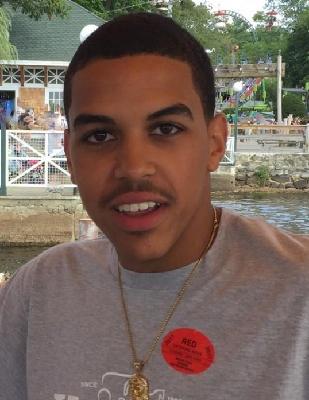
On a spring evening in Boston, a 30-year-old man’s life was brought to a violent and sudden end, leaving behind a case that has remained unsolved for years. Wellington Demaisonet, a resident of the city’s Dorchester neighborhood, became another victim of a year marked by a troubling increase in homicides across the city. His death is a cold case, a file number on a list, but it represents a real person whose future was stolen and whose killer has never been brought to justice.
The evening of Friday, May 5, 2006, was just beginning when police were called to the Mission Hill neighborhood. At approximately 8:16 p.m., officers from Boston Police District 2 received a report of a "man down" and responded to 6 Carmel Street. There, in an alleyway, they discovered Wellington Demaisonet. He was suffering from apparent head trauma and what police identified as gunshot wounds. Paramedics could do nothing for him, and he was pronounced deceased at the scene.
The Office of the Chief Medical Examiner later officially ruled the death a homicide.
The investigation into Wellington’s murder was launched immediately by the Boston Police Department’s Homicide Unit. Detectives canvassed the area, a residential street of multi-family homes in a dense urban neighborhood bordering Roxbury and Jamaica Plain, not far from the Longwood Medical Area. In the initial hours and days, police released few details, identifying Wellington as the victim and confirming he was from Dorchester. But the trail of evidence and witnesses seemingly went cold. No suspects were publicly named, and no motive for the killing was ever released.
The year 2006 was a particularly challenging one for law enforcement and residents in Boston. By the beginning of December of that year, the city had already recorded 70 homicides, surpassing the number from the same period in the previous year, which itself had seen a ten-year high in murders. This wave of violence prompted city officials to explore new strategies to curb the bloodshed, from counseling for those affected by trauma to increasing police patrols. Wellington’s murder was one of many that year that left a family grieving and a community on edge.
As years turned into more than a decade, Wellington Demaisonet's case was transferred to the Boston Police Department's Unsolved/Cold Case Squad. This specialized group within the Homicide Unit is tasked with re-examining homicides that remain unsolved for ten years or longer, looking for new leads that might be developed through advances in forensic technology or from witnesses who may, with the passage of time, finally be willing to come forward. The department maintains a public list of these unsolved cases, a digital wall of remembrance and a standing appeal for information. Wellington's name and the brief, stark details of his death are listed on the page for 2006.
Little has been shared publicly about the man Wellington Demaisonet was. No obituaries or family remembrances appear in public records, leaving a void where a life story should be. We know only his name, his age, and that he was a resident of Dorchester. The lack of personal details makes his unsolved murder all the more poignant—a man reduced to a case file, his memory waiting for the justice that might finally allow those who knew and loved him to find peace.
As of late 2026, the murder of Wellington Demaisonet remains an open and active investigation in the files of the Boston Police Department's cold case squad. Detectives believe that even years later, someone in the community may hold the key piece of information needed to solve the case. The Boston Police Department continues to ask for the public's help. Anyone with information, no matter how insignificant it may seem, is urged to contact the Homicide Unit at 617-343-4470. For those who wish to remain anonymous, tips can be called into the Crime Stoppers Tip Line at 1-800-494-TIPS.