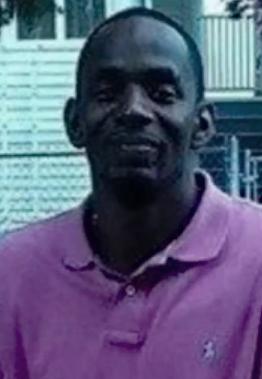
On a winter day in Boston, the life of a 41-year-old man named Ferdinand Singleton came to a violent and sudden end. The specific details of who he was as a person—his family, his work, his passions—have faded over the decades, lost in the passage of time. What remains is the stark, official record of a life cut short and a crime that has gone unanswered for more than half a century. His case is a quiet but persistent echo from a city grappling with a high number of homicides in the early 1970s, a period marked by social upheaval and violence.
The official timeline of Ferdinand’s last day is brief and grim. On Thursday, January 11, 1973, officers from the Boston Police Department were dispatched to 1477 Washington Street in the city's Dorchester neighborhood. The call was for a report of "trauma," a sterile word that could not capture the reality of the scene they discovered. Inside the residence, they found Ferdinand Singleton.
He was pronounced deceased at the scene, having suffered injuries that were clearly not accidental or self-inflicted.
The investigation began immediately, with homicide detectives canvassing the area and processing the scene for evidence. The case was assigned to the Boston Police Department's Homicide Unit, a team tasked with solving the city's most serious crimes. Following the discovery, Ferdinand’s body was taken to the Office of the Chief Medical Examiner for an autopsy. The examination confirmed what investigators suspected: the manner of death was a homicide. The specific cause of death and the nature of the trauma he sustained have not been publicly detailed by authorities.
In the days and weeks that followed, detectives worked to piece together Ferdinand's final hours. They would have sought to understand his circle of friends and acquaintances, his routines, and any potential conflicts that might have led to his murder. The address at 1477 Washington Street, located in a dense urban area, would have been a focal point of the investigation. Detectives would have interviewed neighbors and potential witnesses, hoping someone saw or heard something unusual that could provide a crucial lead. Despite their efforts, the trail grew cold. No suspects were publicly named, and no arrests were ever made.
As years turned into decades, Ferdinand Singleton's case file was passed from one generation of detectives to the next. It officially remains an open and unsolved homicide, a lingering question in the archives of the Boston Police Department. His name is listed on the department's webpage for unsolved homicides from 1973, a year that saw dozens of other individuals lose their lives to violence in the city. His case sits among many others, a testament to the enduring pain of unresolved loss for families and communities.
The investigation into the murder of Ferdinand Singleton is now considered a cold case. Modern forensic advancements, such as DNA analysis, offer a potential path forward for many historical cases, but it is unknown if any physical evidence was preserved from the 1973 crime scene that would be suitable for such testing. For now, the Boston Police Department continues to ask for the public's help. They believe that even after so many years, someone in the community may hold the key piece of information needed to finally bring a measure of justice for Ferdinand. The case remains open as of November 2026, a silent appeal for truth. The Boston Police Homicide Unit can be reached at 617-343-4470, and anonymous tips can be provided to the Crime Stoppers Hotline at 1-800-494-TIPS.