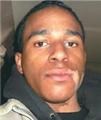
On a cold winter evening in Boston, Sunday, February 4, 1973, police were called to the rear of 500 Albany Street in the city's South End. The dispatch was for a "trauma," a term that did little to prepare them for the grim discovery they were about to make. There, they found the body of Albert Fred Stuart. He was 40 years old, and he was pronounced deceased at the scene. An subsequent autopsy by the Office of the Chief Medical Examiner confirmed the violent nature of his death, officially ruling it a homicide.
For more than half a century, the life of Albert Stuart and the precise circumstances of his death have remained shrouded in mystery. Public records offer few clues about the man himself—who he was, what he did for a living, or who was left to mourn him. His story is largely defined by its violent end in a desolate part of the city.
The location where he was found was an industrial corridor, a gritty stretch of warehouses, loading docks, and brick commercial buildings huddled beneath the shadow of the elevated Central Artery. It was a transient, workaday area, a place one might pass through but not linger, especially after dark.
The investigation into Albert’s murder began immediately, handled by detectives from the Boston Police Department. In 1973, law enforcement faced a challenging landscape. The city was contending with a high number of homicides, and the tools of forensic science were far from what they are today. Detectives had to solve cases without the aid of DNA databases, digital surveillance footage, or advanced forensic testing. An investigation relied on traditional, painstaking police work: canvassing a neighborhood that had few residents, interviewing workers from nearby businesses who may have seen something, and hoping for a confidential informant to step forward with a crucial lead.
In Albert Stuart’s case, the trail grew cold. No suspects were publicly named, and no motive was ever established. Was it a robbery that turned violent? A personal dispute that escalated with deadly consequences? Or a random act of brutality? Without witnesses or a confession, these questions remained unanswered, echoing through the decades. The silence surrounding the case has been profound, leaving only the stark facts of a man found dead on a winter night.
His case is one of dozens from that year that remain unresolved. The Boston Police Department's website lists the unsolved homicides of 1973, a somber roll call of lives cut short by violence. Each name represents a story interrupted, a family left in a state of perpetual uncertainty, and a perpetrator who was never held accountable for their actions. These cold cases are a quiet but constant reminder of the justice that is still sought for victims like Albert.
Time has dramatically changed the city of Boston and the South End neighborhood where Albert Stuart spent his final moments. The elevated highway that once cast a shadow over Albany Street is gone, and parts of the area have seen significant redevelopment. But the fundamental facts of this unsolved crime have not changed. The case remains an open and active investigation with the Boston Police Department’s Unsolved Homicide Unit, a testament to the department's commitment that no victim is forgotten. Detectives believe that even after fifty years, new information could emerge. Someone may have seen something they didn't understand at the time, or someone who has held a secret for decades may finally be ready to speak.
The Boston Police Department continues to ask for the public's help to solve this decades-old homicide. Anyone who may have information about the death of Albert Fred Stuart is urged to contact the Cold Case Homicide Unit at (617) 343-4470. For those who wish to provide information anonymously, tips can be called into the CrimeStoppers Tip Line at 1 (800) 494-TIPS or sent via text by texting the word 'TIP' to CRIME (27463).