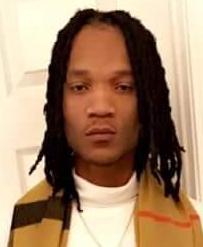
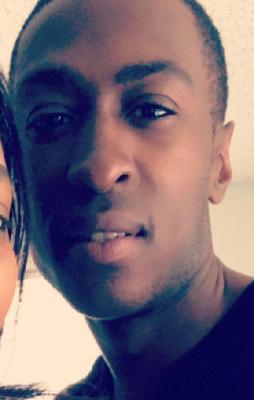
Michael Milano was a 30-year-old male bartender from Boston’s North End who loved life and had dreams of opening his own lounge. A former high school football player and Catholic Youth Organization boxing champion, he was remembered by those who knew him as a well-liked and good-natured man. In early March 1973, he proudly purchased a new Mercedes-Benz, a symbol of his hard work and future ambitions. He had no idea the car would make him a target in a brutal gangland war he had no part in.
On the night of March 8, 1973, Milano was driving his new car through the Brighton neighborhood of Boston. He had two passengers with him: his friend Louis Lapiana and Lapiana’s girlfriend, Dianne Sussman. Milano had insisted Sussman sit in the front passenger seat so she could appreciate all the features of the new vehicle, a small act of kindness that would spare her from the worst of the violence to come.
As they stopped for a red light at the intersection of Sparhawk and Market Streets, another car pulled alongside them. Inside were hitmen from the notorious Winter Hill Gang. They unleashed a torrent of automatic gunfire, riddling the Mercedes with bullets. Michael Milano was killed instantly. Lapiana was struck and catastrophically injured, left paralyzed from the neck down. Sussman, who reflexively ducked, survived the ambush without physical injury.
The Boston Police Department immediately recognized the shooting as a professional, gangland-style hit. However, detectives were perplexed, as their investigation revealed nothing to suggest Milano was involved in organized crime. "Everyone loved the guy," one detective noted at the time. The truth was that the murder was a tragic and violent mistake. The intended target was Alfred "Indian Al" Notarangeli, a rival gang leader who drove a similar Mercedes-Benz. Notarangeli was the owner of the North End bar where Milano worked.
Years later, the facts of the case emerged through the testimony of Winter Hill Gang hitman John "The Executioner" Martorano. In a 1999 plea deal that saw him confess to 20 murders in exchange for a 12-year prison sentence, Martorano admitted that he and fellow gang member Howie Winter were the shooters who killed Milano. He testified that they were acting on the orders of gang boss James "Whitey" Bulger, who was in a second car nearby acting as a lookout. According to Martorano, an associate had been sent to spot Notarangeli and mistakenly identified Milano as the target when he left the bar and got into his new car.
Martorano's confession brought a painful clarity to the families of the victims, who for decades had no answers. Louis Lapiana, who spent the remaining 21 years of his life in a hospital on a respirator, finally had confirmation that he was not targeted for any wrongdoing of his own. His brother, Michael Lapiana, said the revelation brought his brother "closure" and "relief" from the rumors that had circulated after the shooting. In 2002, the Milano family won a $2.2 million wrongful death lawsuit against Bulger, though they were told they would have to wait for the resolution of the criminal case to collect.
In 2013, after 16 years as a fugitive, James "Whitey" Bulger was brought to trial in federal court for a sweeping racketeering indictment that included 19 murders, one of which was Michael Milano's. Martorano was the government's star witness. Dianne Sussman also testified, her emotional account of the horrific night and its aftermath moving at least one juror to tears. Despite Martorano's testimony, the jury returned a finding of "not proven" on the charge of Bulger's involvement in Milano's murder.
As of August 2013, the case remains officially unsolved. While John Martorano confessed to being one of the shooters, his plea agreement protected him from further prosecution for the crime. Howie Winter was never charged in connection with Milano's death. With the jury's finding in the Bulger trial, no one has ever been convicted for the murder of Michael Milano. The case is still listed as an open homicide by the Boston Police Department.