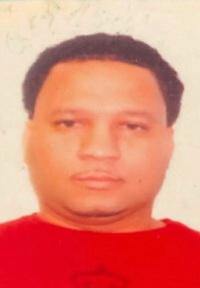
George W. Holden, a 25-year-old man from Medford, Massachusetts, was a former professional heavyweight boxer known in sports circles as "The Medford Irisher." Born on February 27, 1948, he launched his boxing career on August 24, 1967, in Portland, Maine. Over the next five years, Holden, who weighed between 168 and 186 pounds, fought in 43 professional matches. His record stood at 13 wins, with one by knockout, 26 losses, and three draws. He trained alongside other local boxers who would go on to have their own careers, including Anthony Veranis, Tommy Sullivan, Edward G. Connors, and Joe DeNucci. Sponsored by the Everlast sporting goods company, Holden's career came to an ignominious end on April 13, 1972. During what would be his final match, also in Portland, he reportedly entered the ring heavily intoxicated.
The fight against Jimmy McDermott was declared a no-contest, and Holden was indefinitely suspended from professional boxing.
Outside the ring, Holden's life had a turbulent side. Author Howie Carr later described him as a "small-time hoodlum" who became involved in organized crime and was known to law enforcement. This aspect of his life may have played a role in the violent end he met just over a year after his boxing career was finished. His death would become the 82nd homicide recorded in the city of Boston in 1973.
On the morning of Wednesday, August 22, 1973, the Boston Police Department received a call directing them to the Charlestown marina. In the waters of the Little Mystic River, along the shoreline between Terminal and Medford Streets, they made a grim discovery: the body of George Holden. An examination by the Office of the Chief Medical Examiner would later confirm that he had been killed by a single, fatal gunshot wound to the head. The death was officially ruled a homicide. Police reports from the time characterized the killing as a "gangland execution" carried out with a small-caliber handgun, suggesting a deliberate and targeted act.
The Boston Police Department immediately launched a homicide investigation. Detectives canvassed the industrial waterfront area of Charlestown, a neighborhood known in that era for its insular nature and ties to organized crime. The location where Holden's body was found, a somewhat isolated spot by the marina, offered few immediate clues. The initial investigation struggled to gain traction, and despite the police's efforts, no suspects were ever publicly identified or charged in connection with the murder. The motive behind the killing remained elusive, lost in the shadows of the world Holden was said to inhabit.
For decades, the case has remained frozen in time. As years turned into decades, witnesses' memories faded, and potential leads grew cold. The murder of George Holden joined a long list of unsolved homicides from a particularly violent year in Boston's history. The file remains open within the Boston Police Department's Cold Case Unit, a silent testament to a life cut short and a crime unpunished. His name is listed on the department's website detailing the unsolved homicides of 1973, a public reminder of the lingering quest for justice.
As of September 2025, more than half a century after his death, George Holden's murder remains officially unsolved. The questions of who shot him and why he was left in the waters of the Mystic River are unanswered. The Boston Police Department continues to ask for the public's help, hoping that someone, somewhere, holds the piece of information that could finally bring closure to this decades-old case. Anyone with information is urged to contact the Boston Police Department Homicide Unit.