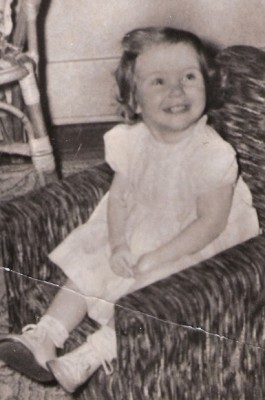
Thecla Merle Gerken, a 23-year-old schoolteacher known to friends and family as “Tec,” was remembered as a vibrant and cheerful person, a "true disciple of Pollyanna." She grew up in Woonsocket, South Dakota, and spent her school years teaching in the nearby town of Cuthbert. Thecla saved her money for summer vacations, which she often spent with relatives in Dyersville and New Vienna, Iowa. In the summer of 1917, however, she decided to visit Sioux City to stay with her childhood friend, Hazel May Stockland, who was married to Dr. Henry H. Hagedorn. Some reports later suggested Thecla made the trip against her parents' wishes while on her way to a new job in Dubuque.
On the beautiful summer evening of Wednesday, June 27, 1917, Thecla and another friend from her hometown, Mabel Houlihan, spent time together in Sioux City.
The previous night, they had attended a dance and met two young men who had arranged to take them to another dance that evening, but the date was broken for unknown reasons. Instead, Thecla and Mabel decided to walk downtown for ice cream. Around 10:00 p.m., they got a treat at a shop on 5th and Pierce streets and began their stroll home, arm in arm, through a well-lit, upscale residential neighborhood.
As they walked north on Jones Street, Mabel noticed a shabbily dressed man in a brown slouch hat and rubber-soled shoes following them. To let him pass, the two women stopped at the corner of 9th and Jones streets and chatted for a while longer before saying their goodbyes around 11 p.m. Mabel headed east on 9th Street toward her home, while Thecla continued north on Jones Street, intending to walk to the Hagedorn residence at 1017 Jones Street, just a few minutes away. She crossed the intersection diagonally to walk in the brighter part of the street.
Shortly after the friends parted, neighbors heard a man and a woman in a low-key conversation near the intersection. One witness, a stenographer named Helen Eyland, heard the woman ask in a reproving tone, "George, why did you do that?" Another neighbor overheard the woman say loudly, "Don't do that!" Moments later, as Mabel was nearing her home, she heard Thecla scream her name: "Mable, come back. Come back quick, Mable." The plea was followed by more shrieks and then the sharp crack of a gunshot that echoed through the quiet night. Mabel was frozen in terror. A neighbor, Mrs. A.C. Hoskins, heard someone wearing soft-soled shoes running down a nearby alley.
Charles Eyland, Helen's father, rushed to his window after hearing the shot and saw a young woman staggering in the street before collapsing in the intersection of 9th and Jones. Two men, Elmer E. Compton and H.H. Hubbard, were the first to reach Thecla. They carried her to the grass by the curb as other neighbors hurried to help. By the time Mabel Houlihan arrived, her friend was lying on her back, blood streaming from her mouth. Thecla had been shot once in the right breast with what an autopsy later determined was a.38-caliber revolver. She died at the scene.
The Sioux City Police Department’s entire detective force was assigned to the baffling case, but they struggled to find a solid clue. The leading theory centered on the man named "George," who was heard arguing with Thecla just before she was killed. Investigators explored the possibility that she was shot by a deranged man or a persistent suitor she may have been trying to avoid by leaving her hometown. The two young men she and Mabel had met at the dance were questioned, but no evidence linked them to the crime. Despite an extensive investigation, no arrests were ever made.
Over a century has passed, but the murder of Thecla Gerken remains one of Sioux City's oldest and most mysterious unsolved homicides. Her life was cut short by a senseless act of violence that has never been explained. The case is documented by Iowa Cold Cases and was included in the 2012 book "Iowa Unsolved Murders: Historic Cases." As of May 2012, her killer has never been identified, and the file remains open, a silent testament to a young woman whose bright future was stolen on a summer night long ago.