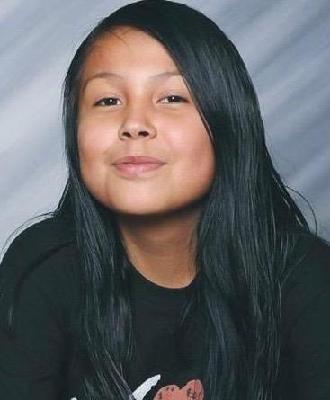
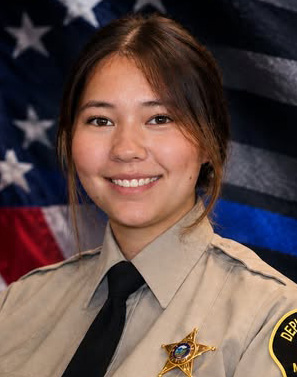
Leslie Ironroad was a 20-year-old Native American woman with a creative spirit, remembered by friends as a "nice little girl." In early 2003, she was living in McLaughlin, South Dakota, a small town on the vast Standing Rock Sioux Reservation, which straddles the border of North and South Dakota. She stayed in the spare bedroom of her friend, Rhea Archambault, and helped her make star quilts. Leslie was part of a close-knit community, but her life was cut short by an act of brutal violence that remains unpunished.
In late February 2003, Leslie went to a party a few miles from the Archambault home. The night took a terrifying turn. Early the next morning, on February 20, Leslie made a frantic, tearful phone call to her friend’s brother, begging to be picked up. She said, "these guys are going to fight me," before the call abruptly ended. She never made it home.
Later that morning, she was discovered locked inside a bathroom, having been horrifically beaten and repeatedly raped.
Leslie was rushed to a hospital in Bismarck, North Dakota, where she fought for her life for a week. Her friend Rhea Archambault found her there, bruised and battered. When Rhea asked what happened, Leslie replied, "Rhea, is that you? Turn the lights on, I can't see." But the lights in the hospital room were already on. Leslie Ironroad succumbed to her severe injuries on February 27, 2003. Before she died, she gave a statement to an agent from the Bureau of Indian Affairs (BIA), reportedly identifying the men who had assaulted her.
Despite Leslie’s dying declaration, the initial investigation into her rape and murder was plagued by what has been described as severe neglect. Crucial evidence was lost when authorities failed to perform a rape kit. The case languished, getting lost in a pile of other investigations handled by the overstretched BIA police force, which at the time had only a few officers to patrol the 2.3 million-acre reservation. For years, there was no progress, and it seemed as though Leslie’s case had been forgotten.
In 2007, an investigative report by National Public Radio brought national attention to the case and the systemic issues hindering justice for sexual assault victims on tribal lands. The report highlighted the failures in Leslie's investigation, prompting the Bureau of Indian Affairs to officially reopen her case a year later, in 2008. The renewed focus offered a glimmer of hope that those responsible for her death would finally be held accountable.
Years have passed since the investigation was reopened, but justice for Leslie Ironroad remains elusive. As of March 2023, her homicide is still an open cold case. No suspects have ever been publicly named, arrested, or prosecuted in connection with her brutal assault and murder. Leslie’s story is a tragic example among the many unsolved cases of Missing and Murdered Indigenous Women (MMIW) in South Dakota and across the nation, leaving her family and community without answers or closure. The individuals she named before her death have never faced charges.