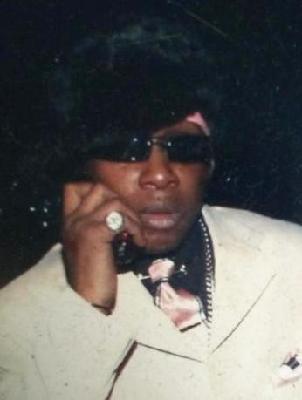
More than half a century has passed since the violent death of a young man in Boston, a case that has lingered in the files of the city’s unsolved homicides. Marvin Anthony Alford was 24 years old when his life was cut short by a bullet on a spring Saturday in 1971. Born in Boston on May 26, 1947, to his parents James Marvin Alford and Norretta Safronia Hampton Alford, Marvin was a young man on the cusp of the rest of his life, which ended in a crime that remains a mystery decades later.
The official record is stark and spare. On the evening of April 10, 1971, the Boston Police Department received a call reporting a person shot at 475 Centre Street in the Jamaica Plain neighborhood. When officers arrived at the scene, they found Marvin. He was pronounced deceased, and the Office of the Chief Medical Examiner would later rule his death a homicide. The weapon was a firearm, but the public record offers no further details about the circumstances of the shooting.
What Marvin was doing at that location, who he was with, and what led to the fatal encounter are all questions that have gone unanswered.
The address at 475 Centre Street places the crime in a historically dense and diverse part of Boston. In the early 1970s, Jamaica Plain was a neighborhood of triple-decker homes and vibrant business districts, a community undergoing the social and economic shifts common to many American cities of that era. Centre Street itself has long been a main artery, a path that has existed since the 1600s, lined with businesses, churches, and homes. Whether the address was Marvin’s residence, a place of business, or a random spot where tragedy struck is not publicly known. The silence in the public record about the nature of the location leaves a void in the story of that night.
The investigation into Marvin A. Alford's murder was launched immediately by the Boston Police Department. Detectives in 1971 would have canvassed the neighborhood, seeking witnesses and trying to piece together a timeline of Marvin's last hours. But the initial inquiry did not lead to an arrest, and as days turned into years, the case grew cold. There have been no publicly announced suspects, persons of interest, or breakthroughs in the many years since. The case file has been passed down through generations of homicide detectives, a silent testament to a life taken and a case unresolved.
For families of victims, the passage of time does little to heal the wound of an unsolved murder. Each anniversary is a painful reminder that justice has not been served. Without a resolution, loved ones are left in a state of perpetual uncertainty, haunted by the lack of answers and the knowledge that the person responsible was never held accountable. The profound loss of a 24-year-old son and the decades of silence that followed can only be imagined.
Today, the murder of Marvin A. Alford is listed on the Boston Police Department's webpage for unsolved homicides from 1971. It is one of many cases from that year that still awaits a conclusion. The department maintains that these cases are never truly closed and that new information can revitalize an investigation at any time. As of late 2026, Marvin's case remains open, a half-century-old puzzle waiting for a missing piece. The Boston Police Department urges anyone with information, no matter how insignificant it may seem, to come forward.