Crime Solvers Central
302 Cases Solved. Advancing justice for missing persons, unsolved homicides, unidentified and unclaimed remains.

Case Description

Any updates on this case? Let us know!
Summary based on 1 source
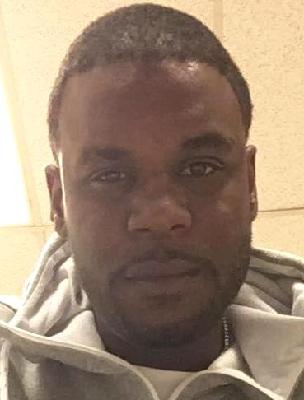
On a Tuesday in the final days of winter, the life of Timothy Jackson, a 23-year-old Black man, was violently cut short. The date was March 4, 2008, in Cincinnati, Ohio. The specific location was 1631 Sparkle Drive, a two-story apartment building constructed in the mid-1960s in the city’s Roselawn neighborhood. In one of the 22 units of that building, or perhaps just outside it, Timothy was shot. The precise circumstances of what led to the fatal gunfire, who was with him, and what happened in the immediate aftermath remain unanswered questions in a case that has grown cold with the passage of time.

The Roselawn neighborhood, which became part of Cincinnati in the early 1900s, is a community of just over 7,000 residents on the city's north side. Characterized by a mix of single-family homes and apartment complexes like the one on Sparkle Drive, it is a neighborhood that has seen significant demographic and economic shifts over the decades. In 2008, the city of Cincinnati was grappling with violent crime, and Timothy’s death was one of many that year. In Ohio, hundreds of homicides were reported in 2008, each leaving a permanent void in a family and a community. For Timothy’s loved ones, the lack of answers has only compounded their grief.

Following the shooting, the Cincinnati Police Department was notified and patrol officers responded to the scene. They would have worked to secure the area, speak with any potential witnesses, and call for medical assistance. Tragically, Timothy succumbed to his injuries, and his death was officially classified as a homicide. The investigation was handed over to the department's Homicide Unit, a specialized group of detectives tasked with solving the city's most violent crimes.

These investigators would have spent countless hours processing the crime scene on Sparkle Drive, searching for ballistic evidence, fingerprints, or any trace of the person who pulled the trigger. They would have canvassed the neighborhood, knocking on doors and hoping to find someone who saw or heard something that could provide a lead. Detectives would have delved into Timothy's life, speaking with his family and friends to understand his routines, relationships, and any potential conflicts that might have led to his death. Despite these efforts, the initial investigation did not yield a suspect or a motive. No arrests were made, and as the leads dried up, the case eventually went cold.

Today, Timothy Jackson’s case remains open but inactive. It is now listed in the Ohio Attorney General's database of unsolved homicides, a somber collection of stories waiting for an ending. The file represents a life taken and a crime unpunished, waiting for a new piece of evidence or a courageous witness to come forward. The Ohio Bureau of Criminal Investigation (BCI) highlights cases like Timothy's, hoping to generate public interest and new tips that might break the silence. Advances in forensic science, such as new DNA testing methods and genealogical databases, offer a glimmer of hope that even the smallest piece of evidence from 2008 could one day identify his killer.

The investigation, now more than a decade and a half old, continues to be officially managed by the Cincinnati Police Department. The fundamental questions persist: Who shot Timothy Jackson and why? Was it a planned attack or a random act of violence? Was he targeted by someone he knew, or was he simply in the wrong place at the wrong time? Without a witness or a confession, the answers are locked away, and justice for Timothy remains elusive. As of November 2026, his case is still an unsolved homicide, a painful reminder of a young life ended too soon. Anyone with information is urged to contact the Cincinnati Police Department's Homicide Unit.

Links to Additional Sources (1)

See any mistakes? Let us know!