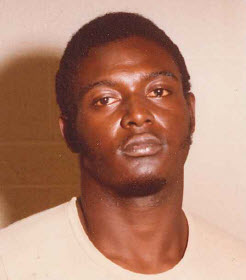
Jeffrey L. Risner, a 50-year-old White male, was found brutally murdered on March 2, 2006, inside a garage behind his residence at 116 Palmer Street in Fostoria, Ohio. Known to some as “Chumley,” Risner had a routine that included driving his former girlfriend’s grandchildren to school. When he failed to appear that morning, family members became concerned and went looking for him. Their search ended in a horrifying discovery when they found his lifeless body lying on the garage floor in a pool of blood. What initially began as a suspicious unattended death investigation quickly developed into a homicide investigation that would remain unresolved for more than two decades.
Officers from the Fostoria Police Department responded to the residence and immediately recognized the suspicious circumstances surrounding Risner’s death.
Detectives were summoned to take control of the investigation, and the Ohio Bureau of Criminal Investigation was contacted to assist with processing the crime scene. An autopsy conducted by the Lucas County Coroner’s Office revealed that Risner had suffered multiple sharp-force wounds to his neck, including injuries that severed his left internal jugular vein and damaged a major neck muscle. He also sustained significant blunt-force trauma to the right side of his head, along with multiple injuries to his face and arms. The neck wounds caused extensive blood loss and ultimately resulted in his death.
Investigators believed the evidence pointed to a violent physical confrontation rather than a sudden, unprovoked attack. Risner had severe facial bruising and injuries to his arms and forearms that investigators described as consistent with an attempt to defend himself. His physical stature, approximately six feet tall and weighing more than 250 pounds, suggested that his attacker may have been someone capable of overpowering him during a struggle. Authorities also believed the circumstances indicated that Risner likely knew the person responsible for his murder. Detectives explored possible personal connections and tensions involving individuals familiar with his home and daily activities.
Early in the investigation, detectives examined a male acquaintance who had been living with Risner and with whom there had reportedly been some tension. In a November 2021 interview, Fostoria Police Captain Patrick Brooks explained that investigators had used DNA evidence to exclude an individual they had previously examined as a suspect. Investigators had also recovered a DNA profile belonging to an unidentified male. In 2013, that profile was submitted to the national Combined DNA Index System, commonly known as CODIS, but the search produced no matches. Despite possessing potentially valuable forensic evidence, investigators were unable to identify the killer, and the investigation eventually became a cold case.
As forensic science continued to advance, detectives remained hopeful that newer investigative techniques could help resolve the murder. By 2021, authorities were exploring the possibility of forensic genetic genealogy, a method that could potentially identify an unknown individual through genetic relationships. Captain Brooks emphasized that solving the case was about more than identifying a perpetrator. Risner had been taken away from his children, grandchildren, and other loved ones, and investigators believed his family deserved answers. Nevertheless, years continued to pass without an arrest, leaving the circumstances of his violent death unresolved.
A major breakthrough finally came in October 2026, more than twenty years after Risner's murder. Following approximately a year of renewed investigative efforts involving the Fostoria Police Department and the Ohio Bureau of Criminal Investigation's Cold Case Unit, authorities announced the arrest of Bradly Ray, a 50-year-old Fostoria resident. On October 29, 2026, a Seneca County grand jury returned a secret indictment charging Ray with murder under Ohio Revised Code Section 2903.02. Seneca County Common Pleas Court Judge Damon Alt signed the indictment, and Fostoria police officers, detectives, and state investigators subsequently arrested Ray without incident. He was transported to the Seneca County Jail to await court proceedings.
The arrest brought renewed attention to Risner's personal relationships and the early stages of the investigation. In a November 3, 2026, report, WTVG's investigative news team identified Ray as Risner's former roommate. Risner's daughter told the station that she was not surprised by the arrest. The revelation was particularly significant because investigators had previously examined individuals who lived with or were acquainted with Risner. However, publicly available information has not established whether Ray was the same individual discussed during the earlier DNA investigation or precisely what new evidence led authorities to charge him. Police have not publicly disclosed the alleged motive or the specific evidence presented to the grand jury.
Following Ray's arrest, his bond was set at $1 million on October 30, 2026. A pretrial hearing was scheduled for November 9, 2026, in Seneca County Common Pleas Court. Fostoria Police Chief Gabe Wedge credited Detective Sergeant Brooks Hall and Ohio BCI Special Agents Doug Burke, Lori Braunschweiger, and Darien Spann for their work reviewing and advancing the investigation. Authorities emphasized that the investigation remained ongoing and that additional details would be withheld to protect the integrity of the case and the judicial process. As of November 6, 2026, Ray had been charged but had not been convicted, and he remained entitled to the presumption of innocence.
For more than twenty years, Jeffrey Risner's death represented a painful and unresolved chapter for his family and the Fostoria community. What began with an ordinary morning when he failed to arrive to take children to school became a prolonged search for answers about a brutal killing inside his own property. The October 2026 arrest marked the most significant publicly reported development in the case since the original investigation. Although a criminal charge has now been filed, the judicial process must determine whether prosecutors can establish responsibility for his murder. For Risner's loved ones, the renewed proceedings offer the possibility of long-awaited answers and accountability after decades of uncertainty.