Crime Solvers Central
307 Cases Solved. Advancing justice for missing persons, unsolved homicides, unidentified and unclaimed remains.

Case Description

Any updates on this case? Let us know!
Summary based on 1 source
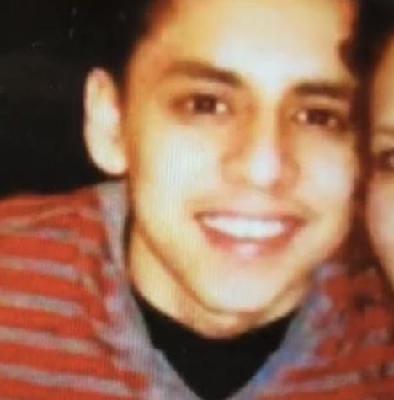
Who murdered 27 year old Ausencio Garcia?
On July 19, 1998, Ausencio Genchi Garcia, a 27-year-old Hispanic man, lost his life in a shooting at the El Moro apartment complex in southeast Portland, Oregon. Garcia worked for a vegetable company in Portland and had attended a party at the apartment complex that evening. What began as a gathering would end in tragedy when gunfire erupted in the early morning hours, leaving Garcia fatally wounded. Police described him as someone who was not known to be violent and had no criminal record. Investigators believed he may have been an unintended victim of violence stemming from a confrontation involving other individuals.

At approximately 2:30 a.m., Portland police officers responded to multiple 911 calls reporting a disturbance at the El Moro Apartments, located at 2016 SE 122nd Avenue. A resident who had stepped outside discovered Garcia lying motionless on the ground. He had sustained fatal gunshot wounds, including a wound to his head. An autopsy subsequently confirmed that his death was a homicide. Investigators determined that more than a dozen shots had been fired during the incident, with bullets striking parked vehicles and the brick buildings throughout the 95-unit apartment complex. The amount of gunfire suggested a particularly dangerous attack that placed numerous residents at risk.

The circumstances surrounding the shooting were connected to an earlier confrontation at the apartment complex. According to police, a dispute had nearly escalated into a fight between a large group of Hispanic individuals and several Black men. Years later, testimony in federal court revealed additional details about the confrontation. Rusty Rex Rean, a member of the Hoover Criminal Gang, testified that he had confronted someone over driving too fast through the apartment complex. The encounter escalated into violence, and Rean was struck in the head with a beer bottle. The blow fractured his skull and caused serious injuries. Prosecutors later argued that the shooting that killed Garcia was an act of retaliation arising from that dispute, although Garcia himself was not identified as a participant in the confrontation.

For years, the killing remained an unresolved homicide under Portland Police Bureau case number 98-69926. Detectives worked to reconstruct the events of that night and identify those responsible for the gunfire. The investigation eventually drew attention to individuals associated with the Hoover Criminal Gang, an organization with a longstanding presence in Portland and a history of violent criminal activity. The connection would become central to federal proceedings more than two decades after Garcia's death.

One of the first significant legal developments occurred in 2003, when Karl Armstrong Jr., an alleged accomplice in the shooting, pleaded guilty in Oregon state court to conspiracy to commit murder. Armstrong, who was associated with the Hoover gang and known by the nickname "Squirrel," entered a plea agreement that also addressed other criminal matters, including an attempted murder case and a federal drug conviction. He ultimately served approximately 15 years in prison before being released in June 2017. As part of his agreement, Armstrong was required to cooperate with prosecutors and provide testimony concerning Garcia's killing.

A major breakthrough came on November 7, 2019, when federal prosecutors announced that Lorenzo Laron Jones, a senior member of the Hoover Criminal Gang known as "Low Down," had been indicted in connection with Garcia's murder. Jones was accused of participating in a decades-long pattern of racketeering activity involving murder, attempted murder, drug trafficking, and firearms offenses. Federal authorities alleged that he had killed Garcia in July 1998 and Wilbert Butler in September 2017. The indictment included charges of racketeering conspiracy, murder in aid of racketeering, and firearms offenses connected to the killings. Jones appeared in federal court and was detained while awaiting trial.

During the federal racketeering trial in 2022, prosecutors presented testimony from former gang associates who described the events surrounding Garcia's death. Armstrong testified that Jones had contacted him and arranged to meet at the El Moro Apartments on the night of the shooting. According to Armstrong, the two drove toward the rear of the complex, where Jones exited the vehicle and walked through nearby yards. Armstrong claimed that he waited inside the car and heard gunshots approximately five to ten minutes later. He testified that Jones subsequently returned to the vehicle and made a statement suggesting that he had shot someone. Armstrong maintained that he had not personally witnessed the shooting and did not know the identity of the person who had been killed.

Rean also testified against Jones, claiming that approximately six months after the killing, the two had been housed together in a Portland jail on unrelated charges. According to Rean, Jones admitted that he had retaliated for the injuries Rean suffered during the earlier confrontation. Rean described an account in which Jones allegedly waited near an apartment building for individuals involved in the dispute to emerge, then opened fire before escaping over a fence and leaving in a vehicle driven by Armstrong. Prosecutors argued that the shooting was motivated by gang retaliation and that Garcia had been an unintended victim.

However, the testimony became a central point of dispute during the trial. Defense attorneys challenged the credibility of the cooperating witnesses, highlighting inconsistencies between their courtroom testimony and earlier statements to investigators. Armstrong acknowledged that he had previously given conflicting accounts, including statements in which he had implicated himself in the shooting. The defense also questioned whether witnesses were motivated by the possibility of receiving favorable treatment in their own criminal cases. These credibility issues became particularly important because much of the evidence concerning the identity of the gunman depended on accounts provided years after the homicide.

On October 19, 2022, following a five-week federal trial, a jury delivered a mixed verdict for Jones. Although jurors convicted him of racketeering conspiracy and other offenses, they found him not guilty of the murder charge involving Ausencio Genchi Garcia. The jury did convict Jones in connection with the September 17, 2017, murder of Wilbert Butler. The distinction was significant: despite the prosecution's allegations and witness testimony, Jones was acquitted of Garcia's murder and was not legally found responsible for that killing.

On October 26, 2023, Jones was sentenced to life in federal prison plus an additional ten years for his convictions arising from the broader racketeering prosecution. That sentence was not imposed for Garcia's murder, of which Jones had been acquitted. Armstrong's earlier conviction for conspiracy to commit murder remains a documented legal development directly associated with Garcia's case, but the federal proceedings did not produce a murder conviction against Jones for the 1998 shooting.

Garcia's death remains a particularly troubling case because investigators believed he was not the intended target of the violence. He had gone to a gathering at an apartment complex and became the victim of gunfire apparently connected to a dispute involving other people. Although the investigation eventually resulted in a conspiracy conviction and a federal prosecution that examined the circumstances of the killing in considerable detail, the identity and legal responsibility of the actual gunman were not conclusively established through a murder conviction in the available records. Portland police have continued to maintain a public cold-case listing for Garcia under case number 98-69926, requesting information from anyone who may know more about the shooting. The case stands as the story of a life abruptly ended during a night of violence, followed by decades of investigation, conflicting testimony, and legal proceedings that have provided important details about what happened without delivering a definitive murder conviction for Garcia's death.

Links to Additional Sources (1)

See any mistakes? Let us know!