Crime Solvers Central
307 Cases Solved. Advancing justice for missing persons, unsolved homicides, unidentified and unclaimed remains.

Case Description

Any updates on this case? Let us know!
Summary based on 14 sources
A Penn State University student is murdered in the school's largest library
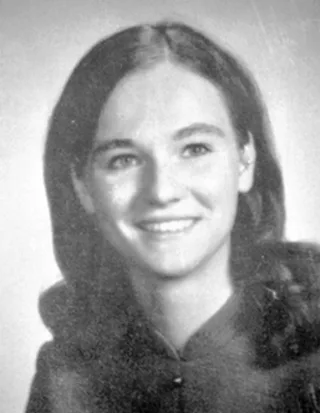
Elizabeth “Betsy” Aardsma was a bright and promising 22-year-old graduate student with a passion for art and poetry. A White female from Holland, Michigan, she was the second of four children raised in a conservative, middle-class household. After graduating with honors from Holland High School, she attended Hope College and later the University of Michigan, earning a degree in English and art in 1969. Initially, Betsy planned to join the Peace Corps and travel to Africa, but her relationship with a medical student named David Wright led her to enroll at Pennsylvania State University to be near him. In the fall of 1969, she had been a student at Penn State for only eight weeks, settling into her new life and planning to get engaged to Wright around Christmas.

The day after Thanksgiving, Friday, November 28, 1969, found the Penn State campus unusually quiet. Betsy had spent the holiday with her boyfriend in Hershey but returned to State College early to work on a research paper. That afternoon, she and her roommate, Sharon Brandt, walked from their dorm to the Pattee Library. Betsy entered the library's cavernous stacks around 4:30 p.m. to gather materials for her assignment. The area was known for being dimly lit and secluded. Sometime between 4:45 and 4:55 p.m., in the narrow space between rows 50 and 51, an assailant stabbed her a single time in the chest. As she collapsed to the floor, she pulled several books from the shelves with her.

The sound of the falling books drew attention, but those who first reached Betsy saw no obvious signs of an attack. She was wearing a red dress over a white turtleneck, which camouflaged the wound and the minimal external bleeding. People assumed she had suffered a seizure or fainted. Two students saw a man running from the area who told them, “Somebody better help that girl,” before he disappeared from the library. A call was made for a medical emergency, not a violent crime. Paramedics arrived and transported Betsy to the Ritenour Health Center on campus, where she was pronounced dead at 5:19 p.m. It was only then that a doctor discovered the fatal stab wound.

An autopsy later revealed the knife had pierced her heart and severed her pulmonary artery. The injury caused massive internal bleeding that filled her lungs within minutes, preventing her from screaming for help. The coroner concluded the wound was delivered with precision by a right-handed person who likely faced her and intentionally aimed for her heart. The investigation, led by the Pennsylvania State Police, was severely hampered from the start. Unaware that a homicide had occurred, library staff had cleaned the crime scene, mopping the floor and reshelving the fallen books, destroying potential evidence before police could secure the area.

Investigators interviewed hundreds of students and staff, but few leads emerged from the quiet holiday campus. Over the years, several individuals were considered persons of interest. One was William Spencer, a sculptor who allegedly confessed to the killing at a party, but police did not find his claims credible. Another was Larry Maurer, a classmate who had recently met Betsy and asked her out for coffee. Maurer was scrutinized by investigators but was ultimately cleared; he was blond and did not match the physical description of the brown-haired man seen fleeing the stacks.

In the decades that followed, independent authors and investigative journalists built a strong circumstantial case against another Penn State student, Richard Haefner. A 25-year-old geology graduate student at the time, Haefner knew Betsy and lived in the same dormitory complex. According to reports, Betsy had recently ended a brief friendship with him to remain committed to her boyfriend. Haefner was known for erratic behavior and had a physical resemblance to composite sketches of the man seen leaving the library. Despite extensive research and suspicion from even his own family members, Haefner was never charged with the crime. He died in 2002.

More than half a century later, the murder of Betsy Aardsma remains one of Pennsylvania’s most infamous cold cases. No one has ever been arrested, and the official case files remain sealed by the state. The identity of the man who walked into the library that quiet afternoon and ended a young woman's life is still unknown. As of November 2025, the case officially remains open but unsolved, a haunting mystery woven into the history of Penn State University.