Crime Solvers Central
302 Cases Solved. Advancing justice for missing persons, unsolved homicides, unidentified and unclaimed remains.

Case Description

Any updates on this case? Let us know!
Summary based on 2 sources
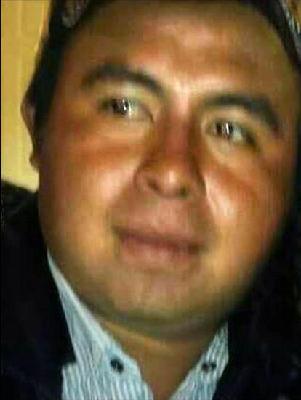
On a spring Saturday in Memphis, Tennessee, the life of Margarito Salas was cut short by gunfire. The 28-year-old Hispanic/Latino man was killed on May 21, 2016, becoming one of the city's many homicide victims that year. Beyond these essential facts, the public record of Margarito’s life and the specific circumstances of his death are tragically sparse. His name is etched into lists of the lost, a reminder of a story interrupted and a family left to navigate a world irrevocably altered by violence.

The incident occurred in the Whitehaven neighborhood, a large, predominantly residential area in South Memphis known globally as the home of Graceland. On streets like Graceland Drive, lined with single-family homes built mostly in the mid-20th century, life unfolds in the shadow of the city’s complex realities. Memphis is a city of deep musical roots and cultural pride, but it has also long contended with high rates of violent crime. In the absence of a detailed public narrative, Margarito’s death is a quiet but profound tragedy, representing the personal cost of a persistent, city-wide issue.

For the family and friends of a homicide victim, the silence that follows can be as painful as the initial shock. When news cycles move on and official investigations yield no immediate answers, loved ones are left in a state of prolonged uncertainty. They are left with memories—the sound of a laugh, a shared joke, a quiet moment of kindness—that stand in stark contrast to the brutal finality of their loss. Each birthday, holiday, and milestone becomes a painful reminder of the person who is no longer there to share in them.

The investigation into the murder of Margarito Salas was handled by the Memphis Police Department. In any homicide case, the first hours and days are critical as detectives work to process evidence, speak to potential witnesses, and piece together the victim's final movements. However, many cases prove difficult to solve, and without sufficient evidence or a witness coming forward with a crucial piece of information, an investigation can stall. When all known leads have been exhausted, a case is often handed over to a cold case unit.

These specialized units exist to give fresh eyes to unsolved homicides, hoping that advances in forensic technology or a change of heart in someone who knows something might finally break the case open. For families, the existence of a cold case unit represents a flicker of hope that their loved one has not been forgotten by the justice system. It is a hope they carry for years, and sometimes decades, waiting for a call that may or may not ever come.

Years have passed since Margarito Salas was killed, and his case remains unsolved. The silence surrounding his death underscores a difficult truth for many families affected by violent crime: justice is not always swift or certain. The loss remains, a permanent void in the lives of those who knew and loved him. His story, though lacking in public detail, is a solemn testament to a life taken too soon and a family’s unanswered questions. As of today, the Memphis Police Department continues to seek information on unsolved homicides, and the possibility of closure for Margarito's loved ones rests on someone, somewhere, deciding to come forward.

Links to Additional Sources (2)

See any mistakes? Let us know!