Crime Solvers Central
307 Cases Solved. Advancing justice for missing persons, unsolved homicides, unidentified and unclaimed remains.

Case Description

Any updates on this case? Let us know!
Summary based on 2 sources
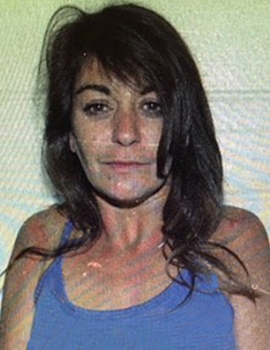
Do you know who murdered Cheryl Martin in 1989?
To those who knew her in Texas, Cheryl Martin seemed to be a woman alone in the world, a person without a past. To her family 1,400 miles away in Maryland, she was the daughter and cousin who had vanished years earlier, leaving behind a wall of silence and unanswered questions. For more than three decades, to the public, she was the "forgotten victim" of the infamous "Texas Killing Fields," her story overshadowed by other killings in the desolate corridor between Houston and Galveston. But Cheryl was a daughter, a mother, and a newlywed whose life took a tragic turn before it was violently ended at the age of 33.

Born and raised near Washington, D.C., Cheryl was remembered by relatives as a friendly, trusting, and outgoing young woman who deeply desired love and acceptance. Her life was fractured during her teenage years by the death of her mother from cancer. Without that stable guidance, Cheryl struggled. She gave birth to two daughters, Christie and Dawn, who were adopted by separate families and grew up unaware of each other's existence. Eventually, Cheryl disappeared from her family's life altogether. The letters and phone calls stopped, and for years, her relatives didn't know where she had gone, assuming she had simply sought a fresh start.

That new start had taken her to Texas. In October 1988, she married a man named Stephen Gregory, and wedding photos show a smiling bride, hopeful for the future. But the happiness was fleeting. Less than a year later, the marriage collapsed, and Cheryl returned to Texas from California, where the couple had been living. To support herself, she sometimes worked as a prostitute at truck stops along the interstate highways, a dangerous world of transient strangers. It was in this world that she spent her final days.

On November 3, 1989, a lawn maintenance crew working near a bridge in the 1800 block of FM 646 West in League City, Texas, made a grim discovery. In a drainage ditch below, lying face down in shallow water, was the body of a woman. She was nude except for a pair of pantyhose hanging from one leg. The victim had been sexually assaulted and strangled. Fingerprints identified her as Cheryl Martin, a 33-year-old Caucasian woman. Investigators determined she had been dead for one to two days. On the roadway above where her body was dumped, police found a small but significant piece of evidence: a torn red ribbon.

The investigation, led by the League City Police Department, faced immediate challenges. One of the original detectives on the case was Gary Ratliff, who would later become the city's police chief and remain committed to solving the murder. Because Cheryl worked at truck stops, the list of potential suspects was vast and anonymous. Investigators learned that just before she disappeared, Cheryl was seen at the Key Truck Stop bar. A truck driver recalled seeing a suspicious, unsettling man lingering in the shadows outside, just watching her. Cheryl assured the driver she was okay, and it was the last time anyone is known to have seen her alive.

Over the years, the case went cold. Leads were followed, but none led to an arrest. Detectives looked at several persons of interest, including a former roommate, Larry Jennings, and a convicted murderer named Dennis Sullivan, who was in prison for strangling a girlfriend years after Cheryl's death. Neither man could be definitively linked to the crime through interviews or DNA. For three decades, Cheryl’s family in Maryland remained unaware of her fate, and her case file gathered dust.

In recent years, remarkable developments have brought new hope. Through the power of DNA and genealogy, Cheryl's two daughters, Christie and Dawn, found each other as adults. Together, they have begun to piece together the story of the mother they never knew, giving a voice and a face to the "forgotten victim." Concurrently, advances in forensic science have allowed the League City Police to re-examine the evidence. As of April 2023, detectives believe the torn red ribbon found at the scene may have been the ligature used to strangle Cheryl. They have submitted it and other items for advanced DNA testing, hoping that after more than 30 years, the killer’s identity might finally be recovered, bringing justice to Cheryl and closure to the family that never stopped wondering what happened to her.