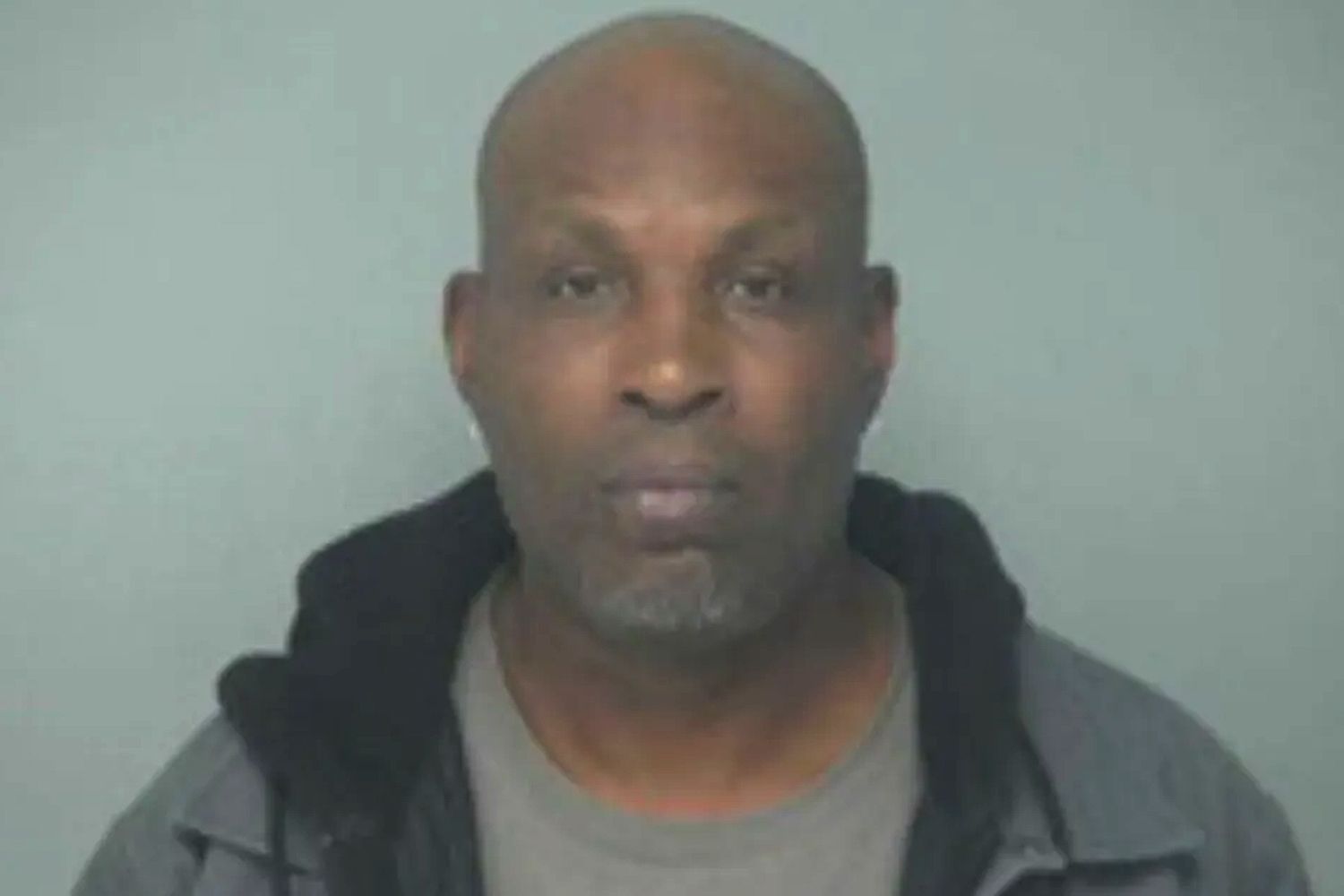
John B. Taylor and the 2000 Flushing Wendy's Massacre
Overview
On the night of May 24, 2000, a bustling Wendy's restaurant on Main Street in Flushing, Queens, became the scene of one of New York City's most brutal mass murders. A former employee, John B. Taylor, and an accomplice, Craig Godineaux, entered the restaurant after closing in a meticulously planned robbery. They rounded up the seven employees still on site, bound them, and executed them in the restaurant's walk-in freezer to eliminate witnesses. Five people died, and two were critically wounded. The calculated cruelty of the crime, which netted the killers just $2,400, horrified the city. An intensive police investigation led to the swift capture of both men. Godineaux, found to be intellectually disabled, pleaded guilty and received a life sentence. Taylor was convicted and sentenced to death, but he would become the last man on New York's death row before the state's highest court declared its capital punishment law unconstitutional, commuting his sentence to life in prison without the possibility of parole.
The Attack on Main Street
Just before 11:00 p.m. on Wednesday, May 24, 2000, the crew at the Wendy's at 40-12 Main Street was finishing their closing duties. The manager, Jean Dumel Auguste, was preparing to lock up when John B. Taylor, a 36-year-old whom Auguste knew from his previous employment at the restaurant, appeared at the door. Taylor, accompanied by 30-year-old Craig Godineaux, used his familiarity to gain entry, claiming he needed to speak with Auguste.
Once inside, the friendly pretense vanished. Taylor produced a .380 caliber semi-automatic pistol and revealed the true purpose of their visit: robbery. The plan was cold and methodical. Taylor forced Auguste to summon the remaining six employees to his basement office under the guise of an urgent meeting. As the workers came downstairs, they were ambushed by Taylor and Godineaux.
The seven employees were herded into the large, walk-in refrigerator. There, their hands were bound with duct tape, their mouths were gagged, and plastic bags were pulled over their heads to muffle their screams and vision. Kneeling on the cold floor, helpless, they were shot one by one in the head. Taylor and Godineaux then emptied the restaurant's safe, stealing approximately $2,400, and fled.
In the silence that followed, a faint sound could be heard. One of the victims, 23-year-old Patricio Castro, was still alive. Despite a gunshot wound to his head, he managed to free himself and crawl to a telephone in the office to dial 911. His faint voice reached a dispatcher, who, sensing the gravity of the situation, sent police to the scene.
The Victims
The massacre claimed the lives of five workers, each with their own story and future, extinguished for a few hundred dollars apiece.
- Jean Dumel Auguste, 27 — The store manager and a Haitian immigrant, he was known for his dedication and hard work. He was saving money to bring his wife and two young children to the United States from Haiti. He had given John Taylor a job at the restaurant months earlier.
- Ali Ibadat, 40 — An immigrant from Pakistan, he worked two jobs to support his wife and four children. He was a diligent employee who was respected by his colleagues.
- Jeremy Mele, 18 — A recent high school graduate from Bellmore, Long Island, he was working at Wendy's for the summer before he was to start college. He was excited about his future and was described as a bright and friendly young man.
- Ramon Nazario, 44 — A father and hardworking provider for his family, he was known for his kind demeanor. His brother later described him as a man who would be thought about every single day.
- Anita C. Smith, 23 — A recent hire, she was a young woman with aspirations and was well-liked by her new coworkers. Godineaux later claimed he put a coat on her in the freezer because he "liked her" before she was shot.
Two employees miraculously survived the execution-style shootings. Patricio Castro, who made the 911 call, and Jaquione Johnson, 18, both suffered devastating head wounds but lived. Johnson's survival was considered a medical miracle; the bullet entered the top of his head, traveled between the hemispheres of his brain, and exited through his mouth without causing fatal damage. Both survivors would later provide crucial testimony against the killers.
The Perpetrators
John B. Taylor, 36 at the time of the massacre, was the architect of the crime. He had worked at the Flushing Wendy's for a short time before being fired for unknown reasons, though some reports suggested a dispute with another manager. His familiarity with the restaurant's layout, staff, and closing procedures was central to the robbery's planning. After his arrest, Taylor reportedly told detectives the reason for the shootings was simple: "no witnesses." He had a prior criminal record, including arrests for robbery.
Craig Godineaux, 30, was Taylor's accomplice. During legal proceedings, it was revealed that Godineaux had a low IQ and was classified as intellectually disabled, a factor that would spare him from a potential death sentence. In his confession, Godineaux admitted to shooting some of the victims but tried to shift the primary blame to Taylor, claiming Taylor shot Anita Smith. He also made the chilling statement that he didn't wear a mask because he knew "nobody was going to be left."
Investigation and Justice
The New York City Police Department launched a massive investigation. The testimony of the two survivors was critical. Patricio Castro, though grievously injured, was able to identify one of the assailants as "John," a former employee. This information, combined with a tip received by police, quickly put investigators on the trail of John B. Taylor.
Less than 48 hours after the murders, police located and arrested Taylor at a relative's home in Brentwood, Long Island. Upon his arrest, Taylor implicated his accomplice, telling detectives, "Please get Craig." Godineaux was arrested shortly thereafter. Police recovered most of the stolen money from Taylor's home. The evidence against the pair was overwhelming, including videotaped confessions, ballistic evidence from the Bryco-Jennings .380 pistol, and the powerful eyewitness accounts of the survivors.
Queens District Attorney Richard A. Brown pursued first-degree murder charges against both men. On January 22, 2001, facing the possibility of the death penalty, Craig Godineaux pleaded guilty to murder. Because of his intellectual disability, which under law made him ineligible for capital punishment, he was sentenced to five consecutive life sentences without the possibility of parole.
John B. Taylor, however, went to trial. In November 2002, a jury listened to harrowing testimony from survivor Jaquione Johnson, who recounted the final terrifying moments inside the freezer. On November 19, 2002, the jury convicted Taylor on five counts of first-degree murder. A week later, they delivered a sentence of death.
The End of Death Row
John B. Taylor was sent to death row, but he would never be executed. In 2004, the New York Court of Appeals, the state's highest court, ruled that a key provision of New York's 1995 death penalty statute was unconstitutional. The law improperly instructed juries that if they deadlocked on a sentence, a judge would impose a sentence that included the possibility of parole, which the court found could coerce jurors into voting for death.
Prosecutors fought to keep Taylor's sentence intact, arguing his case should be an exception, but their appeals were unsuccessful. On October 23, 2007, the Court of Appeals formally overturned Taylor's death sentence. As he was the last remaining person on New York's death row, the decision effectively ended capital punishment in the state. On November 29, 2007, John B. Taylor was resentenced to life in prison without the possibility of parole.
Aftermath and Legacy
The Wendy's on Main Street never reopened. For months, it stood as a boarded-up memorial, a grim landmark in the heart of Flushing. Eventually, the building was demolished and replaced by a multi-level retail center.
For the families of the victims, the legal outcomes brought a measure of finality but not relief from their pain. The commutation of Taylor's death sentence was a source of deep anger for some, who felt that justice had been denied. For two decades, they have marked the anniversary of the tragedy, remembering the loved ones who went to work one evening and never came home. The Wendy's massacre remains a permanent scar on the community, a horrific reminder of a night when seven ordinary lives were shattered by calculated greed and cruelty.